SPORT FOR BUSINESS | OPINION
By Rob Hartnett, Sport for Business Founder
Irish Rugby is stepping further into the media business with the launch of its own official podcast, adding another strand to a growing investment in content, digital engagement and the direct relationship between the national team and its supporters.
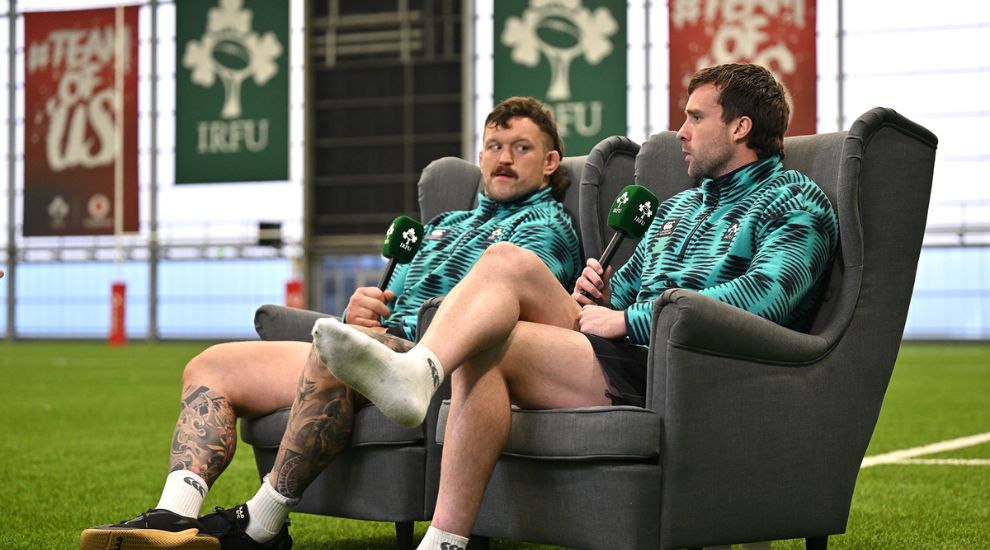
The Official Irish Rugby Podcast has arrived ahead of Ireland’s return to Nations Championship action against Argentina at Aviva Stadium on Friday night, with Andrew Porter and Mack Hansen opening the series in a conversation that promises to take supporters inside the Ireland camp and behind the scenes at the IRFU High Performance Centre.
Hosted by former Munster and Ireland player Barry Murphy, the podcast will release a new episode each week throughout the November campaign, with Fiji and South Africa following Argentina into Dublin as Andy Farrell’s side looks to make its mark on the new competition.
It is an interesting development, not least because rugby is already among the best-served sports in Ireland when it comes to media coverage.
Abundance of Conversation
From the established newspaper and broadcast voices to specialist websites and an increasingly crowded podcast market, supporters have no shortage of places to turn for analysis, opinion and discussion of the national team. Indeed, the abundance of rugby conversation can sometimes feel almost as competitive as the action on the field.
What Irish Rugby can bring to that environment, however, is something the independent media cannot always replicate. Access.
Porter and Hansen are an engaging combination to start with, both with personalities that extend comfortably beyond the traditional confines of the post-match interview. The opening episode touches on everything from Movember and music to teammates’ habits, suggesting a desire to reveal something of the individuals behind the green jerseys.
Whether that approach can develop into a genuinely distinctive offering will be the test. There is a difference between being invited into a controlled conversation and feeling as though you are getting a real glimpse behind the curtain. The closer Irish Rugby can get to the latter, the stronger its proposition is likely to become.
Strengthening the Team
That is only part of the wider story, though, because the launch comes as the IRFU strengthens the people and expertise behind its content and digital operations.
Ryan Bailey, who joined the organisation from The42 in 2019, was recently promoted to Senior Content Lead and Communications Manager, reflecting the growing importance of storytelling within the Union’s communications operation.
Bailey was one of the Sport for Business 30 Under 30 in 2018, when he was building his career as a sports journalist, and his subsequent move into the IRFU was an early example of a wider shift that has gathered considerable momentum in the years since. Talented journalists, producers and digital storytellers have increasingly found opportunities within the sporting organisations that were once primarily the subjects of their coverage.
That migration makes sense. Sporting bodies have compelling stories, unusually loyal audiences and, increasingly, the platforms to bring the two together without relying entirely on traditional intermediaries.
The creation of more sophisticated in-house content teams is changing the balance between the rights holder, the media and the supporter, opening opportunities that extend well beyond public relations or simply promoting the next fixture.
Another important part of the picture is the recent arrival of Adrian D’Arcy as the IRFU’s new Head of Digital Marketing and Analytics, bringing almost a decade of international experience with World Rugby into the organisation.
D’Arcy has worked across some of the sport’s biggest events, including Rugby World Cups, the international Sevens circuit and the Olympic Games, with responsibilities spanning digital marketing, content programming, fan acquisition and audience engagement. It is experience gained at a global level, where the challenge has been to broaden rugby’s appeal while building stronger connections with those already committed to the game.
He also understands the sport from the inside, having enjoyed a lengthy playing career with Clontarf in the All-Ireland League before retiring in 2022. That combination of a deep personal connection to rugby and professional experience of developing its global audience should be valuable as the IRFU looks to strengthen its own digital ambitions.
The role itself is revealing. When the IRFU advertised the position earlier this year, it emphasised using data, analytics and technology to develop audiences, deepen engagement and create sustainable digital revenue streams. Content is part of that ambition, but so too are ticketing, sponsorship, supporter relationships and the ability to understand what motivates different audiences to engage with the sport.
Bringing Bailey’s content expertise together with D’Arcy’s background in digital growth gives the IRFU an opportunity to connect storytelling and commercial development more deliberately.
Access
Sporting organisations have always controlled access to their players and environments, but the ability to turn that access into a valuable media product has changed dramatically. There was a time when a behind-the-scenes feature required the involvement of a broadcaster, a production company and an agreement over distribution. Now the same organisation can conceive, produce and distribute content through channels it controls, building a direct relationship with the audience along the way.
That also creates value for commercial partners. A podcast with a loyal following offers new opportunities for sponsorship, branded integrations and longer-form storytelling around the people and values that make Irish Rugby attractive to brands in the first place.
The more interesting commercial opportunity may lie in what happens after somebody watches or listens. Does that engagement encourage them to follow another channel, sign up for a newsletter, explore a ticketing opportunity or engage more deeply with a sponsor?
Those connections are not automatic, and a large social following does not guarantee them, but they are increasingly central to how leading sports organisations think about the value of their audiences.
Balance
Of course, there is a balance to maintain.
Independent media brings scrutiny and perspectives that governing bodies cannot reasonably be expected to provide on themselves. It remains an essential part of the sporting landscape, and a successful official podcast will not diminish that need.
Supporters are also sophisticated enough to distinguish between independent analysis and content produced by the team they follow. There is room for both, provided each gives the audience something worth its time.
The challenge for Irish Rugby will be to avoid letting the understandable desire to protect players and manage messages take too much personality out of the conversations. Supporters know when somebody is speaking freely, just as they recognise when an interview follows a familiar, tightly managed path.
If the podcast succeeds in giving Porter, Hansen and those who follow them the space to be themselves, it will have a valuable point of difference.
And the numbers will be fascinating to watch.
Irish Rugby begins with substantial advantages in its existing audience, brand recognition, and promotional reach. Its social media channels can put a new episode in front of hundreds of thousands of potential viewers, but there is an important distinction between somebody scrolling past a clip and choosing to spend twenty or thirty minutes listening to a conversation.
The real measure of success will be whether the podcast can build a returning audience, one that actively seeks out the next episode rather than simply encountering it in a feed.
It will also be interesting to see how that audience compares with those already established by independent rugby podcasts, where personality, strong opinions and editorial freedom have helped create loyal communities of listeners.
The Value of Attention
The media landscape is changing rapidly, and the competition for attention is no longer confined to those covering the same sport. Every minute spent listening to a rugby podcast competes with music, entertainment, video, social media, and countless other options.
That makes attention valuable, but it also makes it harder to earn.
For the IRFU, the arrival of D’Arcy, the promotion of Bailey and the launch of The Official Irish Rugby Podcast are connected developments in a broader evolution of how a national sporting organisation communicates with its audience. This is taking place under the leadership of Aoife Clarke, who joined as Head of Communications in July 2023 after ten years at Lidl Ireland
The ambition is no longer simply to have its stories told, but to become a more accomplished storyteller in its own right, with the digital expertise to understand the audience and the commercial capability to build on that relationship.
The first episode is now available on YouTube and Spotify.
Whether it becomes essential listening remains to be seen, but the direction of travel is clear. In an increasingly competitive media environment, Irish Rugby is investing not just in what it says, but in how it reaches people, how well it understands them and what that relationship might ultimately be worth.
⋮⋮⋮⋮
⋮⋮⋮⋮

 Athletics Ireland is a full member of the Sport for Business community of sporting, business, and state organisations.
If you would like to join the Sport for Business community and see your organisation in our content, on our stages, and in the daily conversation around the commercial world of Irish Sport, email us today and let’s see what is possible.
Image Credit: Athletics Ire;and
ABOUT SPORT FOR BUSINESS
Sport for Business is Ireland’s leading platform focused on the commercial, strategic and societal impact of sport. It connects decision-makers across governing bodies, clubs, brands, agencies, and public institutions through high-quality content, events, and insights.
Sport for Business explores how sport drives economic value, participation, inclusion and national identity, and how your story can be part of ours.
Through analysis, storytelling and convening the sector, it helps leaders understand trends, share best practices, and make better-informed decisions. It positions sport not just as entertainment but as a vital contributor to Ireland’s social and economic fabric.
Find out more about becoming a member today.
Or sign up for our Daily Sport for Business Snapshot email bulletins to get a flavour of the material we cover.
Sign up for our News Bulletins here.