There has been plenty of noise this week around the €20 million shortfall in the funding RTÉ had expected to receive in 2027.
That is understandable. RTÉ had been working on the basis of €260 million under the multi-annual funding agreement reached with Government, only to be told around Budget Day that the allocation would instead remain at €240 million.
Director General Kevin Bakhurst described subsequent talks with Minister Patrick O’Donovan yesterday as “extremely constructive”, and there is still a sense that the door remains open to some form of resolution.
However, another part of the broadcasting story has received far less attention and should concern Irish sport just as much.
TG4 will receive no increase in its public funding for 2027.
Its allocation will remain at €65.4 million, despite the broadcaster seeking an additional €11 million, backed by Comisiún na Meán, to bring that figure to €76.4 million. In an inflationary environment, and particularly one in which the costs faced by independent production companies continue to rise, standing still financially is effectively moving backwards.
That is a matter of serious concern for Irish sport.
TG4 has become one of the country’s most important sporting broadcasters, not simply because of the volume of sport it shows, but because of the kind of sport it has been prepared to put on screen.
It has frequently said yes where others might have always previously said no.
That has brought visibility to sports, competitions and athletes which might otherwise have struggled to find a place on television.
Basketball has enjoyed a longstanding relationship with the channel, renewed last year in a two-year agreement that includes international basketball, as well as the National Cup and Super League Finals.
Women’s football has similarly found an important home there. This year, TG4 committed to a sixth successive season of SSE Airtricity Women’s Premier Division coverage, with 17 live games across the league, the Women’s FAI Cup, and the Women’s All-Island Cup. The Aer Lingus College Football Classic has been shown live in two of the last three years.
And only last month, the Irish Life Dublin Marathon was announced to be televised live and free-to-air on TG4 for the first time this year, with worldwide availability through the TG4 Player.
That is precisely the kind of sporting occasion which benefits hugely from television.
The marathon has 22,500 registered participants this year, but its impact extends far beyond those actually running. Live television turns a major participation event into a national occasion. It gives sponsors greater value, gives athletes and ordinary runners a wider stage and provides another opportunity to tell the stories which make sport matter.
Then there is Gaelic Games.
TG4’s relationship with Ladies Gaelic Football has been transformational over more than two decades.
The broadcaster is not merely covering the game. Through its title sponsorship of the TG4 All-Ireland Championships, it has been a key commercial partner in its development.
Coverage has also continued to grow beyond the championship.
This year’s Lidl National Football Leagues received extensive coverage across TG4’s television and digital platforms, including live coverage from all seven rounds of Division One and all four divisional finals across TG4 and Spórt TG4 digital channels.
That increased visibility is really important.
Ladies Football has experienced extraordinary growth in playing numbers and commercial support, but attracting consistently large attendances remains one of the sport’s next big challenges. Television is part of solving that.
It introduces players to audiences. It builds personalities. It creates familiarity with teams and competitions. It gives sponsors a reason to increase their investment, and it makes attending a fixture feel like participation in something of national significance.
Remove or reduce that visibility, and momentum can be lost surprisingly quickly.
We understand that TG4 and the Ladies Gaelic Football Association met yesterday to discuss plans for next year.
It would be surprising if the tone of that conversation wasn’t altered by what emerged from the Budget the previous day.
The broader concern is not necessarily that TG4 will suddenly remove major sports from its schedule.
That would be catastrophising, and there are good reasons not to. But two consequences are easy to imagine.
First, TG4 will simply have less capacity to say yes.
Sporting organisations always approach broadcasters with ideas for coverage.
Sometimes the sport or its sponsors attach money. Sometimes there is an opportunity to share production costs. Sometimes a broadcaster sees the potential to develop something which was previously below the radar.
TG4 has historically been unusually receptive to those conversations.
A frozen budget makes them harder.
Every new broadcast becomes a more difficult calculation.
And when the choice is between maintaining existing commitments and adding another sport or event to the schedule, the new opportunity will inevitably become harder to accommodate.
The second possibility is more concerning.
Independent production sits at the heart of much of TG4’s output, and the cost of producing live sport is not standing still.
Outside broadcasts, cameras, crews, travel, commentary, graphics and production facilities all cost money.
A broadcaster whose funding remains flat while those costs increase eventually has to make choices.
That could mean fewer games. It could mean fewer competitions. It could mean shifting more coverage from linear television to digital platforms and going backwards on production values
Or it could mean asking sporting organisations and their sponsors to contribute more towards the cost of getting their events onto television.
Either outcome would have consequences.
It is worth remembering just how significant TG4’s sporting footprint already is.
Its GAA league coverage earlier this year attracted more than two million combined views across television, streaming and social channels over a single weekend.
It has committed to 36 live regular-season URC games this campaign, including 30 featuring Irish provinces, plus the Grand Final.
Alongside those major properties sit Ladies Football, women’s soccer, basketball, athletics, racing and many other sports whose presence on television cannot simply be taken for granted.
And all of this sits comfortably alongside TG4’s primary purpose.
Sport has always been one of the broadcaster’s most effective ways to bring the Irish language into the homes of people who might not otherwise watch Irish-language programming.
Sport is not peripheral to TG4’s public-service mission. It has been one of the most successful ways to deliver it.
There is still time to change this story.
Yesterday’s engagement between RTÉ and the Department appeared positive, and both sides committed to continuing discussions.
If additional money ultimately becomes available for RTÉ, however, there must surely be a parallel conversation about TG4.
The arguments may be different, but the consequences of underfunding are just as real.
Irish sport has benefited enormously during the past decade from greater television and digital visibility.
Women’s sport in particular has been transformed by it.
Smaller sports have found that a live broadcast can change how sponsors, participants, and the wider public perceive them.
TG4 has been central to much of that progress.
None of it should be assumed to be permanent. Broadcasting sport costs money. Producing it properly costs money.
And every time we celebrate another sport securing live coverage, we should remember that someone ultimately has to pay for the cameras.
For now, there remains every reason to hope that the funding position will improve.
This may prove to be a bump in the road.
The concern for Irish sport is making sure it does not become something far more serious.

 TG4, RTÉ and the Department of Culture, Communications and Sport are among the many sporting organisations that see the value of a Sport for Business membership. If you would like to join them and see your organisation in our content, on our stages, and in the conversation happening every day around the commercial world of Irish Sport, email us today to see what is possible, or sign up straight away using the link below.
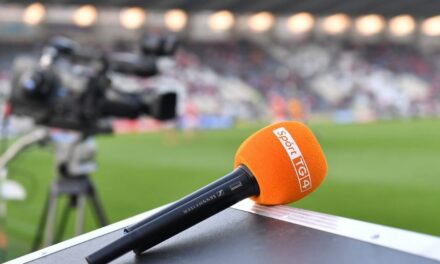
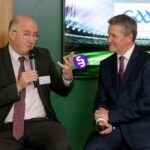
Image Credit: TG4 Sport

ABOUT SPORT FOR BUSINESS
Sport for Business is Ireland’s leading platform focused on the commercial, strategic and societal impact of sport. It connects decision-makers across governing bodies, clubs, brands, agencies, and public institutions through high-quality content, events, and insights.
Sport for Business explores how sport drives economic value, participation, inclusion and national identity, and how your story can be part of ours.
Through analysis, storytelling and convening the sector, it helps leaders understand trends, share best practices, and make better-informed decisions. It positions sport not just as entertainment but as a vital contributor to Ireland’s social and economic fabric.
Find out more about becoming a member today.
Or sign up for our Daily Sport for Business Snapshot email bulletins to get a flavour of the material we cover.
Sign up for our News Bulletins here.