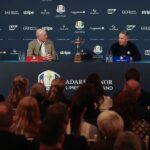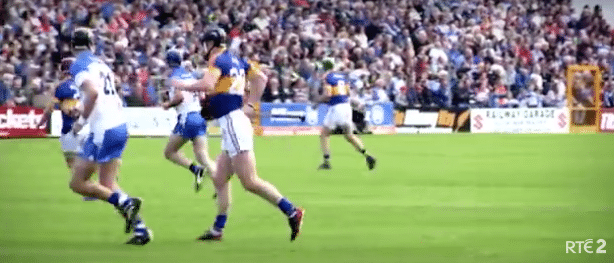
A professional GAA is the subject of a compelling documentary to be aired on RTE2 tonight at 9pm. Produced and presented by Jacqui Hurley the programme looks at elements of the game from the demands of training, the welfare and fitness of the players and the potential for pay to play.
Hurley was behind last years documentary on players featuring Lar Corbett, Anna Geary, Eoin Cadogan and Mikey Carton which earned rave reviews and captured the games from a new perspective.
Tonight’s show widens the scope by going to DCU with Professor Niall Moyna to look at fitness and to Ipswich Town where Stephen Hunt and Mick McCarthy contribute to the debate on what professional sport delivers for players but also takes away.
Sustain
Paraic Duffy, Director General of the GAA does not hide away from the debate but makes the fair point that a professional sport could not sustain the club model on which the true strength of the GAA is based.
The idea of professional sport in 2015 is one of wild excessive salaries paid within top level soccer and US sport. Rugby where we have the closest home based relationship is a level down and few other than the top stars there are making sums that would be considered enough to change your life.
The challenge is that the GAA, for all we love and cherish about it remains for the most part a local rather than a global sport. The television rights paid to the Premier League in a single year for a single game are broadly equivalent to that paid for the entire GAA Championship series.
Reality
That’s a reality of economics, and indicative of the value of having hundreds of millions of dedicated fans around the world.
Even the RBS Six Nations TV rights would be many times a multiple of what the GAA earns. It’s not because of better negotiation, it’s purely down to numbers and the engagement of fans across national boundaries.
It does seem skewed that after a weekend of 160,000 people paying to attend Croke Park that all the players will be back at work this week but the professional salaries that would make it most attractive to players in terms of a comparison to their peers in terms of effort and commitment would not be sustainable.
Chasing the dream
Away from inter county, club teams now at Championship stage in their respective counties will be training or playing five times a week chasing their dream. They will be out shaking buckets, crowdfunding online and selling raffle tickets as well to fund the cost of training facilities but they won’t get paid in the way the physio they have at the side of the pitch will.
Then again, neither does the PRO updating the website, the coaches preparing the next generation, the parents coming up with and running ever more imaginative fundraisers.
We do it because it’s our way of life. Once we were players, then we drift away, then we return as parents wanting to give our children the same sense of community, better now in many ways than it was, that we grew up with.
Short window
Professional sport is a short window in your life and only possible for the smallest group that play the games.
The GAA is a bit like a bumble bee. When you break down the constituent parts there is no possible way that it should be able to fly, and yet it does.
The payment of expenses, negotiated by the Gaelic Players Association has gone some way to ensuring that players are at least not out of pocket but is it possible to pay more?
The latest annual financial report showed that the GAA’s total revenues in 2014 were €56 million, made up primarily of €29 million in gate receipts and €16 million in commercial income. Operating expenses to generate that income, player and game development and distribution to clubs, provinces and other units of the Association left an operating surplus for the year of €132,000.
€37.71
There are around 2,300 men and 1,200 women represented by the GPA and the WGPA. To divide that surplus among the players on an equal basis would give them the princely sum of €37.71. If the idea of letting children watch a semi final like last Saturday’s for €5 was to be thrown out and full commercial charges applied to all tickets that number might raise but what would be lost.
The players deserve to be treated in the same way as professionals at the elite end of every sport. In terms of the GAA it’s not a simple equation.
We are looking forward to see what Jacqui unearths tonight that might make the path a little clearer.