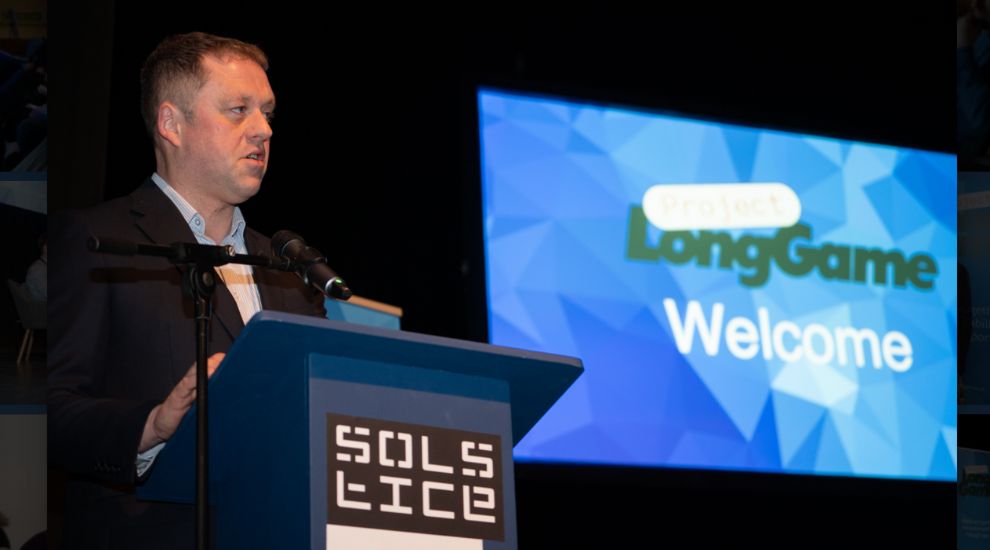
A sustainability and sport project aimed at the grassroots of sport kicked off in Meath last week when Project Long Game held its first public meeting in Navan.
Lead partners Meath County Council and Meath Local Sports Partnership have committed to ‘working together for sustainability through sport’ and this was the first example of how different stakeholders could come together to start the conversation.
The project’s first phase is aimed at helping grassroots clubs across the county understand how they can help build a healthier and more sustainable future for themselves and for future generations.
The Cathaoirleach of Meath County Council Nick Killian and the Chair of the Meath Local Sports Partnership Sharon Tolan were joined by Minister of State for Sport Thomas Byrne and CEO of Sport Ireland Una May to explore how sport can play a key role in tackling the critical social and environmental issues that we face.
With sport acknowledged as having a ‘unique status’ by the UN, it can help deliver effective action in key areas, including health and wellbeing, climate action, gender equality, biodiversity, accessibility, waste prevention and more.
Understanding that sustainability extends to a balance of positive social, economic and environmental activity, sports clubs can not only operate more sustainably but also help influence the behaviour of participants, supporters and communities.
“Sport is central to our lives and it’s a trusted ambassador”, explained keynote speaker Russell Seymour, the first Sustainability Manager at a major British Sporting Venue when he held that role at Lords cricket Ground.
“Through sport, we can also help people to talk about sustainability.”
A panel of representatives from clubs from the ‘big three’ sports of GAA, rugby and football spoke about the opportunities for club and the wider community.
Themes included the need for a club ‘champion’, the value of small, bite-size steps to start and the importance of funding support for clubs committing to the journey.
Keynote speaker, Padraig Fallon, Chair of the GAA’s Green Clubs Committee, gave an outline of the GAA’s approach to social and environmental sustainability. Away from the field of play itself, the organisation has accredited around 500 ‘Healthy Clubs’ – which work to improve the wellbeing of their members, supporters and wider communities.
The final panel allowed three further prominent voices involved with sport and sustainability to give their thoughts on the opportunity facing Meath sport.
Mide Ní Shúlleabháin, the GAA’s lead sustainability consultant, and Meath’s own triple Olympic athlete, Natalya Coyle, pointed respectively to the importance of collaboration and the role of athletes.
Although competitive off the field, ideas should be shared between clubs and members and implemented on a wider basis. Similarly, athletes and players have a platform to voice concerns and potential solutions – everyone has a role to play in this.
Seán McCabe, football’s first Climate Justice Officer with Dublin’s Bohemian FC reminded the audience that society will only deliver sustainable safety through community cooperation. “Our very future depends on this, he told the audience.”
This is an initiative we will be following with interest throughout the year as it develops and expands.