This article first appeared as a column in the Sunday Business Post on November 20th 2016.
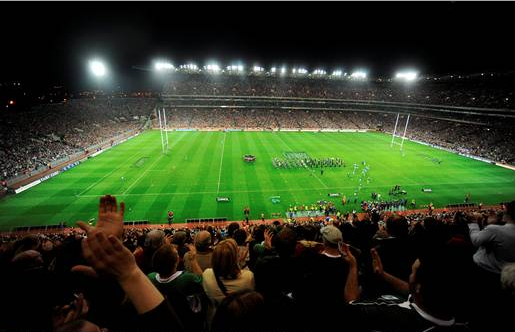
As a nation we love our sport. It’s a grá that quickens the heart regardless of the shape of the ball, the size of the pitch or even whether it involves a ball or a pitch.
So long as we think it will be good and we have a chance of doing well, sign us up.
That’s what Irish Rugby is hoping to do in bidding to bring the Rugby World Cup to these shores in 2023.
The launch team has been in place for 18 months and no stone has been left unturned in preparing for the long 12 months before a final decision is made.
Heritage
It is led by Dick Spring, bringing a rugby and a poltical heritage to the table. Hugo MacNeill has the same blend but with global finance in place of politics and Brian O’Driscoll, carries his recent induction to the Rugby Hall of Fame as the means by which to open doors that might otherwise prove sticky.
It has been a masterclass in political maneuvering with Leinster House and Stormont finding more common ground in relation to sport than might yet be the case with Brexit.
Politics with a small p have also been handled with a deft touch with the GAA fully on board from the word go and providing the majority of stadia to enable the bid make sense in terms of finance, logistics and scale.
Croke Park will host at least the Rugby World Cup Final and probably the two semi finals providing either just over or just under 80,000 souls with a chance to soar, depending on whether standing room on the terrace of Hill 16 is deemed acceptable.
Stirring
With everything in place and a stirring video of waves crashing and Liam Neeson emoting every bit as much as if he were in an All Black Haka, the stage is well set for the negotiation that now needs to take place among the 37 voters that will decide if it is to be Ireland, France or South Africa that gets to win the prize.
None of the three competing nations gets to vote which leaves the remaining ‘foundation’ members of England, Wales, Scotland, Australia, New Zealand and Italy with three votes each (18).
Argentina and each of the Regional Councils of Africa, Asia, Europe, North America, South America and Oceania get two votes each (14).
Canada, Georgia, Japan, Romania and the USA make up the current balance with five votes between them.
Vote
It may be that Argentina and Japan will each get one additional vote in time but whether this comes in time for the meeting of the World Rugby Council that will decide the outcome is not yet clear.
The game has long commenced but the IRFU will be pleased to have the first declaration of intent secured with Canada standing up for the boys in green this week.
Read more about the massive economic value of the Rugby World Cup
With New Zealand and Australia in town over the next ten days it could be that we will be seven up on the road to the majority needed of nineteen before we even get to the end of November.
Celtic brotherhood and reward for supporting England in hosting 2015 could put us within touching distance and there is a real confidence that this will happen.
Charms
The Women’s Rugby World Cup will take place between Dublin and Belfast in August, a key time to gently encourage nations who might not have fallen to our charms by then.
In sport it is always best to concentrate on your own game but to be very aware of your opponents strengths and weaknesses.
France would provide size, scale and certainty of delivery given its recent experience of hosting the FIFA World Cup, Euros and Rugby World Cup within the last two decades. The infrastructure is there, as is the potential audience.
Its Achilles Heel might be the distraction that a bid for the Olympic Games in 2024 might cause. Nobody likes to feel as though they are being used as a dry run and French hearts would dearly like to bring back the Games, more than anything else.
Future
South Africa’s bid is beset already by political challenges involving integration and potential funding. The Mandela tournament was an iconic occasion but World Rugby is trading in the future rather than the past.
Ireland’s triumph in Chicago, and clear reach to a US audience will be of interest commercially and likely be part of the USA bidding for and winning the right to host future editions of the World Cup.
The sponsors, the sport and the administrators would welcome that but the US is not in the race for 2023 and that leaves Ireland as favourites.
It is not a done deal but with Government underwriting of the €120 million ‘key money’, a Deloitte report estimating 450,000 overseas visitors and an €800 million boost for the nation, it is certainly something we can look forward to with excitement, and do everything we can to make happen.
Rob Hartnett is the founder of Sport for Business, a leading source of news, insight and innovation in the commercial link between sport and business and winner of the Best Emerging Sports Business at the Sport Industry Awards.