 The Federation of Irish Sport has called on Government to extend the tax relief currently in place for donations to sporting bodies in connection with capital projects to items of current spend.
Irish Sport is the only contributor to the not for profit sector not to benefit from a tax relief on “current spend”, and this change to the way in which sporting donations are treated, echoing those to arts and cultural programmes, would assist in the development of a culture of private sector investment in sport.
The type of programmes that would benefit would include those that bring different sports to new places; that support our existing and developing athletes as well as programmes that can target hard to reach members of communities; that can develop coaches and assist athletes.
This works for sport overseas. In the US, on average 25% of a university athletic programme is funded by private donations. The Australian Sports Foundation has raised AUS$230m since 1986 whilst BC Sport rose CAN$ 1.2m in 2013.
The Federation of Irish Sport suggests that a developed culture of giving to sport has the potential to make a real and lasting positive impact on the development on sport in this country.
It has been estimated that up to €100 million per year across all sports at all levels could be generated within 10 years.
This echoes the thoughts expressed at a Sport for Business members round table held earlier this year on the potential for developing a consistent and tax efficient culture of personal and corporate philanthropy.
A second call made as part of the submission is to reinstate Government funding of current programmes to 2011 levels over the next two years, a climb back of €4.4 million that was lost over the course of the recession.
The Federation was at pains to recognise the value of the Sports Capital programme which has delivered €70 million in funding over the past three years for the development of sports facilities but stressed that funding of the programmes and personnel to fill those venues, pitches and facilities could not be left to chance.
“A reversal of a portion of the cuts imposed on current funding as a result of the recession is now vital to ensure that our existing athletes are adequately prepared as they launch into Olympic & Paralympic qualification but also that efforts to grow grassroots participation can continue,” said Federation of Irish Sport CEO Sarah O’Connor.
“Whilst the Irish Sports Monitor 2013 published last week had a lot of very positive findings particularly, in relation to women and those over 65 however, there were also reductions in participation levels amongst certain sections of the population showing that participation in sport is not something that can ever be taken for granted”.
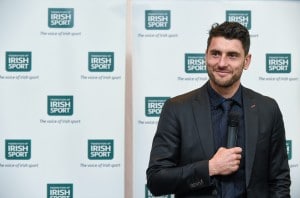 Dublin GAA star Bernard Brogan was also unveiled yesterday as the first President of the Federation, a title that has connotations of Star Wars.
“I believe in the power of sport and want to work with the Federation in terms of making as much noise as possible around the benefits it brings with the right level of targetted investment from public money,” Brogan told Sport for Business.
The Breakfast briefing also heard from a number of sporting organisations about programmes they are offering. Here are some highlights from our twitter reporting as the morning unfolded at Trinity College.
“Tricks for Sticks” brought Hockey into non traditional schools. 100,000 potential new players. Mike Heskin @irishhockey
— Sport for Business (@SportforBusines) October 8, 2014
“From 3 lengths to 6000 metres in 12 weeks” @killianbyrne tribute to @swimireland impact on his life @sportireland breakfast — Sport for Business (@SportforBusines) October 8, 2014
“With a bit more we could do so much more” Damian McDonald of Horse Sport Ireland @Sportireland breakfast. — Sport for Business (@SportforBusines) October 8, 2014
“All our clubs are health promotion units.” Colin Regan of @officialgaa at Irish Sport breakfast.
— Sport for Business (@SportforBusines) October 8, 2014
‘We’re all in the same boat as regards financial challenge of commitment.” Matt McGovern punning with intent @ISA_Performance
— Sport for Business (@SportforBusines) October 8, 2014