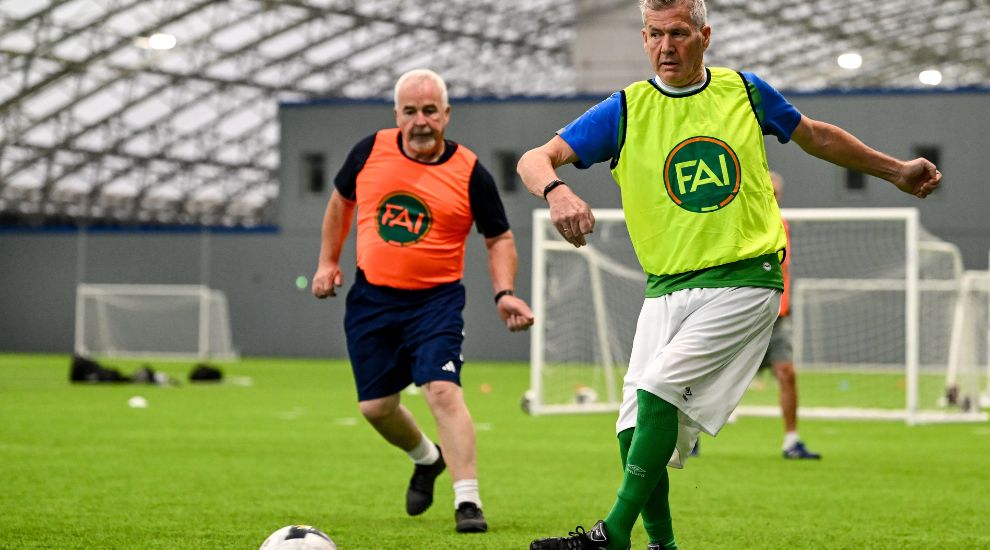
Ireland’s first Walking Football Strategy has been launched with an ambition to increase participation five-fold over the next three years and establish teams in every county in Ireland.
The strategy, covering 2026 to 2029, was launched by Minister of State Jennifer Murnane O’Connor TD and is being supported by the Football Association of Ireland alongside Age & Opportunity, Healthy Ireland, Sport Ireland and the Irish Men’s Sheds Association.
Around 1,000 people currently participate in Walking Football in Ireland, with the new strategy setting a target of 5,000 players by the end of 2029.
It represents another important strand in Irish sport’s growing focus on lifelong participation and active ageing, particularly against the backdrop of significant demographic change.
The number of people aged over 50 in Ireland is forecast by the Central Statistics Office to reach 2.62 million by 2041, representing 43 per cent of the population.
Walking Football is aimed predominantly at men aged 50 and over and women aged 40 and over. The adapted, non-contact format uses a slower pace and simplified rules, creating opportunities for both recreational and competitive participation later in life.
The strategy has been developed by the Walking Football National Development Committee, which brings together representatives from the FAI, Age & Opportunity, Healthy Ireland, Sport Ireland, the Irish Men’s Sheds Association, and grassroots participants.
Its ambition to have Walking Football teams operating in all counties provides a clear framework for developing the sport nationally through football clubs and community organisations.
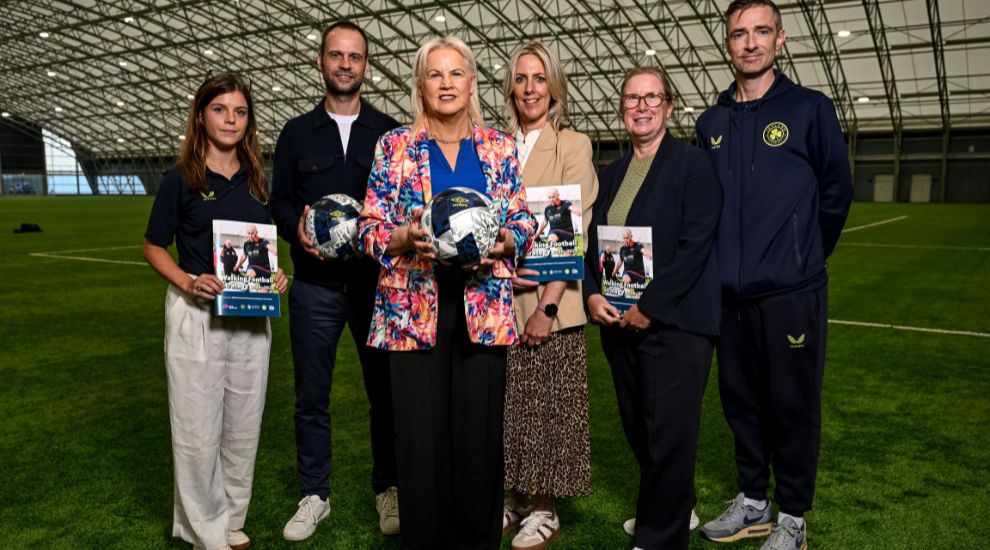
“Walking Football offers a range of physical, mental and social benefits, providing a low-impact form of exercise that promotes social connection and improved mood,” said Minister Murnane O’Connor.
“We have an ageing population, and it is important to promote positive health and wellbeing at all stages of life. Activities such as Walking Football promote healthy ageing and enhance the quality of life for older adults.”
Sue Guildea, Active Programme Manager at Age & Opportunity, said demand was already evident at grassroots level.
“Walking Football is a fun, non-contact sport and is a great way to socialise and keep fit. We have already seen strong demand for Walking Football at grassroots level and this first strategy for the sport in Ireland responds to its growing popularity among older adults.”
FAI Director of Football John Martin said the format was an important part of making football available throughout people’s lives.
“Everyone should be able to enjoy football, no matter their skillset, ability or age, and this is why Walking Football plays such an important role in keeping more people involved in the game for longer while also providing opportunities for others to be active within their local clubs and communities.”
Increasing participation among an ageing population is becoming an increasingly important element of national sports policy, and Walking Football provides an established game with relatively low barriers to entry, a strong social component and the potential to use existing club and community infrastructure.
Moving from 1,000 to 5,000 participants by the end of 2029 will provide a measurable test of how effectively that potential can now be converted into sustained participation nationwide.
Watch out in 2027, when Sport for Business will focus in more detail on the importance of active ageing.


 The FAI and Sport Ireland are full members of Sport for Business. Sky Ireland is the official partner of our football coverage.
If you would like to be part of the Sport for Business community and see your organisation in our content, on our stages, and in the conversation happening every day around the commercial world of Irish Sport, email us today and let’s see what is possible.
Image Credit: FAI, Sportsfile.com
ABOUT SPORT FOR BUSINESS
Sport for Business is Ireland’s leading platform focused on the commercial, strategic and societal impact of sport. It connects decision-makers across governing bodies, clubs, brands, agencies, and public institutions through high-quality content, events, and insights.
Sport for Business explores how sport drives economic value, participation, inclusion and national identity, and how your story can be part of ours.
Through analysis, storytelling and convening the sector, it helps leaders understand trends, share best practices, and make better-informed decisions. It positions sport not just as entertainment but as a vital contributor to Ireland’s social and economic fabric.
Find out more about becoming a member today.
Or sign up for our Daily Sport for Business Snapshot email bulletins to get a flavour of the material we cover.
Sign up for our News Bulletins here.