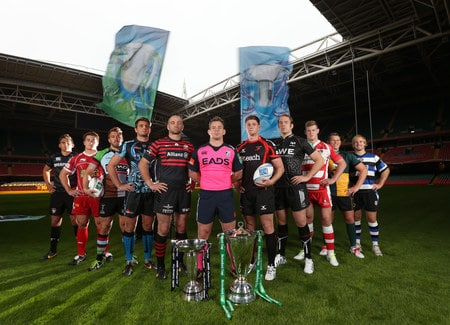
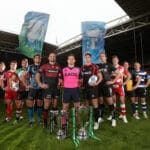
 The Heineken and Amlin Cups continued their series of launches around the competing nations yesterday with a set piece event at the Millennium Stadium in Cardiff for the English and Welsh clubs.
It would not be an overstatement to say that the atmosphere was frosty given the standoff that exists over the future of European Rugby at club level, and possibly beyond that.
There will be a meeting of European Rugby Cup and the appointed mediator Graham Mew on October 23rd but little of what has been said in public gives indication that this will have a positive outcome.
At it’s heart, is the battle over TV rights between Sky Sports who have a contract to show the Heineken Cup under the auspices of the ERC, and BT Sport who have paid over €180 million for the right to show Aviva Premiership matches and whatever cross border competition the clubs of England participate in.
There is precious little room to manoeuvre between those two conflicting positions and with French clubs lined up alongside their English counterparts, the strongest hand appears to lie with the new order.
Rumours have continued to persist that Welsh and at least one irish province appear ready to sign up to the new Rugby Champions’ Cup. This would throw down a gauntlet to the Welsh and Irish Rugby Unions which, if lifted could preface a split from which nobody would win.
Rugby considers itself somewhat nobly to be a sport based on sound principles of honour and an ironically amateur ethos. There is a genuine sense that the sport must come first and that again is a fine position but one which does not take enough account of the power of vast sums of money.
That money comes through television, through paying attendance to see the best players in the biggest games and the sponsorship and commercial partnerships that follow naturally from businesses that want to associate with the sport.
A European Cup without England and France already exists in the shape of the RaboDirect Pro12. It’s a good solid competition which attracts audiences and TV viewers but which is stronger because of the Heineken Cup that sits above it in the minds of fans, players and administrators alike.
An Anglo-French tournament would similarly lack the scope and breadth of competition that the wider European rugby family brings.
If there were to be no final deal to save a premier European tournament, rugby will be a loser, as well as all its constituent parts.
For that reason a deal is almost certain to happen. The shape though will be determined more by the money on the table, and the money at risk, than notional ideas about the balance of power between club and country, Unions and club owners.
Soccer faced similar challenges and is stronger across Europe as a result of creating a Champions’ League that is fit for purpose, that has a back up in the Europa League that grows stronger each year and will continue to do so, and that created an environment that enables professional sport to exist and thrive, albeit in the English case especially, through the financial assistance of mega wealthy club owners.
Rugby may consider itself to be cut from a different cloth but the reality is that major professional sports in the modern era have a lot more similarities than differences. The shape of a ball is less important than the number of people that are willing to pay to watch it being kicked or thrown.