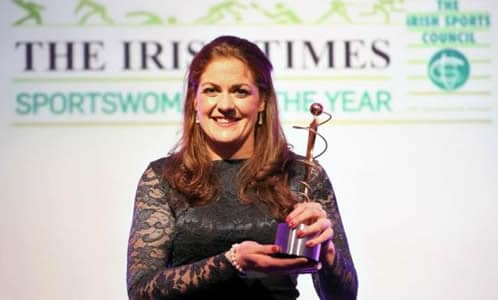
Fiona Coghlan was the face and voice of Irish Women’s Rugby as it climbed into the national consciousness with ‘overnight’ success in 2013 that had been a long time in the making.
She came to the sport late while studying to become a PE teacher at the University of Limerick. UL Bohemians provided a home for her sporting ambition and maintained a hold on her long after she had left the south west to start a career in Dublin and a captaincy of Ireland that led to previously unimagined success.
She remains the only Irish player to have captained a side to victory over New Zealand, the only Irish captain to have led her side to a World Cup semi-final and one of only three to have led the team to Grand Slam success.
Opportunity to be the best
“You want the opportunity to be the best you can be and that happens far from the media spotlight and the big days,” she told Sport for Business at last week’s conference on ‘Levelling the Playing Field’ for Women’s and Girls in sport, held in Dublin.
“The media ‘discovered’ us in 2012 when late flights and missed trains meant we arrived for a six nations game in France with less than ideal preparation.”
“The fact that we lost the game by a single point and even then after a disallowed try was barely commented upon, and the media circus rolled away again.”
“In 2013 we robbed our opening game in Wales and then beat England 25-0 at Ashbourne, the first Irish Women’s team to do so and yet coverage in the paper the following day amounted to 50 words.”
No trophy
“There was more interest from those in power when we won the Triple Crown against Scotland, but it was indicative perhaps of the game at the time, only two short years ago that there was no trophy for doing so.”
“The benefit of media coverage then though meant we had 3,000 fans back at Ashbourne for the likely Championship decider against France and then the RTE TV cameras on us through the rain and the mud of Italy when we won the Grand Slam.”
“That skyrocketed us into the public spotlight with an appearance on the Late Late show part of a whirlwind of engagement and publicity.”
We rolled with it not out of a sense of making a name for ourselves but to raise awareness of the game, to get more girls playing and more people coming to see our games.
Clear progress
“The 2014 Six Nations was a disappointment on the pitch but we had Aon on board as sponsors, a strength and conditioning programme in place and there was clear progress being made. Playing against Italy at the Aviva Stadium was a tribute to the strides the Women’s game had made.”
“All we wanted was to be better than we were before.”
“To have the opportunity to be the best that we could be and the World Cup was where we wanted to measure ourselves.”
“Live coverage on TG4 put the sport in the spotlight and audiences of half a million were something we could only have dreamed about back in 2012 on the late train in France.”
Failed to perform
“Beating New Zealand was very special but we wanted to go all the way and it was a real blow how we failed to perform against England in the semi final.”
“We were not critiqued by the media that time, in the way that a men’s team would have been, and yet we deserved it.”
“This is sport at the top level and we don’t do it to be thought of as plucky losers.”
“England were great that day and would likely have won regardless but we never gave ourselves a chance and that hurt.”
Platform
“We moved on and winning the right to host the 2017 World Cup here in Dublin and Belfast is a great platform to take the sport forward again.”
“That won’t be achieved overnight but so long as we do our best to move it forward one or two steps at a time then we will get there.”
“It’s too important not to succeed.”

Coming up through the week on Women’s Sport through the week on Sport for Business
Tuesday:
A reflection on the potential for an Irish version of the ‘This Girl Can’ campaign which has generated significant traction in England albeit at a cost of £10 million. Could we run a similar campaign here, what would be the logic and the measurement underpinning it and what would it achieve?
Wednesday:
The Leadership Gap – 44% of those competing at the London 2012 Olympic Games were women but in leadership roles within sport on a global basis the number is only 15%. In terms of behavioural change it seems the biggest challenge will be in this area rather than in pure participation.
Thursday:
The Media Question – It’s one that absorbs those in the media and in sport. It’s also what normalises the telling of the stories around Women’s sport.
Friday:
The Sponsorship Question – We will talk to those who are putting their marketing muscle behind women’s sport across a range of area from gaelic games to rugby, soccer and hockey to horse racing. Are they winning?