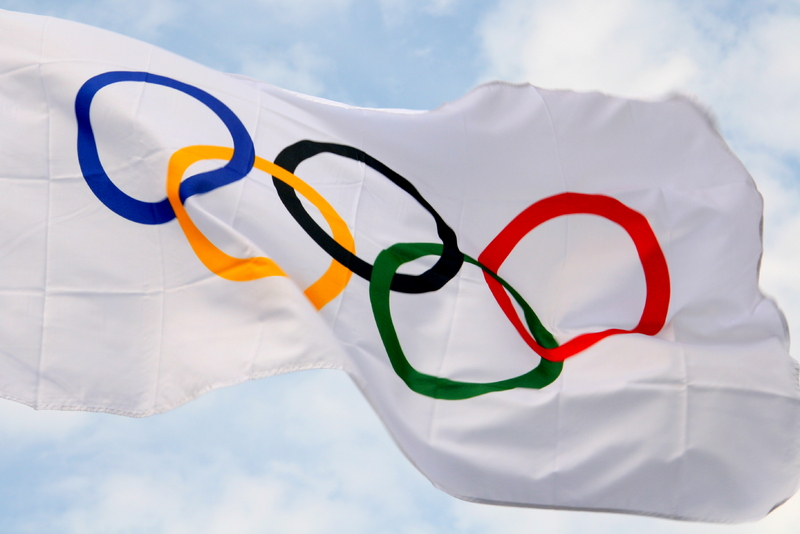
 The Olympic Council of Ireland, led by president Sarah Keane, has spent the past twelve months engaged in a programme of reform with athletes and National Governing Bodies placed at the centre of decision making.
In today’s Guest Opinion Feature on Sport for Business Scott Graham, a Consultant with Teneo PSG dives into the figures of how National Olympic Councils around the world are drawing commercial partnerships and points the way towards how that might be possible for Ireland.
Considerable progress has been made, including the establishment of an athlete commission, and with the appointment of Peter Sherrard as the organisations new CEO the Irish Olympic movement has clearly begun a new chapter.
The Olympic Council of Ireland recently published it’s 2018-2024 Strategic Plan and while much of the coverage following its launch focused on the dark days of the past, some of the positives from this plan may have slipped under the radar.
Read our Coverage of the Strategic Plan: To The Olympics and Beyond
There are many refreshing aspects to the Strategic Plan and, as an example of the new board’s ambition, the OCI has outlined their desire to be financially independent as soon as possible and to become a net contributor to Irish Sport.
This will do away with the days of old where the OCI was considered by some as a glorified travel agent.
Financial independence and a reduced dependence on government funding will allow the OCI become a more credible and more persuasive advocate for the Irish Olympic movement and the various sporting bodies affiliated to it.
After all, it is difficult to bite the hand that feeds you. This model is used to great success by the US Olympic Committee which receives no direct government grants, operating with a greater business focus and working closely with high net worth donors to deliver medal success.
With the government’s current funding for Irish sport largely unchanged over the past 10 years, strong advocates can only be a good thing for those who believe in harnessing the power of sport for good.
While the OCI plays an important role in delivering medals at an Olympic level, the good work being done by Sport Ireland and National Governing Bodies provides the real breathing ground for talent, helping to identify and foster athletes with potential.
The OCI’s Strategic Plan recognises the importance of these key stakeholders and commits to working closely together to deliver the best support services possible.
International Income
Becoming financially independent may seem farfetched for an organisation in brand recovery mode and with limited commercial partnerships. However, New Zealand, a proud sporting nation with a population the same as our own, is a perfect case study.
The New Zealand Olympic Council brought in an enviable $11.762m NZ dollars (€7 million) in 2016 with over 50% of funding coming from commercial partners, benefactors and trusts during the four years leading up to Rio 2016.
2016 New Zealand Olympic Council Income Breakdown
• Games income $4.23m
• Commercial partners $2.78m
• High Performance Sport NZ funding $2.14m
• Games Donations $724,000
• Other Donations $630,000
• Special Projects $372,000
• Charitable Gaming Trusts $332,000
• Fundraising $320,000
• International Olympic Committee $203,000
• Miscellaneous income $31,000
In Ireland, the Olympic Council must contend with competition from the big three of Gaelic Games, Soccer and Rugby that dominate the sponsorship landscape.
The GAA’s Annual Report outlines how the organisation made €19.71 million from ‘sponsorship and media’ in 2017, gobbling up a sizable chunk of brand’s sponsorship spend in Ireland.
The New Zealand Olympic Committee is up against arguably a bigger beast in the form of the All Blacks.
New Zealand Rugby takes in $55m NZ dollars in sponsorship revenue, a sizable piece of the sports sponsorship pie in that market.
Other national Olympic committees are generating huge sums from sponsorship proving what is possible when a nation values Olympic sport.
National Olympic Sponsorship Revenue 2015 (per annum)
• USA Olympic Federation €80.2M | 26 partners
• Japan Olympic Federation €34.9M | 39 partners
• Canada Olympic Federation €27.8M| 24 partners
• Netherlands Olympic Federation €10.5M| 6 partners
• UK Olympic Federation €8M| 13 partners
• Germany Olympic Federation €6.5M| 17 partners
• Italian Olympic Federation €5.5M| 12 partners
• French Olympic Federation €5.45M| 9 partners
• Australia Olympic Federation €5.1M| 22 partners
The US Olympic Committee is by far the highest-earning in terms of sponsorship, mostly due to its 27-year-old revenue share agreement with the International Olympic Committee, which guarantees the USOC 20% of central IOC sponsorship income. In 2012, terms of the deal were revised and, from 2020 to 2040, the USOC will receive 10% of central IOC revenue, a 50% cut.
The Japanese Olympic Committee, in second place, benefitted from early domestic sponsorship deals for the Tokyo 2020 Games which span a huge range of business sectors. The additional revenue in the build-up to their home games will help with athlete preparations and their chances of medal success.
Interestingly, the Netherlands Olympic Council generates a relatively high level of income from a limited number of partners. The Netherlands team achieved 5th place at the 2014 Sochi Winter Olympics and 11th place at the 2016 Rio Summer Olympics which has cemented their status as an internationally dominant sports country and allowed them to negotiate high-value deals.
Commercial Pulling Power
The commercial pulling power of the 5 rings in a global context is immense and something the OCI have a real opportunity to capitalise on. Despite the persistent issue of doping which has affected many sports over many years, the Olympic movement continues to grow.
The International Olympic Committee generated almost $1 Billion from sponsorship revenue and $4.1 Billion from broadcasting rights in the lead up to Rio and has more than doubled its revenue in the last 20 years. Much of this is driven by increased viewership figures and the commercial appeal of Olympic sport.
The OCI’s new leadership team are continuing the recovery process and beginning to highlight the incredible opportunity they have for brands to associate themselves with the 0.0001% of the world’s population who can call themselves an Olympian.
In an Irish context, the appeal is to support home-grown heroes who are revered by the Irish public, 73% of whom call themselves a sports fan according to Teneo PSG’s Sport Sentiment Index published in December and Highlighted at The Sporting Year Ahead in January.
The Olympic Cycle
While the Winter Olympics is not exactly top of the sporting agenda for the Irish public it has demonstrated that there is more to the Olympic movement and the Olympic Council of Ireland than the Summer Games which come into public consciousness every four years.
In fact, as well as the Summer and Winter Games, the OCI plays a role in supporting Irish athletes at the European Games and young athletes at the Youth Summer and Winter Games. These events, as well as the many development, education and community programmes referenced in the OCI’s Strategic Plan, will provide opportunities for brands to activate a sponsorship outside of the traditional 4-year cycle.
In an age where people do their best to block and avoid ads, look for experiences, trust their peers more than advertising messages and, according to Teneo PSG research, clearly favour companies that support teams, individuals, events or causes that they too support, sponsorship is playing an increasingly important role in allowing brands to connect with customers.
With a new approach to doing business, the Olympic Council of Ireland is well positioned to help brands achieve their marketing objectives as well as Ireland’s sporting ambitions.
Scott Graham is a consultant at Teneo PSG, winner of the ESA European Sponsorship Agency of the Year 2017.
Sign up today for our free daily news digest covering the commercial world of sport or discover the benefits of becoming a full member alongside the many leading organisations whom we serve.