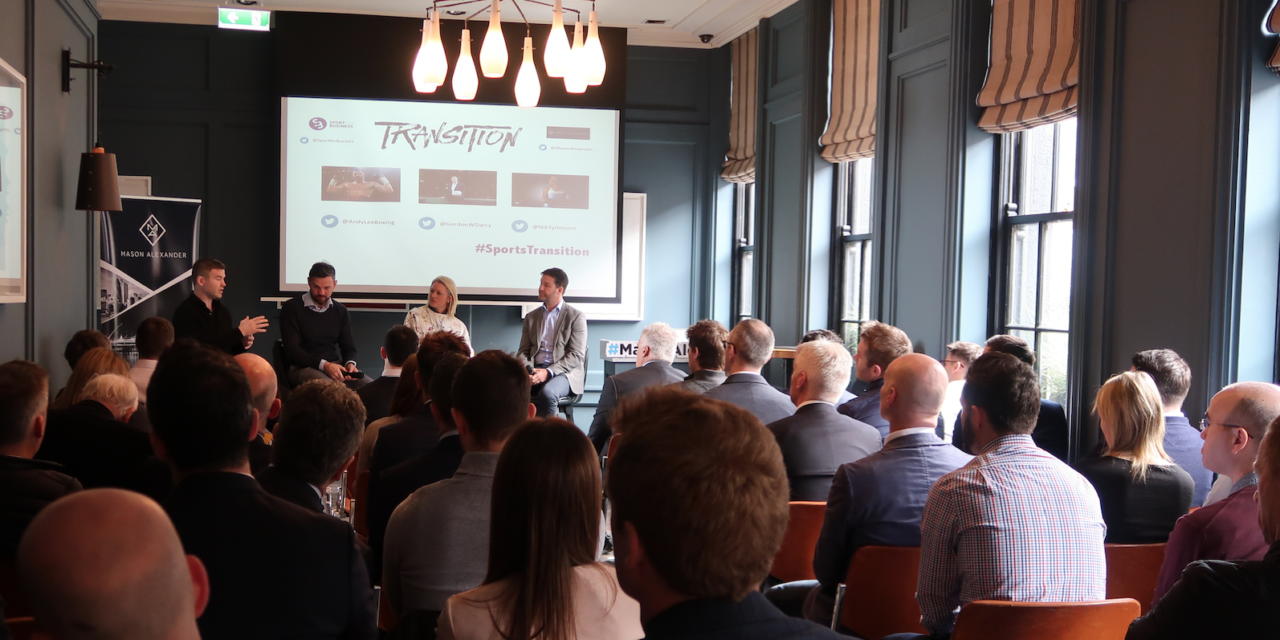
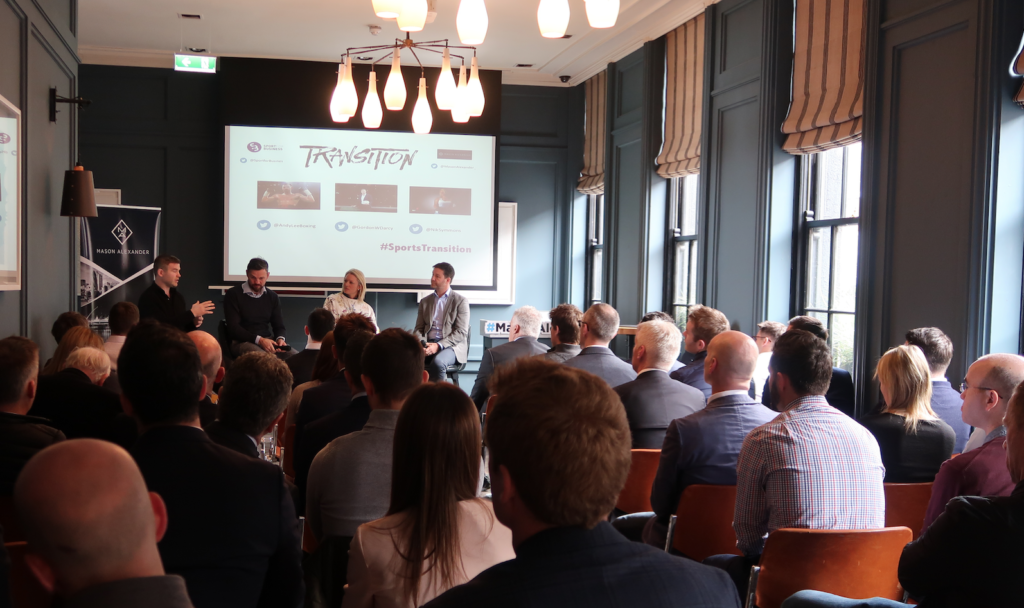
Transitioning from Sport to Business was the subject of the latest in our series of Sport for Business Breakfasts yesterday morning, held in partnership with Mason Alexander and featuring Gordon D’Arcy, Andy Lee and Nikki Symmons sharing their experience with a room filled with leaders from the sporting and business communities.
“There is an economic reality to life,” said D’Arcy who admitted to being aware of the fact that sport would end at some point but regretting not putting enough into preparing for it.
“It’s very hard to plan for because you are not sure how the culture of an office will be different to those in a sporting environment.”
“You don’t have the same sense of identity you get from a sporting career. It gives you a strong sense of worth and finding that in the real world can be a real challenge.”
“The workplace is not designed to be a place for athletes to transition into, it\s designed for people who are there to work.”
Boxing is very much a young man’s sport and I made a decision that enough was enough for me,” said Lee.
“We had a new baby daughter and life was changing. So far it’s been fine. I don’t miss training and I don’t miss being punched in the face.”
“I was lucky through my career that I was well advised. Ciaran medlar from BDO has always helped me out and taken care of me so I was able to avoid becoming a boxing cliche and now I have a bit of time to decide fully what I want to do next.”
“I think it’s important to define yourself by what you are rather than what you were,” said Symmons who now works within her sport at the International Hockey Federation in Lausanne.
“I had a lot of injuries and had to come to terms with retirement at an early stage and while I exited quickly when the time came it came back to bite me later, having not dealt with it properly at the time.”
“One of the biggest difference is the timeframes we deal with,” continued D’Arcy.
“It has made my head nearly explode getting to grips with the timings that apply to business. In sport for us, long-term was maybe six months and short-term was very immediate.”
“It’s a big mistake to hire somebody for their name. That will lead to frustration. It only lasts for a short period for the company and the individual wants to learn, not live in their past.”
“Like a good coach, a good employer will give you the opportunity to learn and perform to their best.”
“Performance is all about two things, performance and application,” said Lee when asked about the transferable skills that make elite performers in sport a good fit for business.
“Bringing an attitude that the only way to get results and succeed is through hard work.”
“Adaptability is something that comes naturally in sport which can be a real benefit as well,” added Symmons.
“Finding solutions in a changing environment is something we can bring to a workplace team that adds value, and in return, there is plenty we have to learn but we can do that.”
The discussion between our three panellists was hosted by David McHugh of LineUp Sports.
Join us tomorrow for part two of our review of the discussion covering networking, media, mental toughness and more.
Here are some of the posts from Social media that appeared through the morning…
Great morning listening to @Gordonwdarcy @Niksymmons @AndyLeeBoxing about how they #sportstransition in the working world! Well done @SportforBusines @MasonAlexander pic.twitter.com/rzsMwwoJAs
— Niamh McInerney (@niamhaoconnor) May 1, 2018
“I knew when to stop after I got run over by a prop having had a running start over him.” @Gordonwdarcy #SportsTransition pic.twitter.com/7lRbjAfXy0
— Sport for Business (@SportforBusines) May 1, 2018
Great event hosted by @MasonAlexander_ this morning in @thedeanhotel on athletes transition out of sport. Great to see our members @shanesupple and new Shels CEO @daveoc91 in attendance. pic.twitter.com/BvkptS3wYt
— PFA Ireland (@PFAIOfficial) May 1, 2018
Sign up today for our free daily news digest covering the commercial world of sport or discover the benefits of becoming a full member alongside the many leading organisations whom we serve.

Image Credit: Jenny Kinmouth, Mason Alexander