 The Federation of Irish Sport holds its Annual Conference at DCU today with inclusivity at the heart of what will be debated.
A survey undertaken before the event has revealed that participation rates among those born outside of Ireland, making up 17.3% of the population, are significantly below the national average.
19.7% of Irish-born adults are members of a sports club, compared to just 7.7% of non-Irish-born adults. In effect, non-Irish-born adults are 61% less likely to be involved in organised sport.
Overall, 43% of the Irish adult population are involved in some social form of sports participation, this figure drops to 30% among those in the lowest income bracket and just 23% among adults with disabilities.
These will be the challenges discussed today with the theme being one of building greater inclusivity in Irish sport
The Irish sporting community will be challenged on its record in delivering real inclusivity; taking in those with disabilities, members of the LGBT community, ethnic minorities and the elderly.
The theme reflects the priorities set out in the Irish Government’s Irish Sports Policy 2018 – 2027 published last July.
The Policy was clear in its statement that “Sport must be welcoming and inclusive, offering appropriate opportunities for participation and improvement to all.”
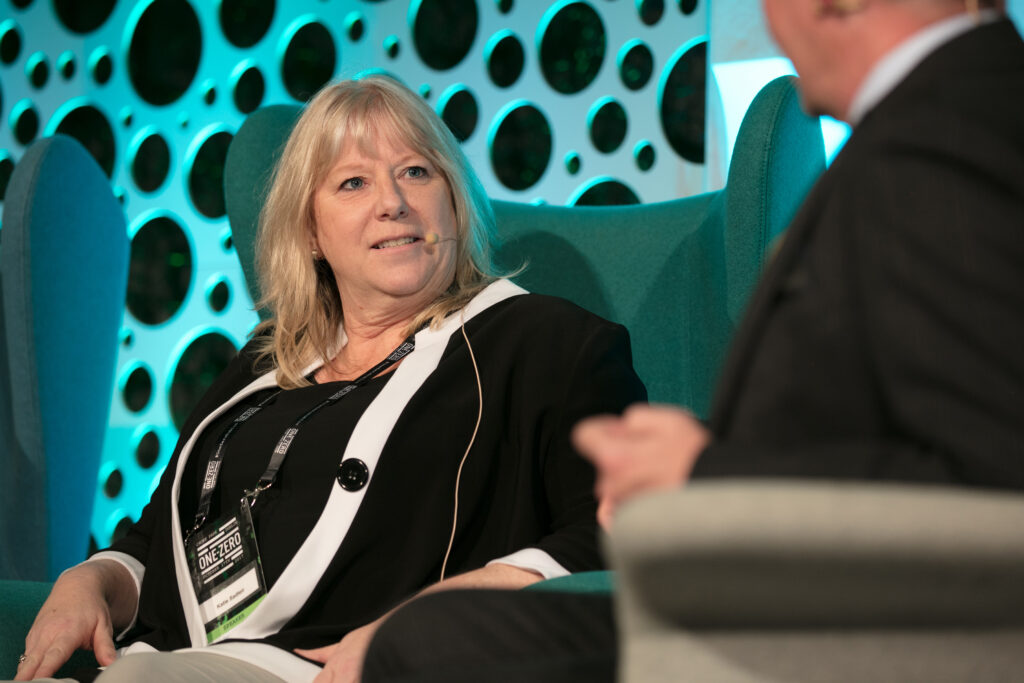 Whether that is the case and how it can become so will be addressed by speakers including Gareth Thomas, former Wales rugby international and gay rights advocate; Piara Powar of Football Against Racism (Europe) who will outline his vision for harnessing football to propel social cohesion; Boidu Sayeh who will share his experience of leaving war-torn Liberia, aged 8, without his family to start a new life in Westmeath and his subsequent sporting success and challenges; Katie Sadleir, GM of Women’s World Rugby (pictured above in conversation with Rob Hartnettat the 2017 One-Zero Conference); Jon Morgan of Disability Sport Wales and the new Chair of Cara; Michelle Daltry, Hugo MacNeill, Trevor Ringland and Colin Regan from the GAA.
“Sport isn’t just about All-Ireland glory, World Cup qualification or Olympic success,” said Federation of Irish Sport CEO Mary O’Connor.
“We all recognise the invaluable role it plays in bringing communities together, stimulating personal development and fostering greater social cohesion across society.
“While nearly half of Irish adults are involved in some level of sports participation, unfortunately, these numbers drop off dramatically when it comes to the economically disadvantaged, adults with disabilities, ethnic minorities, the LGBT community and ageing populations.”
“Sport has the potential to be a key gateway for integrating foreign-born populations into the local community, however, the research suggests non-Irish born adults are 61% less likely to be a member of a sports club versus those born in Ireland.”
“While a lot of great work is being done by many of our member organisations and local grassroots sports clubs, we want to use the conference as an opportunity to ask our members what more can be done to increase participation rates among these communities.”
“Equally, if we are to inspire social change and deliver on the action points outlined in the National Physical Activity Plan and National Sports Policy 2027, continued Government support is essential. This starts with funding. More specifically, making greater funding available for bespoke programmes aimed at tracking and driving sports participation amongst underrepresented strands of the population and at-risk communities.”
“In the 2019 Budget, the Government increased current funding by 11%. While this was welcomed by the sports community, it is critical that the Government again honours its commitment in the 2020 Budget, as set out in the National Sport Policy 2027, to double annual current funding over a ten-year period.”
Sport for Business will be there today and will report on what emerges tomorrow.