
The FAI has unveiled its new four-year strategic plan for the sport under the headline ‘It’s Time To Change The Game’, setting out a roadmap aimed at improving participation, facilities and player development across Irish football.
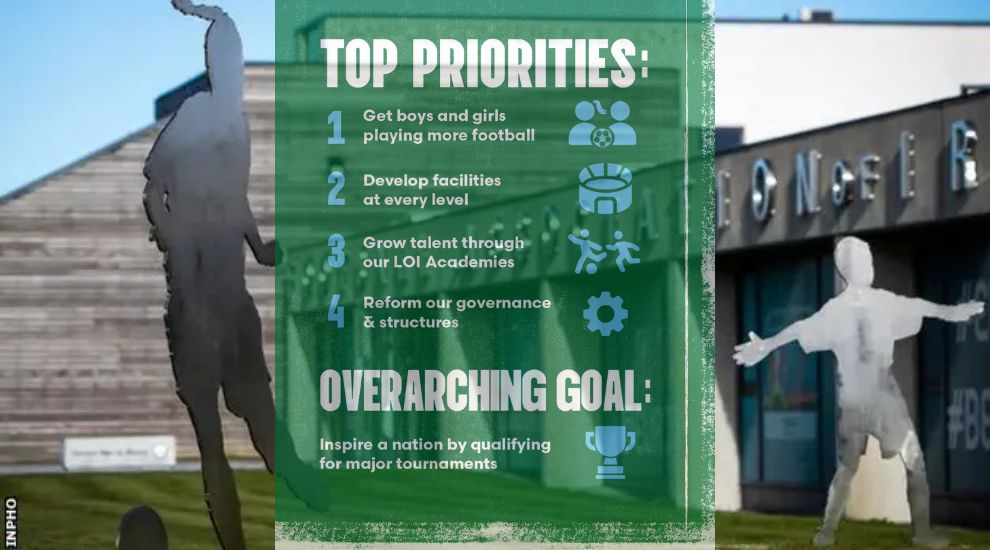
The 2026–2029 FAI Strategy seeks to build what the governing body describes as a self-sustaining ecosystem for Irish football, with the long-term ambition of inspiring the nation through the success of Ireland’s international teams and consistent qualification for major tournaments.
Three core priorities will shape the next strategic cycle: increasing the number of boys and girls playing football, improving facilities at all levels of the game, and strengthening the development pathway through academies linked to the League of Ireland.
Addressing underperformance
Despite football being the most played sport in Ireland, the strategy acknowledges significant challenges within the game. The FAI notes that Ireland is currently the third most underperforming nation in UEFA when population size, participation levels and available resources are taken into account.
According to the association, that gap is reflected in several areas including international results, club resources and player development pathways.
Ireland’s international teams have qualified for fewer major tournaments than comparable European nations, while many League of Ireland clubs operate with fewer staff, facilities and commercial capacity than their European counterparts. Access to clear player pathways also varies around the country, limiting contact time and development opportunities for young players.
At grassroots level, the FAI says many clubs still lack the infrastructure required to support modern participation and development.
Three “gamechangers”
To support the strategy, the FAI plans to introduce three key initiatives described as “gamechangers”: the Global Ireland Football Foundation, a new Football Pathways Plan, and expanded League of Ireland academies.
The association believes progress in these areas will help establish the foundations for a stronger football ecosystem capable of delivering success across grassroots, domestic leagues and international teams.
Signs of progress
While highlighting areas for improvement, the FAI also pointed to recent positive developments in the sport.
More than €122 million has already been raised towards a long-term €863 million infrastructure investment target, while Ireland ranks 14th among UEFA’s 55 member associations for overall participation.
Participation among women and girls has grown by 79 per cent, while the domestic game has also seen economic impact, with a BDO report in 2024 estimating the League of Ireland contributes €164.7 million to the Irish economy.
Other milestones include the qualification of the Republic of Ireland women’s national football team for its first major tournament at the 2023 FIFA Women’s World Cup, a 10 per cent increase in disability football players and significant growth in commercial partnerships.
Call for change
FAI President Paul Cooke said the strategy followed extensive consultation with stakeholders across Irish football.
“Following an extensive period of consultation with stakeholders from around the country, we are proud to launch the 2026–2029 FAI Strategy that aims to have a transformative impact on the future of Irish football,” he said.
“With our priorities focused on facilities, football development and the League of Ireland, it is vital that we use these pillars to affect all areas of our game and ensure that we are successful on and off the pitch.”
FAI Board Chair Tony Keohane said the plan aims to create a system where all participants in the sport play a role in delivering progress.
“It is hugely important that the 2026–2029 FAI Strategy is used to help build a self-sustaining ecosystem that will ensure our players, coaches, administrators, referees, volunteers, supporters and stakeholders know that they all have a part to play in delivering success for Irish football.”
FAI Chief Executive David Courell said the next four years represent a crucial period for the game.
“It is exciting to launch the 2026–2029 FAI Strategy as we set about getting more boys and girls to play more football, developing facilities at every level and growing talent through our League of Ireland academies,” he said.
“This is a crucial period for Irish football and we must make necessary changes so that we are no longer the third most underperforming nation in UEFA. Put simply, we must modernise how we develop and deliver football.”
The full strategy document is available to download from the FAI website.
We will be diving into its constituent parts in greater detail over the next week.
Image Credit: Sport for Business
ABOUT SPORT FOR BUSINESS
Sport for Business is Ireland’s leading platform focused on the commercial, strategic and societal impact of sport. It connects decision-makers across governing bodies, clubs, brands, agencies and public institutions through high-quality content, events and insight. Sport for Business explores how sport drives economic value, participation, inclusion and national identity, and how your story can be part of ours.
Through analysis, storytelling and convening the sector, it helps leaders understand trends, share best practice and make better-informed decisions. Its work positions sport not just as entertainment, but as a vital contributor to Ireland’s social and economic fabric.
Find out more about becoming a member today.
Or sign up for our twice-daily bulletins to get a flavour of the material we cover.
Sign up for our News Bulletins here.
Upcoming Events