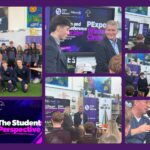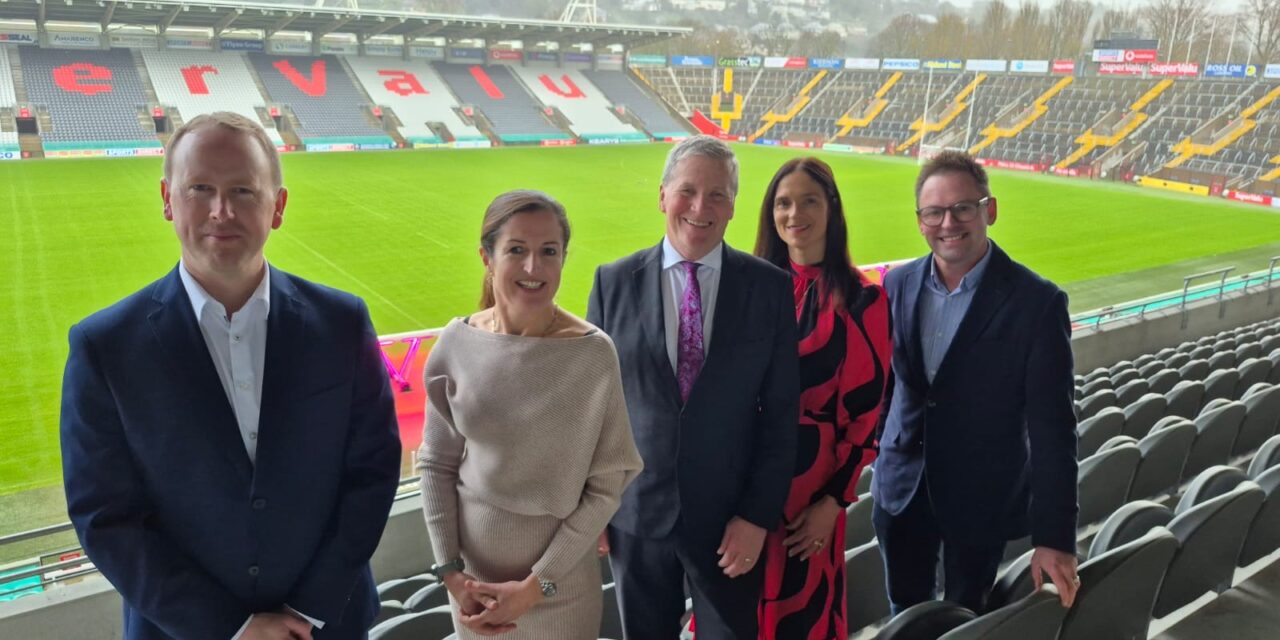
Sport can sometimes be treated as a collection of individual passions, separate codes, separate venues, separate governing bodies and separate ambitions. What was striking at this morning’s Sport for Business / Leading Sport Network event at Páirc Uí Chaoimh, hosted by Rob Hartnett of Sport for Business, was the strength of the case for thinking differently.
This was not a session about results on the field, nor about how Cork might win more trophies. It was a conversation about sport as infrastructure, as economic engine, as social glue and as a practical way of shaping the future of a city, a county and a wider region.
Hartnett set the tone from the outset by framing sport as the one subject that still brings people together. In an era when conversations around weather, politics or the cost of living can quickly become wearying or divisive, he pointed to sport as a shared language. In Ireland, and especially in Cork, that matters. It matters emotionally, culturally and commercially.
He also grounded the discussion in hard value. Referencing the GAA’s social return on investment work, he noted the scale of economic and social contribution that sport already makes, while pointing as well to the reported impact of major American football games in Ireland. The message was clear: sport is not an add-on. It is already a serious driver of activity, spending, identity and civic pride.
Fresh Look
That provided the platform for a fresh look at Cork Sport 2040, an initiative first shaped in 2019 before momentum was halted by the pandemic. Maeve Buckley of Leading Sport outlined the original thinking behind the project, recalling how a coalition of Cork sporting, academic and civic stakeholders came together because they felt the region was perhaps not fully matching its potential.
As Buckley explained, Cork already had the heritage, assets and institutions. What it perhaps lacked was a joined-up vision and a framework for collective action. The ambition was to build a long-term vision for sport, health and wellbeing in Cork City and County that would make it an even better place to live, work and play.
What made the review especially timely was Buckley’s recognition that Cork has not stood still since then. Páirc Uí Chaoimh has been redeveloped and opened up in new ways. Munster Rugby’s high-performance infrastructure has expanded. Rowing Ireland’s national training centre in Farran Wood has deepened Cork’s role in elite sport. MTU, UCC, clubs, local authorities and the sports partnership have all advanced projects and programmes in the intervening years.
So the question was not whether Cork still has potential. It was whether the moment has now arrived to shape that potential into something more deliberate.
Clarity and Collaboration
Buckley drew on international examples including Wellington, Copenhagen and Vancouver, each of which has used sport or physical activity as part of a broader economic and civic identity. The lesson was not that Cork should copy anyone else, but that success elsewhere tends to depend on the same foundations: collaboration, clarity of focus, written strategy, consistent advocacy and some form of structure or resourcing to keep it moving.
That theme of moving from possibility to action ran through the panel discussion that followed.
Representing the hosts, Sinéad O’Keeffe of Cork GAA spoke powerfully about Páirc Uí Chaoimh not simply as a stadium but as a multifunctional civic asset. She described the need to be brave enough to look beyond traditional uses, and to ensure that days without activity become the exception rather than the norm. In her view, the venue must be busy, welcoming and useful to multiple sports and multiple communities.
That approach is already visible. The stadium has hosted rugby and international soccer matches, running events, business gatherings and other activities that would once have seemed outside the traditional definition of what such a venue was for. O’Keeffe made the point that diversification is essential both commercially and culturally.
Philip Quinn, Chief Operating Officer of Munster Rugby, reinforced the value of collaboration through the province’s experience of bringing major fixtures to Cork. He reflected on Munster’s own stadium redevelopment journey at Thomond Park and the balancing act involved in maintaining existing support while also reaching new audiences.
Unlocking Wider Gains
What emerged from his contribution was a strong case study in how cross-organisational cooperation can unlock wider gains. Munster’s large-scale matches at Páirc Uí Chaoimh have not only created memorable sporting occasions but have also demonstrated measurable economic value for the city and county. Quinn outlined the impact assessment work done around the Crusaders fixture, which showed the benefits generated through visitor spend, hotel bed nights and local activity. The gain is not confined to one organisation. It radiates into hospitality, transport and the broader business community.
Matt McKerrow, interim CEO of Rowing Ireland, brought another important perspective. Rowing Ireland remains unusual among major governing bodies in being headquartered outside the Greater Dublin Area, and he was clear that this should be seen as a strength rather than a challenge.
From Farran Wood, the organisation has the opportunity to shape a bespoke high-performance environment rooted in Cork. McKerrow spoke about the practical investments being made to support athletes, including workspace, catering and facilities that reflect the reality of modern elite sport. His broader point was that Ireland should think more confidently about regional hubs. Not everything has to default to Dublin, and Cork has the assets, expertise and quality of life to play a bigger national role.
That idea resonated strongly in the room. There was a recurring sense that Cork occupies a sweet spot: large enough to matter, connected enough to collaborate, and rich enough in sporting culture to sustain a genuinely distinctive model.
Spreading benefit
The audience discussion deepened the conversation further. There were thoughtful interventions around how the city and county must be seen together, not in opposition, and how major events or visitor programmes should be designed to spread benefit beyond the urban core. Others pointed to the opportunities in talent development, arguing that Cork already possesses much of the expertise needed to support emerging athletes and coaches if it can be better connected.
Importantly, the discussion also confronted inclusion. Contributions highlighted the need to ensure that any 2040 vision reflects a more diverse Cork and responds to those communities and neighbourhoods where participation is lagging or access remains too limited. That broadened the conversation in exactly the right way. A plan for sport cannot just be about elite venues and headline events. It must also be about who feels welcome, who gets to take part and who gets left behind if the work is not done.
There was also a welcome note of realism from local authority voices, stressing that while the ambition is strong, future work must complement rather than duplicate existing planning processes and sports strategies. That felt like an important grounding influence. Enthusiasm is valuable, but it will need shape, ownership and alignment.
In the end, the event did not pretend to solve everything in one morning. What it did do was re-establish a sense of shared purpose. Hartnett’s call for everyone in the room to devote an hour a week over the coming weeks to feeding in ideas was simple, practical and well judged. It recognised that momentum is fragile and that good intentions need deadlines, habits and follow-through.
That will feed into another gathering bringing smart minds and purpose together for the greater collective good.
The strongest takeaway from Páirc Uí Chaoimh was that Cork does not need to invent a sporting identity. It already has one. The challenge now is to connect the many strands of that identity into a coherent force for economic development, participation, wellbeing and place-making.
There was enough in the room this morning to suggest that Cork Sport 2040 is not an abstract concept. It is a live opportunity. The next step is to turn that opportunity into action.
Image Credit: Sport for Business
ABOUT SPORT FOR BUSINESS
Sport for Business is Ireland’s leading platform focused on the commercial, strategic and societal impact of sport. It connects decision-makers across governing bodies, clubs, brands, agencies and public institutions through high-quality content, events and insight. Sport for Business explores how sport drives economic value, participation, inclusion and national identity, and how your story can be part of ours.
Through analysis, storytelling and convening the sector, it helps leaders understand trends, share best practice and make better-informed decisions. Its work positions sport not just as entertainment, but as a vital contributor to Ireland’s social and economic fabric.
Find out more about becoming a member today.
Or sign up for our twice-daily bulletins to get a flavour of the material we cover.
Sign up for our News Bulletins here.
Upcoming Events