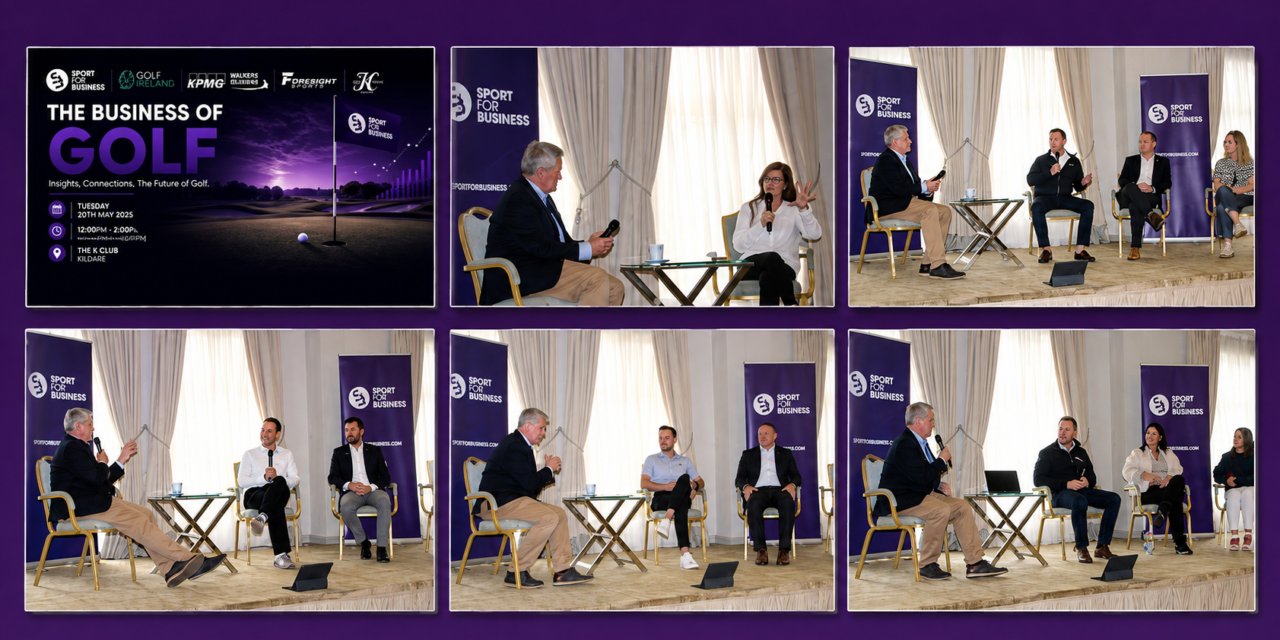
The golf course belongs to the players from today, but yesterday afternoon, Sport for Business was given a valuable opportunity to go behind the ropes at The K Club and see everything that makes the sport work, away from the scorecard.
Our Business of Golf gathering, staged ahead of the 2026 KPMG Women’s Irish Open, brought together voices from across the sport to examine storytelling, sponsorship, major-event delivery, participation, and the changing expectations of those who come to watch and play.
Our thanks go to The K Club, Golf Ireland, ForeFront Sports and the KPMG Women’s Irish Open for helping us bring the event together at one of the busiest moments of the golfing year.
Golf Has a New Story to Tell
We opened with Suzanne Thompson of Swing and Tonic, Daragh Small of Golf Ireland and Ruth Crehan of ForeFront Sports, looking at how golf is telling its story to audiences that would have been almost impossible to reach when the Ryder Cup was last staged at The K Club in 2006.
The consistent message was that authenticity matters.
Thompson spoke about the success of content which feels natural and relatable rather than overly produced. Sometimes the imperfect shot, the behind-the-scenes moment or the piece filmed quickly on a phone connects more strongly than something which has taken hours to create.
It was a theme echoed by Golf Ireland. Its four-part Our Game series was designed around human stories rather than simply promoting participation. The approach is reaching beyond the existing Golf Ireland audience, with 67 per cent of Instagram viewers coming from non-followers and 177 new followers added through the campaign.
Creehan explained how the same thinking shapes promotion of the KPMG Women’s Irish Open. The ambition is not simply to sell golf to golf fans, but to position the tournament as a great day out for families and people who may never have attended a professional golf event before.
That widening of the audience was perhaps the strongest thread running through the afternoon.
Ryder Cup Moves From Planning to Mobilisation
One of the highlights was a fireside conversation with Linda Hoey of Ryder Cup Europe, looking ahead to the return of the Ryder Cup to Ireland at Adare Manor in 2027.
Hoey brought considerable major-event experience from 17 years at World Rugby and described the scale of planning that goes into something as significant as the Ryder Cup.
A major event of that scale can take around seven years from bidding through foundation planning and delivery, with approximately 53 functional areas spanning broadcast, media, marketing, legal, finance, transport, security and logistics.
With the Ryder Cup now little more than a year away, the emphasis is shifting firmly towards mobilisation.
The conversation also looked beyond the three days of competition to legacy: participation, Ireland’s international reputation, tourism, investment and the opportunity to demonstrate once again that Ireland can successfully host events on the very biggest global stage.
Hoey stressed that the benefit will extend beyond those fortunate enough to have tickets, with fan activity and broader activations intended to enable people across the country to engage with the tournament.
Why Brands Keep Choosing Golf
Our sponsorship discussion brought together Eimear Rigby of Amgen, John Gillick of AIG and Paddy Somers of Golf Ireland, each approaching golf from a different commercial perspective.
AIG’s relationship with Irish golf now stretches back 25 years, evolving from a natural business relationship focused on golf insurance into a much broader platform encompassing brand, business, inclusion, and community engagement.
One statistic illustrated the scale that exists beneath elite golf. AIG’s Cups and Shields programme starts with approximately 25,000 golfers across 400 clubs, creating months of activity and stories well beyond the professional game.
For Amgen, the attraction lies in community, staff engagement, relationships with business partners and the opportunity to associate the company with major moments in Irish sport.
There was also an important reminder that sponsorship measurement has evolved. Brand visibility still matters, but so too do sales, digital engagement, employee response, hospitality, community impact and the money and awareness generated for charity partners.
The best partnerships begin with clarity around what both sides are seeking to achieve and then build over time.
Creating a Tournament People Want to Attend
From the commercial side, we moved to the operational challenge of staging a major event with KPMG Women’s Irish Open Championship Director Simon Honan and The K Club’s Paul Heery.
Their conversation offered a fascinating glimpse behind the curtain.
By tournament week, the major structures are in place. The focus shifts to fine detail, customer journeys and solving the hundreds of small issues that spectators should ideally never notice.
This year the tournament is also pushing harder on the broader entertainment proposition, with live music, children’s activities, yoga and a stage programme sitting alongside the championship golf.
As Honan put it, sporting events are increasingly competing for the same audience and have to consider the entire spectator experience. Golf offers a particular opportunity because it can cater simultaneously for the committed fan, the family looking for a day out and the person experiencing the sport for the first time.
That is an important shift in how golf thinks about itself.
From Primary School to Senior Golf
Our final main conversation perhaps captured the sport’s greatest strength: its ability to span generations.
Sam Hooper of Golf Ireland outlined the extraordinary expansion of the organisation’s work in schools. Where its previous structure might have reached between 2,000 and 5,000 primary school pupils annually, six dedicated community officers are now helping bring golf to 55,000 to 60,000 children each year.
At the other end of the age spectrum, Shane O’Connor of Whirlpool explained why the brand chose to enter golf through its partnership with Golf Ireland and senior competition.
The logic was compelling: golf reaches urban and rural Ireland, its participants demonstrate strong brand loyalty, and the senior golfer is often among the most active members of a club.
It reinforced a point made repeatedly throughout the day. Golf is increasingly difficult to define through any single demographic. It can be introduced in a primary school classroom, picked up later in life, played across generations and followed through everything from TikTok and Instagram to live tournament attendance. That is a significant strength.
We closed with Damian Connolly of the Association of Turf Professionals Ireland, opening another strand for future discussion on technology, sustainability, and the increasingly sophisticated science that goes into producing the sporting surfaces we often take for granted.
The Sport Beyond the Ropes
What emerged from the afternoon was a picture of a sport with considerable momentum.
There are more ways to discover golf, more ways for brands to engage with it, more sophisticated thinking around the spectator experience and a much stronger pathway being built between the inspiration of major events and participation at grassroots level.
This week the attention rightly turns to the players competing for the KPMG Women’s Irish Open title on the Palmer South Course.
Yesterday was about everything that enables those moments to happen — the investment, creativity, partnerships, people and ideas that sit behind the ropes.
And on the evidence of our Business of Golf gathering, there is plenty more to talk about as Irish golf heads into an extraordinary period of opportunity.

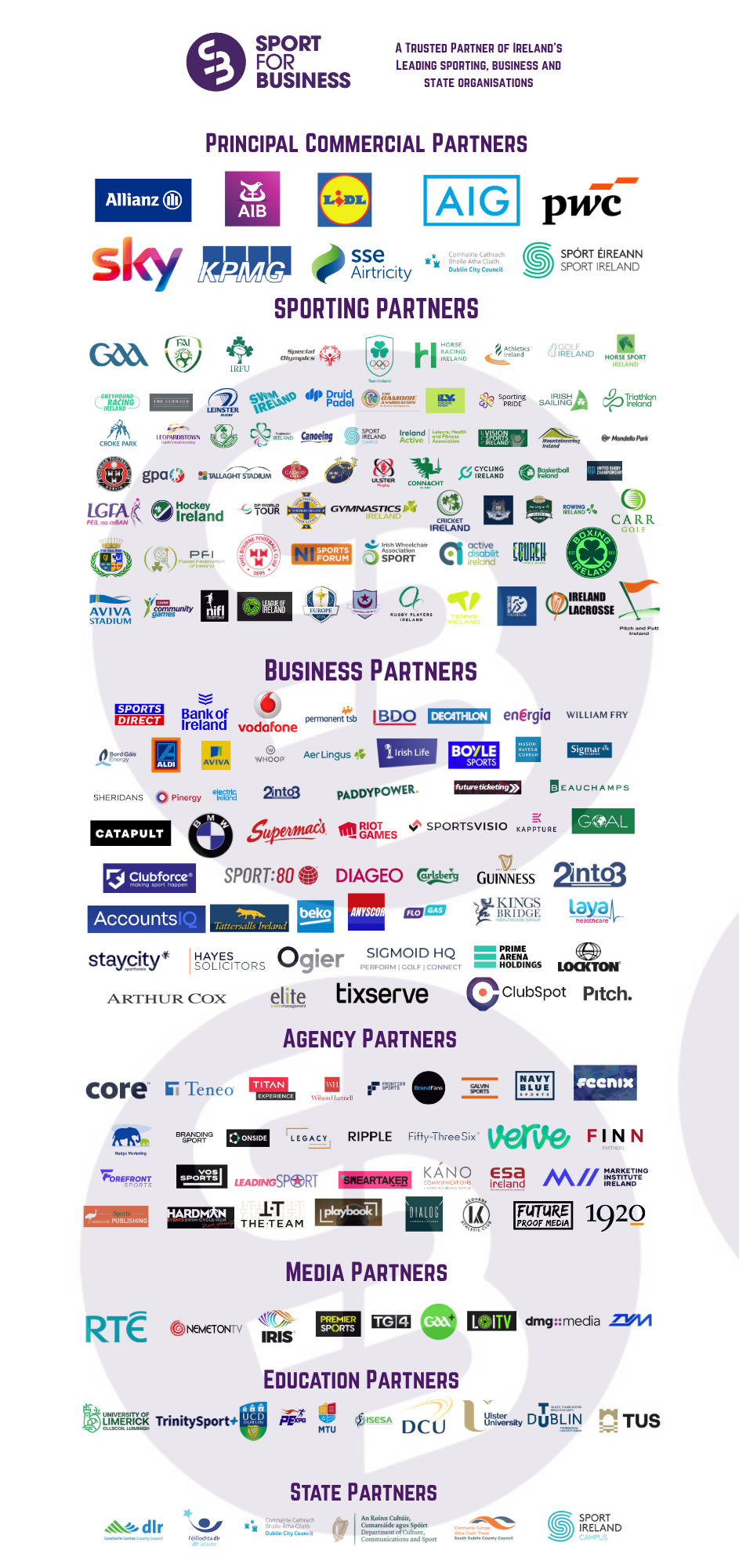
 Golf Ireland, KPMG, Forefront Sports, the Ryder Cup, Whirlpool and ATPI are full members of Sport for Business.
If you would like to be part of the Sport for Business community and see your organisation in our content, on our stages, and in the conversation happening every day around the commercial world of Irish Sport, email us today and let’s see what is possible.
Image Credit: Swing and Tonic
ABOUT SPORT FOR BUSINESS
Sport for Business is Ireland’s leading platform focused on the commercial, strategic and societal impact of sport. It connects decision-makers across governing bodies, clubs, brands, agencies, and public institutions through high-quality content, events, and insights.
Sport for Business explores how sport drives economic value, participation, inclusion and national identity, and how your story can be part of ours.
Through analysis, storytelling and convening the sector, it helps leaders understand trends, share best practices, and make better-informed decisions. It positions sport not just as entertainment but as a vital contributor to Ireland’s social and economic fabric.
Find out more about becoming a member today.
Or sign up for our Daily Sport for Business Snapshot email bulletins to get a flavour of the material we cover.
Sign up for our News Bulletins here.