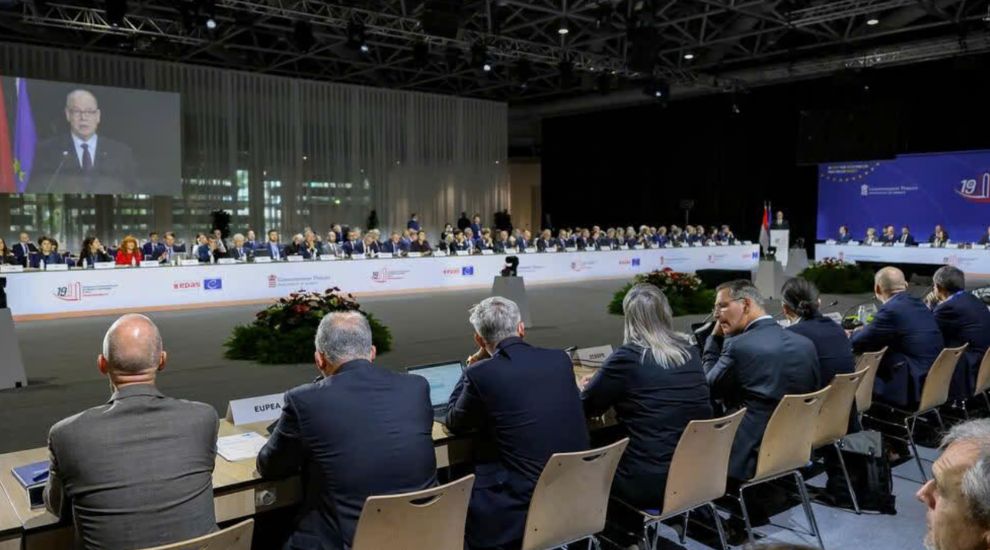
European Sports Ministers adopted a resolution to strengthen the protection, health and wellbeing of children in sport, following a conference in Monaco yesterday, where Ireland was represented by Minister of State for Sport Charlie McConalogue.
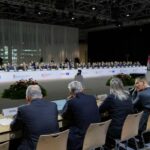
The 19th Council of Europe Conference of Ministers responsible for Sport brought together around 300 delegates, including 25 ministers and state secretaries, for discussions that moved beyond established safeguarding principles to the practical responsibilities of governments, sporting organisations, and those involved in coaching young athletes.
McConalogue took part in the opening ministerial panel, alongside International Olympic Committee safeguarding specialist Gloria Viseras and youth representative Emily Karakoleva, to examine the resolution’s challenges and proposals.
The discussions centred on protecting children from violence and abuse, and ensuring that the pursuit of sporting achievement does not come at the expense of their physical or mental wellbeing.
Measures discussed included stronger codes of conduct, appropriate background checks, safeguarding training, clear reporting procedures, and linking public funding more directly to the delivery of effective child protection standards.
There was also recognition that safeguarding must extend beyond protection from abuse to address overtraining, concussion, injury prevention, doping, body image and the emotional pressures that can accompany competitive sport at an early age.
Council of Europe Secretary General Alain Berset opened the conference alongside Prince Albert II of Monaco, while Princess Charlene, herself a former Olympic swimmer, introduced an afternoon session devoted to turning political commitments into practical action.
That discussion drew on expertise from FIFA, the International Paralympic Committee and other sporting organisations, with an emphasis on cooperation between government, education, health services and the sporting community.
The conference also examined how poverty, disability and geographical isolation can prevent children from accessing the benefits of sport, with delegates calling for greater attention to inclusion and participation alongside safeguarding.
The resolution was formally adopted at the conference’s conclusion, providing a shared European framework for further work by governments and sporting organisations.
The discussions come against a backdrop of increasing scrutiny of safeguarding arrangements within national governing bodies at home, and the continuing challenge of ensuring consistent standards across a sporting system that depends heavily on volunteers.
The distinction between having policies and demonstrating that they work in practice is likely to become increasingly important, particularly where public investment supports the development of young athletes.
McConalogue spoke ahead of the conference about the responsibility to ensure sport remained a positive experience for children, stressing that participation should never come at the expense of their safety or mental health.
The next question is how the commitments made in Monaco will be reflected in Ireland’s sporting structures, from national governing bodies and high-performance pathways to the thousands of clubs providing children with their first sporting experiences.
Sport for Business Perspective
The discussion is timely given the attention paid to the experience of children in sport at our recent Sport for Business Children in Sport Conference in Ballymun.
We share the recognition that the quality of a child’s sporting experience must be measured by more than performance or competitive achievement. The challenge is to translate that understanding into decisions on funding, coaching, competition structures and the everyday environments in which children participate.
The Monaco resolution adds a European dimension to that conversation, and gives Irish sport another reference point against which progress can be assessed.

 The Department of Culture, Communications and Sport, and Sport Ireland are full members of the Sport for Business community of sporting, business, and state organisations.
If you would like to join the Sport for Business community and see your organisation in our content, on our stages, and in the daily conversation around the commercial world of Irish Sport, email us today and let’s see what is possible.
Image Credit: European Union
ABOUT SPORT FOR BUSINESS
Sport for Business is Ireland’s leading platform focused on the commercial, strategic and societal impact of sport. It connects decision-makers across governing bodies, clubs, brands, agencies, and public institutions through high-quality content, events, and insights.
Sport for Business explores how sport drives economic value, participation, inclusion and national identity, and how your story can be part of ours.
Through analysis, storytelling and convening the sector, it helps leaders understand trends, share best practices, and make better-informed decisions. It positions sport not just as entertainment but as a vital contributor to Ireland’s social and economic fabric.
Find out more about becoming a member today.
Or sign up for our Daily Sport for Business Snapshot email bulletins to get a flavour of the material we cover.
Sign up for our News Bulletins here.