
Cheltenham finished on a high for Ireland with the victory of Gaelic Warrior in the Boodles Gold Cup on Thursday. It meant a victory in each of the three Championship races for Trainer Willie Mullins and Jockey Paul Townend, and victory in the Champion Hurdle and the Gold Cup in the same year for owner Rich Ricci, a first time this has been achieved.
But beyond the victories and the sporting stories, we took a sideways look at the ways in which brands were activating at and around the track this year.
Our resident expert on the ground was Laura Owen, co-founder and Chief Operating Officer at Mongoose, a global agency specialising in sport, lifestyle and experience.
There are valuable lessons from reading her thoughts below, bearing in mind the global experience she brings to her answers.
What is it about Cheltenham that makes it such a special place for brand activation?
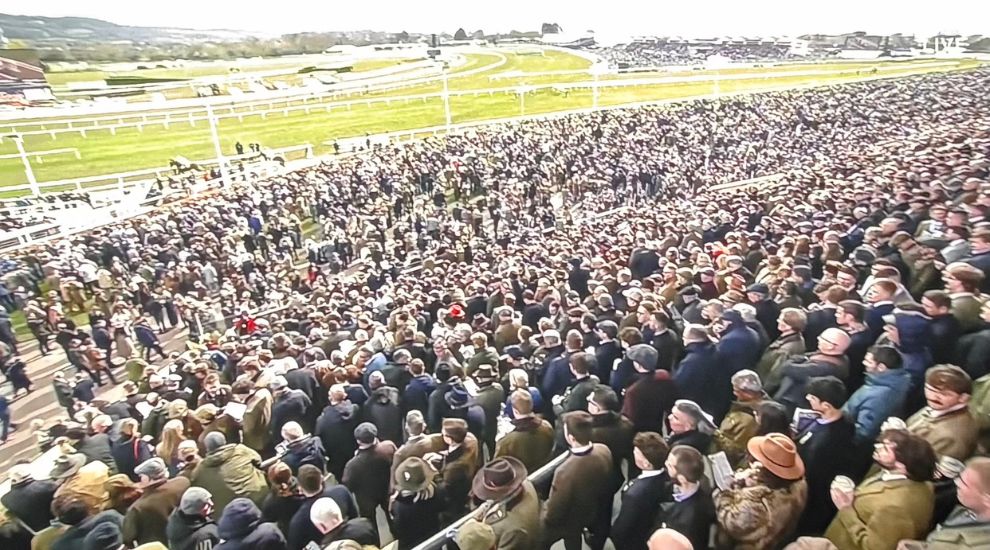
High-quality racing is what makes people flock to the Cotswolds, but watching events on the course is a comparatively small part of the day. Getting dressed up, catching up with acquaintances and enjoying a few drinks all make up additional layers to what is a highly social and experiential day out.
The natural flow of people between bars, hospitality tents, food stalls and bookies also means brands can engage with a much higher proportion of people than at events where people are confined to their seats.
Attendances seem to be holding up, despite some noise around the cost of the experience, is it moving towards a more premium demographic than other sporting events?
There will be a few factors contributing towards the recent fluctuations in attendance numbers – the cost of living crisis and general state of British horse racing being just a couple. It’s not as if attendances at smaller, cheaper race days around the country are booming while Cheltenham suffers.
Ultimately, it’s still the event that everyone wants to be at. That has meant supply and demand has driven up prices in recent years. Similar furores around Premier League and World Cup pricing shows Cheltenham isn’t an outlier.
Most of the noise around costs has centred on the price of a pint of Guinness, a burger on the track or nearby hotels and AirBnBs which are more of a concern for the regular punter than the more premium demographic who are more likely to be found in a hospitality lounge or taking off from the sponsored helipad!
What are some of the sectors, outside of the traditional betting and gaming companies, that have made a move on Cheltenham in recent years?
Finance – investment firms like Close Brothers and Brown Advisory have become synonymous with the Festival in the last few years thanks to race sponsorships that ensure they get namechecked on countless broadcasts, podcasts and preview shows. Singer Capital Markets went even bigger by snapping up the rights to the Grade 1 Arkle this year.
Luxury consumer goods have also become more prominent partners with jewellery brand Boodles upgrading their longstanding sponsorship of the Juvenile Handicap Hurdle to become title sponsor of the blue riband Gold Cup.
What are the activations you have been behind this year that you are especially proud of?
We are very proud of our work with Virgin Holidays last summer, we activated their Barbados takeover of Battersea Power station across 12 weeks which included: road tennis, a chill zone, a steel band, street food experience, yoga and sunset sessions. It was designed to bring Barbados to London in an authentic and engaging way attracting over 3000 consumers to Battersea Power Station for the special events.
More recently we brought together two all-female run clubs in London to promote the launch of Amazfit’s Active 3 Premium Watch designed with women in mind and more specifically those just starting out on their running journey. We branded Acai and the Tribe as a meeting point and built an electrolyte cocktail stand along the River Thames in partnership with Puresport to mark the half way point with everyone finishing up atEveryman Cinema for some rest and recovery.
With 150 attendees it was a great success and introduced many new users to the brand with lots of social engagement and many claiming it was the best run club event they had ever been to.
Any others that have caught your eye?
It’s hard to look past the really cool activation that Lego is doing in Formula 1.
The LEGO x Formula 1 activations take one of the world’s most technical, high-speed sports and reframe it through colour, scale and play. Across the 2025 rollout, LEGO and F1 brought the partnership to life through fan-zone build experiences, pop-up “Pit Shops,” photo moments and even fully drivable brick-built F1 cars for the Miami drivers’ parade. This turned a global motorsport property into something instantly more accessible, family-friendly and visually distinctive.
Last weekend, Lego showed that they are taking authentic activations to the next level for their second season. On the Friday of the Australian Grand Prix, the first official practice day of the season, Ferrari drivers Charles Leclerc and Lewis Hamilton were pictured walking through the paddock with life-size LEGO helmets. Which of course will be available to pre-order I’m sure!
How do you approach measurement of the impact your campaigns are having?
In practice, we typically measure across a combination of brand, audience and commercial metrics. That can include reach and awareness, engagement, content performance, brand perception, lead generation, data capture, hospitality outcomes, partner satisfaction and, where relevant, direct sales impact.
Importantly, measurement should be embedded from the outset. We use pre-campaign benchmarking, live dashboard reporting during delivery and post-campaign evaluation to provide a full picture of effectiveness. That allows us to optimise activity in real time, demonstrate return on investment more clearly, and make smarter decisions around renewals, rights evolution and future activation planning.
Overall, our approach is about moving measurement beyond a simple output report and using it as a tool to prove value, guide decision-making and strengthen the long-term effectiveness of the sponsorship programme.
From your personal experience activating sponsorships within Formula 1, Cricket and Tennis what lessons would you bring to any brand activating at Cheltenham?
Activations need to be designed around the event, understanding the audience profile of Cheltenham and their behaviours during the festival is key to designing an activation concept that resonates with race goers. The crowd is broad but skews towards socially motivated, betting-aware, and highly occasion-led, so the activation needs to feel premium, easy, and culturally fluent.
1. Build for “occasion”, not interruption.
People have made a day of it. Cheltenham attracts huge dwell time, with average Festival attendance around 65,000 a day and around 40,000 hospitality guests across the four days. Brands should reward that commitment with something that elevates the day rather than just grabs attention.
2. Design for groups, not individuals.
Cheltenham is highly social. People arrive in friendship groups, corporate groups and hospitality groups. Activations should be shareable in pairs or groups: photo moments, hosted experiences, tasting rituals, prediction games, “best turned out” content, or group rewards tied to the race schedule.
In summary at Cheltenham, the strongest activation is one that feels premium, socially shareable, useful with value add on the day, and culturally in tune with the rituals of racing rather than trying to overpower them.
Is there one interaction you’ve experienced at the Festival that really resonated with you?
Amongst all the noise, excitement and many pints of Guinness being consumed at Cheltenham I really enjoyed the Bottlegreen cocktail bar – it was a sanctuary, somewhere to breathe and take in the festival spirit. It has a secret garden meets speakeasy theme – cosy and intimate inside with green drapes, beautiful foliage and comfy seating with a garden party vibe… and if you ask the bar man for the Cotswolds Orchard Secret there’s an extra special cocktail available.
One activation that caught my eye last year was the Brooklands Watch Company who created a limited-edition watch in partnership with the Jockey Club that featured a buckle made from one of Golden Miller’s horseshoes. For those who don’t know, Golden Miller won five consecutive Gold Cups in the 1930s and has a statue overlooking the parade ring at Cheltenham that people rub for good luck.
It wouldn’t be for everyone, but I liked the idea of creating something tangible and timeless that represents the prestige and history that so many brands are trying to tap into.
If you had three words to express why Cheltenham is such a winner for brands what would they be?
Prestige, excitement, eyeballs.
 If you would like to be part of the Sport for Business community and see your organisation in our content, on our stages, and in the conversation happening every day around the commercial world of Irish Sport, email us today and let’s see what is possible.
Image Credit: Sport for Business
ABOUT SPORT FOR BUSINESS
Sport for Business is Ireland’s leading platform focused on the commercial, strategic and societal impact of sport. It connects decision-makers across governing bodies, clubs, brands, agencies and public institutions through high-quality content, events and insight. Sport for Business explores how sport drives economic value, participation, inclusion and national identity, and how your story can be part of ours.
Through analysis, storytelling and convening the sector, it helps leaders understand trends, share best practice and make better-informed decisions. Its work positions sport not just as entertainment, but as a vital contributor to Ireland’s social and economic fabric.
Find out more about becoming a member today.
Or sign up for our twice-daily bulletins to get a flavour of the material we cover.
Sign up for our News Bulletins here.
Upcoming Events