Bohemians have made a number of changes to the way they are managed off the field of play as they prepare for a period that will transform the club and give it the space to grow to match their ambition.
The appointment of Jimmy Dignam as Chief Operating Officer, alongside Daniel Lambert’s move into a newly created Chief Commercial Officer role, reflects the scale of the task they will face in the coming years.
In Bohs’ fashion, though, it is an internal transition, shaped by people who know the club intimately, at a time when Bohs face some of the most significant operational challenges and opportunities in their 135-year history.
Dignam steps into the COO role after more than four years working full-time at the club, having first joined as a senior administrator before becoming Head of Operations. Long before that, he was a volunteer, a member and a supporter — a pathway that mirrors how much of Bohemians’ modern structure has been built.
After five and a half years as COO — and nearly a decade before that as a volunteer board member — Lambert has been one of the central architects of Bohemians’ off-field growth. His decision to step back from the breadth of the COO role, at his own request, is as much about focus as it is about workload. He is also the manager of Kneecap.
As CCO, Lambert will concentrate on the areas where his impact has been most transformative: income generation, merchandise, brand development and major strategic projects, including the Dalymount redevelopment.
Under Lambert’s stewardship, Bohs have gone from selling limited merchandise out of the shipping container that is the physical club shop, to shipping thousands of jerseys globally each month; from operating with minimal staff to employing a 12-strong non-football team across administration, community, climate and retail; and from uncertainty around Dalymount’s future to the brink of construction.
Those changes did not happen in isolation. Lambert is quick to credit volunteers, staff and board members who committed to long-term thinking at moments when short-term spending might have been the easier option.
That philosophy — prioritising structural health over quick fixes — now defines how Bohs see themselves within the league.
So what of the changes?
For club president Matt Devaney, the appointment of Dignam is about trust as much as it is about title.
He described Dignam as “an invaluable asset” since joining the club full-time in 2021, crediting him with helping to professionalise structures that were once heavily reliant on goodwill and volunteer effort.
Bohemians are approaching a complex two-year period away from Dalymount Park ahead of its long-awaited redevelopment. The logistics of temporary homes, supporter engagement, matchday delivery and financial sustainability will demand operational clarity and calm leadership.
Dignam is clear-eyed about what lies ahead, but optimistic about the foundations already in place.
He points to the progress of the past 15 years — expanded membership, growing crowds, stronger community roots, and the development of facilities such as the Oscar Traynor Centre — as evidence that the club has learned how to navigate transition without losing its identity.
At the same time, the league around Bohs is changing rapidly. Private investment is reshaping competitive benchmarks, wage inflation is real, and rivals are scaling up staffing and infrastructure. For a 100 percent fan-owned club, standing still is not an option.
Dignam speaks with feeling about the responsibility of the current generation to hand the club over stronger than they inherited it. That principle underpins everything from staff recruitment and governance to community engagement and supporter democracy.
He also acknowledges the challenge ahead. Competing in an increasingly professionalised league as a members-owned club requires creativity, innovation and relentless attention to detail.
Jersey sales, including the new Kneecap and Palestine shirt for 2026 that saw queues snaking around Phibsboro yesterday on the first day of its sale, commercial partnerships and diversified income streams are not peripheral — they are essential.
The reshaped executive structure is designed to reflect that reality: clear roles, specialisation of skills, and collaboration rather than overlap. Dignam focuses on operations, Lambert on commercial growth, with football operations supported by experienced figures such as Pat Fenlon, and parallel leadership from such as Sean McCabe who spoke at our recent Playing for the Planet event with the Department of Culture, Communications and Sport, across community, climate and facilities.
Bohemians are no longer a club proving that a fan-owned model can survive. They are a club looking to prove that it can compete, grow and innovate — even as the financial landscape around them shifts.
The next few years, split between temporary homes and the promise of a redeveloped Dalymount Park, will test that ambition. But with familiar hands in new positions, Bohs are betting on continuity, culture and competence to carry them through.
For a club built on the idea that football can be owned collectively, that feels like a very Bohemian way to move forward.
Image Credit: Bohemian FC
Further Reading for Sport for Business members:
Read our Sport for Business Coverage of Sport for Social Good
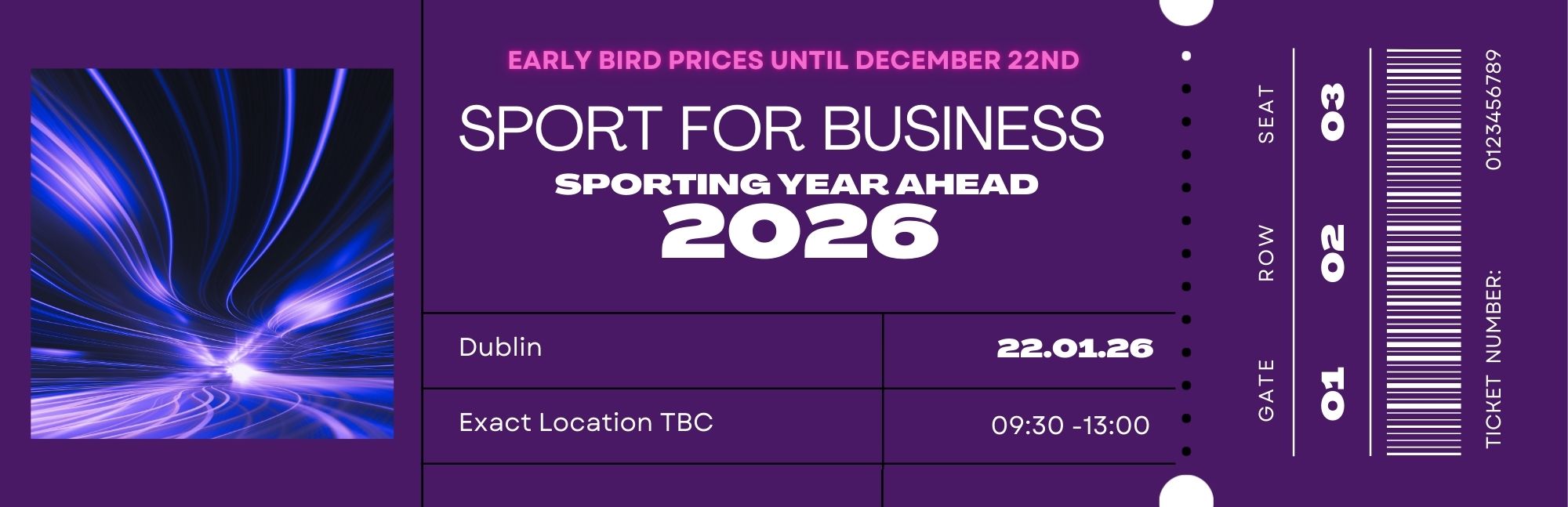
SPORT FOR BUSINESS Upcoming Events

MEMBERSHIP AND EVENTS,
Bohemian FC, as well as all the leading sporting and business organisations in and around the world of sport, are among the 300+ members of the Sport for Business community.
This includes all of the leading sports and sponsors, as well as commercial and state agencies, individuals interested in our world, and an increasing number from beyond these shores taking a keen interest in Ireland.
Find out more about becoming a member today.
Or sign up for our twice-daily bulletins to get a flavour of the material we cover.
Sign up for our News Bulletins here.