A growing governance dispute between Trivela Group and club chair Joanna Byrne has escalated sharply, with the majority shareholders instructing Byrne to step down from her role — a move complicated by her position as an elected representative and the opposition’s leading spokesperson on sport.
She has refused, setting the stage for a potential boardroom battle with political as well as sporting dimensions, raising questions around governance, accountability and potential conflicts of interest.
Byrne’s argument is that the move is as a result of her opposition to the Republic of Ireland playing Israel in the UEFA Nations League this year. Trivela denies that it is a put down on those views but that instead it has prompted a review of the appropriateness of public representatives taking on board roles in not only Drogheda but any club.
Neither side appears willing to step down but something will have to give.
At its core, the issue remains one of control. As majority shareholders, Trivela Group hold decisive authority under company law, including the ability to remove directors — and by extension the chair — through a shareholder vote at an Extraordinary General Meeting (EGM).
While Byrne is not obliged to resign immediately and can choose to remain in position, such resistance would likely only delay the outcome if Trivela opt to exercise their voting power.
However, Byrne’s dual role adds a layer of sensitivity that extends beyond a typical boardroom dispute.
As an elected representative and the main opposition spokesperson on sport, her involvement at chair level within a professional club places her at the intersection of politics and sporting governance. That raises potential questions around perceived conflicts, political scrutiny, and the broader optics of her continuing in the role amid a dispute with majority owners.
It also increases the likelihood that the situation will play out in a more public arena.
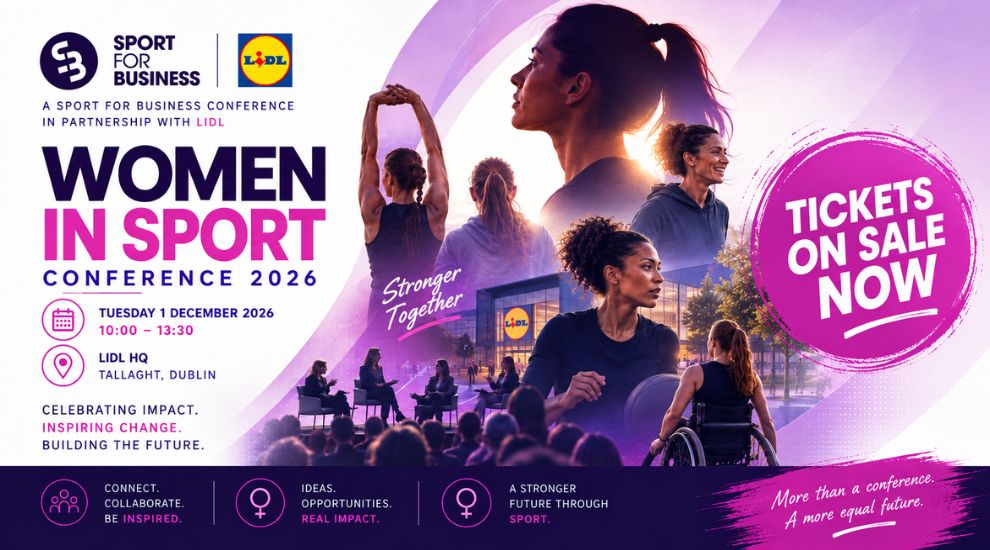
Byrne was a keynote speaker at the Sport for Business Women in Sport Conference last december and spoke passionately about her history with the club, taking her first steps as a child on the pitch and more. Her connection certainly runs deep but the question now is whether sport and politics, which are clearly interwoven in many areas, are OK to be so in governance terms.
Any move to remove Byrne formally could attract political attention, particularly if framed around issues of governance, ownership influence, or the role of private investment in sport. Equally, her position may strengthen her resolve to resist stepping down without due process, given the reputational considerations attached to both her political and sporting roles.
In most cases of this nature, a negotiated exit remains the most likely outcome. Such an approach would allow for a managed transition, limiting disruption and avoiding the escalation of a public dispute that could have ramifications beyond the club itself.
Failing that, Trivela could proceed with a formal vote to remove Byrne, a step that would be procedurally straightforward given their majority shareholding but would bring the conflict firmly into the open.
More destabilising scenarios — including a split at board level or a prolonged stalemate — cannot be ruled out, particularly if positions harden on either side.
With Trivela Group holding the balance of power, the coming days are likely to determine whether this is resolved quietly or becomes a more visible test case in how the worlds of business, sport and politics can collide.
 If you, like Drogheda United, Shelbourne and Shamrock Rovers, would like to be part of the Sport for Business community and see your organisation in our content, on our stages, and in the conversation happening every day around the commercial world of Irish Sport, email us today and let’s see what is possible.
Image Credit: Sport for Business
ABOUT SPORT FOR BUSINESS
Sport for Business is Ireland’s leading platform focused on the commercial, strategic and societal impact of sport. It connects decision-makers across governing bodies, clubs, brands, agencies and public institutions through high-quality content, events and insight. Sport for Business explores how sport drives economic value, participation, inclusion and national identity, and how your story can be part of ours.
Through analysis, storytelling and convening the sector, it helps leaders understand trends, share best practice and make better-informed decisions. Its work positions sport not just as entertainment, but as a vital contributor to Ireland’s social and economic fabric.
Find out more about becoming a member today.
Or sign up for our twice-daily bulletins to get a flavour of the material we cover.
Sign up for our News Bulletins here.
Upcoming Events