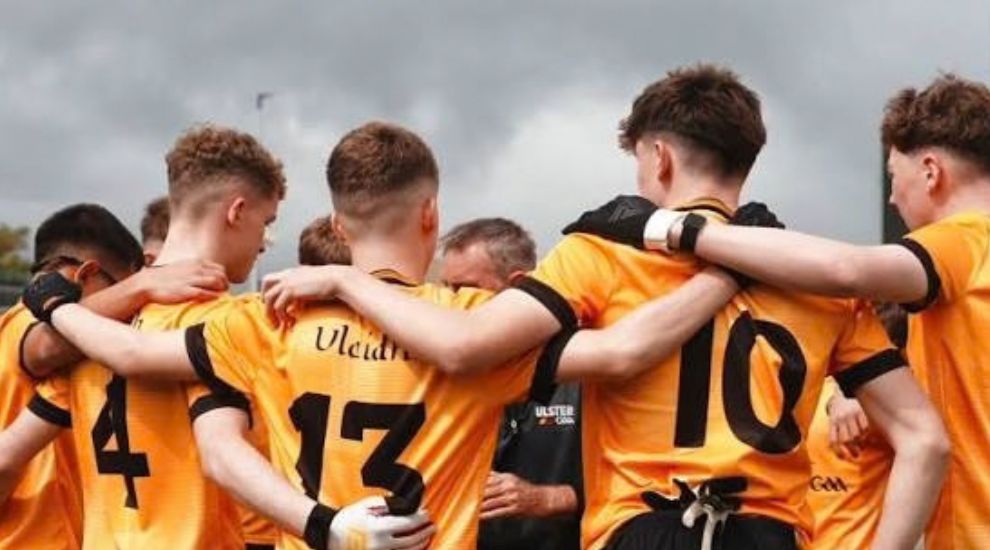
The GAA is preparing for a significant overhaul of its approach to games development after an internal review identified what it describes as a “participation crisis” among adolescents and a “volunteer crisis” across the Association. The Irish Examiner reported the review on Saturday.
The Games Development – Cohesion, Clarity and Consistency report is due to go before Central Council and comes at a particularly important moment, with the current four-year games development funding cycle reaching its conclusion.
Produced by a working group led by National Games Development Committee Chair Micheál Martin, the review does not question the importance of the GAA’s investment in participation and coaching. It does, however, reportedly, ask whether the structures through which that money is being spent are delivering as effectively as they should.
Central GAA expenditure on coaching and games development outside individual projects was €12.965 million in 2025, according to details of the review reported by the Irish Examiner. The government contributed €2.39 million towards that expenditure, with its contribution increasing to €3.2 million this year.
The GAA’s wider financial reporting underlines the scale involved. The Association reported €15.2 million invested in Coaching and Games Development during 2025 and €28 million across Games Development and Player Welfare.
Participation remains strong among younger children, particularly through Go Games, but there is a persistent drop-off as players move through their teenage years.
The report identifies competitive structures, academy pressures, and scheduling conflicts as factors intensifying that decline.
It also offers a remarkably frank assessment of the structures behind the investment, with the most worrying finding relating to volunteers.
The increasing use of paid staff was intended to strengthen the people giving their time to clubs. The report says that in some cases it has instead accelerated volunteer withdrawal, raising questions about whether the current system can genuinely be described as volunteer-led.
Separate research with SETU Waterford earlier this year supports that concern.
Of 1,305 club officers surveyed across the GAA, LGFA and Camogie Association, 31 per cent were spending more than eight hours each week on club duties, while more than 30 per cent held more than one executive position.
Recruitment was also challenging, with 68 per cent describing officer recruitment as moderately, quite, or extremely difficult.
One of the potentially most consequential changes proposed by the Games Development review is better use of data.
Digital team sheets could provide the Association with a much more accurate picture of how many people are actually playing in each county.
That information could then influence how future games-development funding is allocated.
Martin said the system would help the GAA measure both participation and the playing load being placed on individuals.
Historically, sporting organisations have often measured participation through registrations, programmes delivered or coaching activity.
Digital team sheets move closer to measuring actual playing activity.
The review also proposes an innovation fund for counties dealing with particular challenges, including urban growth, demographic change or the development of hurling.
The GAA will examine the operation of talent academies early next year.
The review is not calling for their abolition but is questioning their purpose, how young players experience them and how they interact with club and school competitions.
The underlying principle is that talent academies should complement clubs and schools, not compete with them.
That is consistent with the GAA’s own 2026 annual report, which identified an uneven Talent Academy model and said the Association needed better alignment between club, school and county activity. It also said governance reform, better data, and a renewed volunteer strategy were needed before further funding expansion.
Sport for Business Perspective
Two numbers are worth keeping side by side.
The first is the millions of euro being invested annually in games development.
The second is the number of teenagers who are still playing Gaelic games two, three and four years after entering the development system.
The second number ultimately determines whether the first represents good investment.
How many coaches were employed or programmes delivered will remain useful measures.
How many players stayed in the sport, how frequently they played and whether clubs became more sustainable are stronger ones.
And the questions around volunteering are perhaps even more important given the nature of how Gaelic Games are run.
Professional expertise has an essential role in modern sport, but Gaelic games cannot employ enough people to replace the vast network of volunteers on which the organisation is built.
The objective therefore has to be to use professional staff to make volunteering easier and more rewarding, rather than creating structures volunteers are required to service.
Keeping more teenagers playing and more adults volunteering would be two very good places to start.
 The GAA, LGFA and Camogie Association are full members of Sport for Business.
If you would like to be part of the Sport for Business community and see your organisation in our content, on our stages, and in the conversation happening every day around the commercial world of Irish Sport, email us today and let’s see what is possible.
Image Credit: Ulster GAA

ABOUT SPORT FOR BUSINESS
Sport for Business is Ireland’s leading platform focused on the commercial, strategic and societal impact of sport. It connects decision-makers across governing bodies, clubs, brands, agencies, and public institutions through high-quality content, events, and insights.
Sport for Business explores how sport drives economic value, participation, inclusion and national identity, and how your story can be part of ours.
Through analysis, storytelling and convening the sector, it helps leaders understand trends, share best practices, and make better-informed decisions. It positions sport not just as entertainment but as a vital contributor to Ireland’s social and economic fabric.
Find out more about becoming a member today.
Or sign up for our Daily Sport for Business Snapshot email bulletins to get a flavour of the material we cover.
Sign up for our News Bulletins here.