From destination marketing and global technology companies to automotive brands and healthcare providers, this week’s biggest sponsorship announcements demonstrate that sport’s commercial landscape is constantly evolving.
The opening of the Glasgow 2026 Commonwealth Games provides one of the clearest demonstrations of how major-event sponsorship is changing.
Longines leads the commercial programme as Principal Partner, continuing an association with the Commonwealth Games that stretches back across several editions. The wider partner family includes Bupa, EDF Energy, Allwyn, CMS and Coca-Cola, supported by a group of official providers and media partners.
Each partner has a clearly defined role. Bupa serves as the Official Healthcare Principal Partner, while the programme also encompasses energy, professional services, lottery and consumer categories. The emphasis is less on traditional venue branding and more on delivering tangible services and experiences around the Games.
That approach is particularly significant because Glasgow 2026 has deliberately adopted a more compact model. With ten sports, six integrated Para sports and venues clustered within an eight-mile corridor, organisers are challenging the notion that successful sponsorship depends on ever-larger events. Instead, partners are being offered opportunities across broadcast, digital platforms, community engagement and live fan experiences, including the free Game On festival at Kelvingrove Park.
If Glasgow illustrates how event sponsorship is evolving, football provided a reminder this week that commercial partnerships are increasingly judged on their wider social and political context.
Aston Villa Partnership Shows Sponsorship Faces Greater Scrutiny
The week’s most widely discussed football announcement came as Aston Villa unveiled Visit Rwanda as its new principal partner in a multi-year agreement reported to be worth around £20 million per season.
The deal immediately attracted international attention, with Amnesty International and other campaign groups questioning Rwanda’s human rights record and its continued use of elite sport as a platform for destination marketing. The agreement follows previous Visit Rwanda partnerships with Arsenal, Paris Saint-Germain and Bayern Munich, demonstrating the country’s long-term commitment to promoting tourism through global sport.
For Aston Villa, the commercial attraction is clear. UEFA Champions League football has transformed the club’s international profile and increased the value of its sponsorship portfolio. Yet the reaction underlines that sponsorship is increasingly judged not only by commercial return but by public perception, corporate values and reputational fit. As governments and tourism agencies invest more heavily in elite sport, scrutiny is becoming part of the commercial equation.
Stripe and the Ryder Cup Show the Future of Partnership
While Aston Villa highlighted the reputational dimension of sponsorship, Stripe’s new Worldwide Partnership with the Ryder Cup demonstrated another important trend: brands becoming integral to the operation of major sporting events.
The Irish-founded financial technology company has become a Worldwide Partner and Official Payment Solutions Partner for both the 2027 Ryder Cup at Adare Manor and the 2029 Ryder Cup at Hazeltine National Golf Club.
Rather than simply acquiring branding rights, Stripe will power much of the event’s commercial infrastructure, handling online ticketing, on-site food and beverage payments and merchandise transactions. The partnership places technology at the centre of the spectator experience while giving organisers valuable insight into customer behaviour.
It is a reminder that sponsorship increasingly extends beyond marketing. The most valuable commercial relationships now help rights holders improve efficiency, enhance fan engagement and generate data that can shape future events. For an Irish company founded by Patrick and John Collison, the partnership also represents another significant Irish presence at one of the world’s premier sporting occasions.
PSG Illustrates the Global Ambitions of New Automotive Brands
European football produced another significant commercial announcement with Paris Saint-Germain naming BYD as its global automotive partner through 2029.
The partnership gives one of China’s largest electric vehicle manufacturers access to PSG’s enormous worldwide audience while reinforcing the club’s position as a global lifestyle brand extending far beyond football.
The deal also reflects the changing geography of sports sponsorship. Where automotive partnerships were once dominated by European, Japanese and American manufacturers, Chinese electric vehicle companies are increasingly using elite sport to accelerate international expansion and build consumer confidence in new markets.
Cycling Reinvents One of Sport’s Longest Partnerships
Professional cycling offered a reminder that sponsorship remains fundamental to the identity of many sports.
From 2027, the long-established Soudal Quick-Step team is expected to become Soudal Safety Jogger, with Safety Jogger assuming the co-title role following Quick-Step’s decision to step back after more than two decades as a title sponsor.
Unlike many sports, cycling embeds sponsors directly into team identities, making every commercial change highly visible. The latest transition demonstrates how teams continue to balance commercial continuity with the need to attract new investment while maintaining recognisable brands within the peloton.
Purpose Drives Dove Brand Activation
One of the week’s most interesting activations came from Dove, which used the FIFA World Cup Final as a platform to promote its Body Confident Sport initiative aimed at helping more girls remain involved in sport.
Rather than competing with the spectacle of the final itself, the campaign focused on participation, confidence and inclusion, demonstrating how global sporting events can provide a platform for wider social programmes.
It is another indication that brands increasingly seek purpose-led partnerships capable of delivering measurable social impact alongside traditional marketing objectives.
Sport for Business Perspective
The same themes have been evident across Sport for Business coverage this week.
AIB’s celebration of the backroom teams behind Kerry and Mayo demonstrated how an established sponsor can refresh its relationship with one of Ireland’s biggest sporting occasions by focusing on the people behind success rather than simply the stars on the pitch.
The announcement that Stripe will become a Worldwide Partner of the Ryder Cup also stood out as an example of an Irish-founded technology company providing genuine operational value as well as sponsorship investment. It is precisely the type of partnership likely to become more common as rights holders look beyond branding towards technology, payments and fan experience.
Meanwhile, KPMG’s long-term commitment to the Women’s Irish Open, which moves to Dun Laoghaire Golf Club in 2027, illustrates how sustained sponsorship can help build an event’s identity while supporting tourism and regional development.
The Hiscox Irish Open Padel Championships highlighted another growing trend, with brands identifying opportunities to grow alongside emerging sports rather than competing for attention only within established properties.
Finally, the 123.ie National Senior Track and Field Championships continue to demonstrate the value of consistent title sponsorship in underpinning one of Ireland’s flagship domestic athletics events.
Across each of these stories, both internationally and in Ireland, the direction of travel is the same. Sponsorship is becoming less about renting visibility and more about creating value. Whether through technology, healthcare, destination marketing, community engagement or storytelling, the strongest partnerships are those where the sponsor becomes part of the experience rather than simply appearing alongside it.
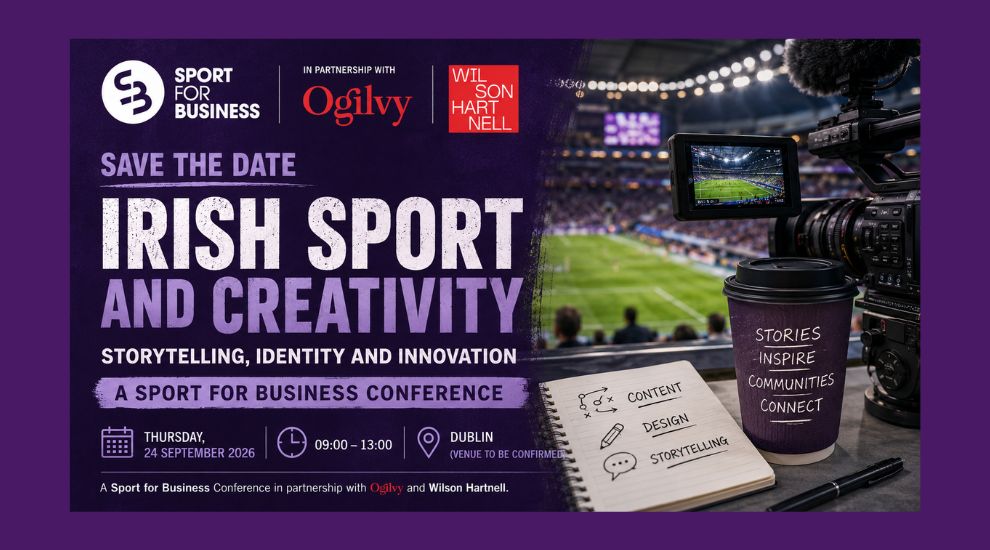
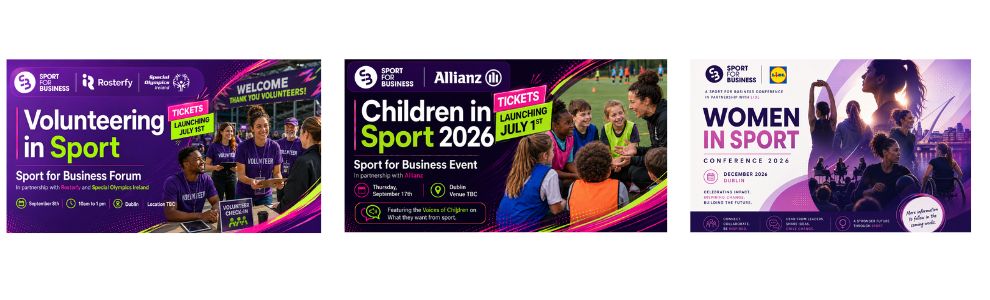

If you would like to be part of the Sport for Business community and see your organisation in our content, on our stages, and in the conversation happening every day around the commercial world of Irish Sport, email us today and let’s see what is possible.
Image Credit: Sport for Business
ABOUT SPORT FOR BUSINESS
Sport for Business is Ireland’s leading platform focused on the commercial, strategic and societal impact of sport. It connects decision-makers across governing bodies, clubs, brands, agencies, and public institutions through high-quality content, events, and insights.
Sport for Business explores how sport drives economic value, participation, inclusion and national identity, and how your story can be part of ours.
Through analysis, storytelling and convening the sector, it helps leaders understand trends, share best practices, and make better-informed decisions. It positions sport not just as entertainment but as a vital contributor to Ireland’s social and economic fabric.
Find out more about becoming a member today.
Or sign up for our Daily Sport for Business Snapshot email bulletins to get a flavour of the material we cover.
Sign up for our News Bulletins here.