Dublin’s All-Ireland semi-final defeat to Kerry has reopened a debate that the GAA has largely been able to avoid: whether the most important matches in Gaelic games should be decided with greater assistance from video and goal-line technology.
The immediate flashpoint was Ross McGarry’s second-half effort in Sunday’s 2-18 to 0-20 defeat at Croke Park. After Kerry goalkeeper Shane Murphy made the initial save, television replays from at least one angle appeared to suggest that the ball had clearly crossed the line before being scrambled clear.
The decision remained with the umpires, and no goal was awarded. Had it counted, Dublin would have moved to within a point at a critical stage of the game.
It was one of three decisions highlighted afterwards by Dublin manager Ger Brennan. He also questioned the early penalty awarded to Kerry and the decision to allow Seán O’Brien’s second-half goal to stand despite replays showing that the Kerry player had entered the square before the ball arrived.
“To be fair to inter-county officials, the game is so fast,” Brennan said.
“I feel very strongly that video-assisted technology has to come into play for key decisions.”
“If the officials had an opportunity to have just a quick look, take 30 seconds out, stop the clock, those decisions would have gone in a different direction.”
Brennan also acknowledged that Dublin’s own inaccuracy contributed significantly to the defeat. His team had more attacks, more shots and more successful scores than Kerry but converted at a substantially lower rate. The refereeing argument, however, dominated much of the post-match discussion.
Goal-line technology or full video review?
VAR has had a chequered history since its inclusion in Rugby and Football. Delays to the game, referees being sidelined, and the natural rhythms of sport being altered have been among the brickbats thrown at it and among the reasons why there should be no rush to action in the GAA.
But the technology has been defined, tweaked and improved and has certainly been an addition to the FIFA World Cup, which stands as a reference point for many watching the tournament and then the weekend’s Gaelic Football.
Clear goals have had no delay and no impact. Where there has been some debate, the referees have been called on and acted swiftly with a run to the sideline and a quick review.
This level of technology is expensive, though, and requires professional match officials in far greater numbers than we have in Gaelic Games.
There are really two separate questions involved.
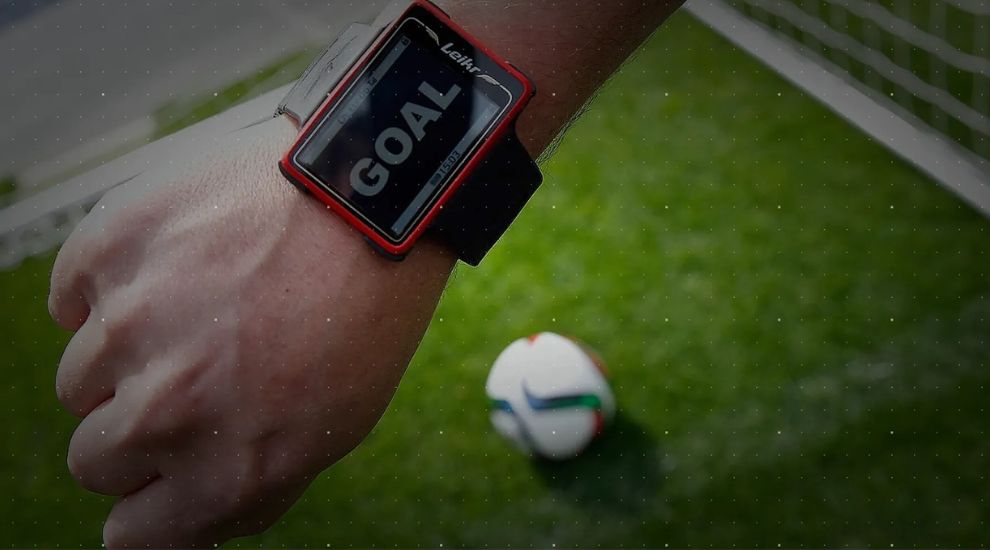
The McGarry incident was a binary decision: did the entire ball cross the line? That is the type of call for which goal-line technology was developed. It does not require an official to interpret intent, the severity of contact or whether an infringement materially affected play. We already have it in place at major venues in Hawkeye, and it should be addressed as to whether this could be introduced for goals as well as points.
Under the GAA’s rules, it can be consulted to establish whether a ball travelled between the posts for a point, or outside them for a wide or a 45 or 65. Goal-line decisions remain with the referee and umpires.
That limitation now appears increasingly difficult to explain at Croke Park, where the camera infrastructure already exists, and spectators can see multiple replays of a disputed incident within seconds.
The penalty and square-ball decisions would require a broader video-review system. That would be closer to VAR in football or the television match official in rugby, bringing more complicated questions about which decisions can be reviewed, who initiates a review, and how far back in play officials can look. That is a debate for another day.
The strongest case may therefore be for a deliberately limited technological intervention.
An automated goal-line system could provide the referee with an immediate yes-or-no signal without stopping the game or introducing lengthy reviews. It would address one clearly defined problem while leaving subjective decisions with the match officials.
A broader video-review official could then be trialled separately, perhaps initially for goals, penalty decisions and serious foul play at All-Ireland semi-finals and finals.
There would be obvious operational and financial considerations. The GAA would also need to decide whether technology should be confined to Croke Park and a small number of major grounds or made available throughout the championship. Different technological standards across venues would inevitably provoke debate.
The question is no longer whether every refereeing mistake can be eliminated. It cannot. Yesterday’s decisions went against Dublin, but in the past or indeed the future, these things tend to balance out. But with a different group of players and management.
Should all the hard work over weeks, months and years come down to what actually happens on the pitch, or on whether two umpires can see through a crowd of players in a fraction of a second?
After Sunday, it will be increasingly difficult for the GAA to argue that it should.
But this year’s All-Ireland Football Final will be between Kerry and Mayo, and good luck to both of them. The weekend was a glorious one for the sport, with over 160,000 people witnessing great football, a historic win for Wicklow, and another for London GAA, serenaded as You Biys in Green from a packed Hill 16 yesterday, and so much more. It’s just a shame that this is the debate, but then again, sport is a mix of everything that is important and much that is not, at least beyond the moment, and sure isn’t that why we love it.



 The GAA is a full member of Sport for Business.
If you would like to be part of the Sport for Business community and see your organisation in our content, on our stages, and in the conversation happening every day around the commercial world of Irish Sport, email us today and let’s see what is possible.
Image Credit: Hawk-Eye Innovations

ABOUT SPORT FOR BUSINESS
Sport for Business is Ireland’s leading platform focused on the commercial, strategic and societal impact of sport. It connects decision-makers across governing bodies, clubs, brands, agencies, and public institutions through high-quality content, events, and insights.
Sport for Business explores how sport drives economic value, participation, inclusion and national identity, and how your story can be part of ours.
Through analysis, storytelling and convening the sector, it helps leaders understand trends, share best practices, and make better-informed decisions. It positions sport not just as entertainment but as a vital contributor to Ireland’s social and economic fabric.
Find out more about becoming a member today.
Or sign up for our Daily Sport for Business Snapshot email bulletins to get a flavour of the material we cover.
Sign up for our News Bulletins here.