The IRFU Annual report showed a healthy surplus of €7.3 million in the year 2013/2014. On Tuesday we looked at some opportunities arising out of the international game, on Wednesday at commercial revenue streams from the Provinces and through sponsorship, and on Thursday at support for the club game.
Today we conclude our look at the report by focusing on what it has to say about developing the game.
Clubs
Clubs are obviously the foundation for development and 23 clubs are now actively working towards attaining the Club Excellence award that has been granted to 14 clubs since its introduction in 2011. The mark covers all areas of management, governance and development and the aim is to bring all clubs up to a minimum standard that is high enough to give a consistently strong basis for the game to grow.
The introduction of electronic database management is also progressing with all provincial tournaments now run centrally and clubs having the capacity to manage online membership, annual subscriptions and in some cases fundraising through a more integrated fashion than was previously the case.
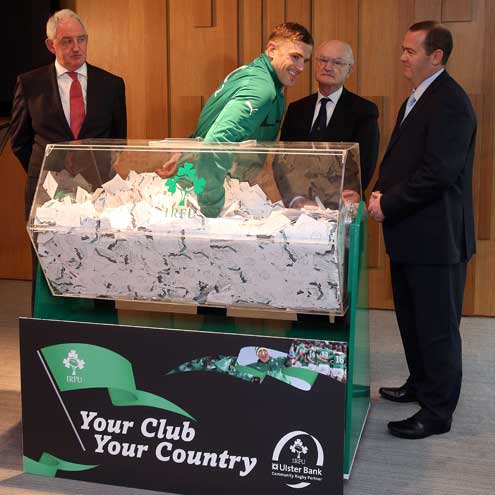 Fundraising remains a challenge at all levels but the “Your Country Your Club’ National Draw had another good year. It produced €530,000 in revenue for the 142 clubs that took part. This initiative is now taking place across soccer and GAA as well and provides a national prize structure through working with sponsors, that gives a low cost, high return for clubs who actively get behind the promotion.
All of the administration, where fundraising campaigns often run out of steam, is taken care of centrally and more clubs should make more of the opportunity this presents.
At age grade level and mini rugby the Annual report recognises that this is a great strength and a great weakness.
29,000 young players are being introduced through mini rugby and this is the most vibrant section in many clubs. Young players should then graduate into the sport through their clubs but it is at this point that the numbers start to fall off sharply.
Schools Clash
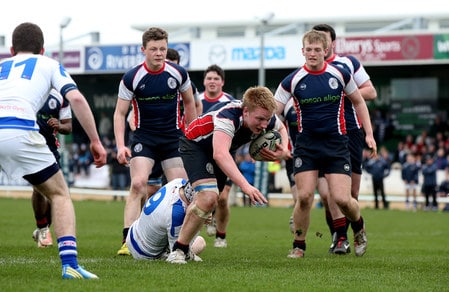 A major difficulty around Rugby’s strongest heartlands is the clash between school and club rugby. In many cases when a player shows promise and is brought onto a Junior Cup team they will be pushed through a well organised but time intense programme of development and in most cases asked or told to stop playing other sports or even with the clubs they came into the game through.
If the most talented then are being taken from clubs, others will be less engaged with staying on and a vicious circle develops.
By the time players come out the other end they are disconnected from the club, probably in need of a rest after a Junior Cup and Senior Cup cycle in their school and either in need of a break or carrying on their sport through third level colleges.
There is no simple solution but in the same way as the GAA is diluting the importance of it’s U14 Feile competitions to reduce intensity and burnout among players too early, so too might rugby need to consider the importance attributed to the premier schools competitions.
Women’s Rugby
An area of continued rapid growth has been the Women’s game with 63% of senior clubs now fielding a Women’s XV. 15 new clubs were formed during 2013 and the presence on TV of the Women’s Rugby World Cup from next week as well as rising interest in the Olympics where the irish Women will be represented but not the men will mean further growth in this area.
 It will be important to address areas of self consciousness for young Women in this area and a campaign in the US has gathered real momentum in recent weeks where the Harvard University Women’s team chose to focus on a theme of Strength is Beautiful with a photoshoot that has gone viral and is changing perceptions in a very positive way.