 Organised sport is really only a little over a century old in its present form. In that short period of time it has thankfully overtaken more violent forms as the principal way in which we express our nationality.
How many times outside of sport do we hear our and others national anthems? The uniform of the pitch or the track has thankfully overtaken that of the battlefield in terms of the universal statement of statehood.
Sport has helped to achieve many breakthroughs as a result of the national pride it can engender. Women’s place in many parts of the world has been enhanced through participation in international sport. The Olympic Games insists on gender parity, both in sports and in teams and this has helped to change minds.
Disability is now seen more in terms of ability as a result of the Paralympic Games of London 2012, a change of perspective that could never have been achieved without the visibility of the power of sport to overcome individual difference. That difference is personal rather than defined by a flag.
South Africa’s path to a shared culture, and survival, was lit by the endeavours of a Springbok rugby team that chose integration against all of its previous instincts.
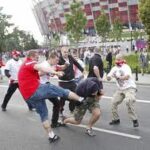 Make no mistake it also highlights the underbelly of nationalism. The Russian celebration of national dominance of Poland at the Euro 2012 Championships was ugly, as is the tribalism that has at times exerted itself in team sports and popular support of individuals based on the colour of their vest. It can at times be as visceral and as unworthy as cheering against one person because of the colour of their skin.
Sport then has the power to change and it has the power to shine a light on issues that prefer to live in dark corners.
Throughout this summer, as has been highlighted time and time again by competitors, commentators and fans, Irish and British supporters have roared on the athletes of each other’s nationality with only a small notch less fervour than their own. It is of course easier to cheer an athlete as a person but while Britain has always done so, this is a relatively new departure for many Irish. Children did it most naturally so hopefully the prejudice of those who they replace on sidelines and in stands will not reassert in them as they develop their own personalities.
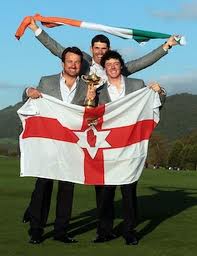
The reaction to a kite flown by Rory McIlroy in a newspaper interview this week was, in this context, depressing.
McIlroy is a sporting star on a world stage. He has lit up the game of golf in a way that has been of great benefit to the island of Ireland and also to himself.
He has grown up in a community that favours the unionist tradition but thankfully the past twenty years have shown that this belief in cultural and national identity can be expressed in ways other than violence.
When asked the question before about his nationality he has always replied ‘Northern Irish’ and were it not for the inclusion of golf in the Olympics four years hence everyone could have got along with ‘claiming’ his achievements as being ours in a way not artificially partitioned by national borders.
McIlroy has competed many times, at many levels for Ireland, as is right. His early development in the game was facilitated and funded by the Golfing Union of Ireland, as is right. He has helped deliver back the first sold out event ever on the European tour at this year’s Irish Open which of course took place in Northern Ireland, as is right with Golf an island of Ireland administered sport.
Northern Ireland has two cultures, and is unique in the way that dual nationality applies to its citizens. Heroes of the past weeks Jason Smyth, Michael McKillop and Bethany Firth chose to represent Ireland at the Paralympics and brought home five gold medals celebrated equally is Donegal as in Down. An Icon of women’s sport in the 1960’s Mary Peters chose to represent Britain but is still seen as a great athlete and a torch bearer by any individual who enjoys the glory of sport.
Rory McIlroy, should he wish to compete in the Olympics, must choose. There is no Northern Ireland team. He can represent Ireland or he can represent Great Britain. Team GB is not Team UK which is a subtle but potentially important distinction, if only in our small corner of the world.
Sporting history sparkles with those who may not have known the words of one national anthem or another but who enhanced our collective experience with their individual efforts. Ray Houghton’s Scottish accent has never dimmed but his goals in the 90’s helped to lift our country. Mo Farah left Somalia to pursue his dream but has become a national hero of his adopted country.
Rory McIlroy should perhaps have ducked the question. There is no need to answer it yet. Who knows what the next four years will bring. Any Olympian will vouch that qualification is a privilege earned rather than granted by achievements of the past.
Those who condemn him for expressing his personal view of his place in international politics should pause and think back to the joy he brings as Rory McIlroy, to the inherent ‘Irishness’ he brings to a global audience, and to the right he has, granted by us, to be free to choose his own path.
We cannot have everybody who wins or competes do so for us as a nation. The point of sport is that we can have them compete for us as individuals and if anyone cheers less for the potential achievement of Rory McIlroy adding to a GB as opposed to an Ireland notch on an ephemeral medal table, they should perhaps coolly consider whether that reflects more on his choice or theirs.
View all the latest news on the commercial side of Irish sport
Find out more about how Sport for Business can be of benefit to you
Subscribe today for the free Sport for Business daily news digest
National Spirit