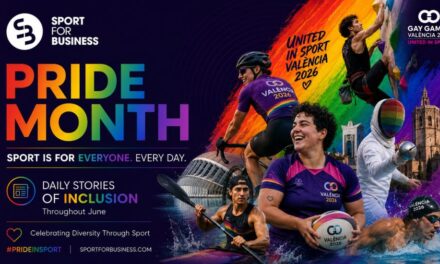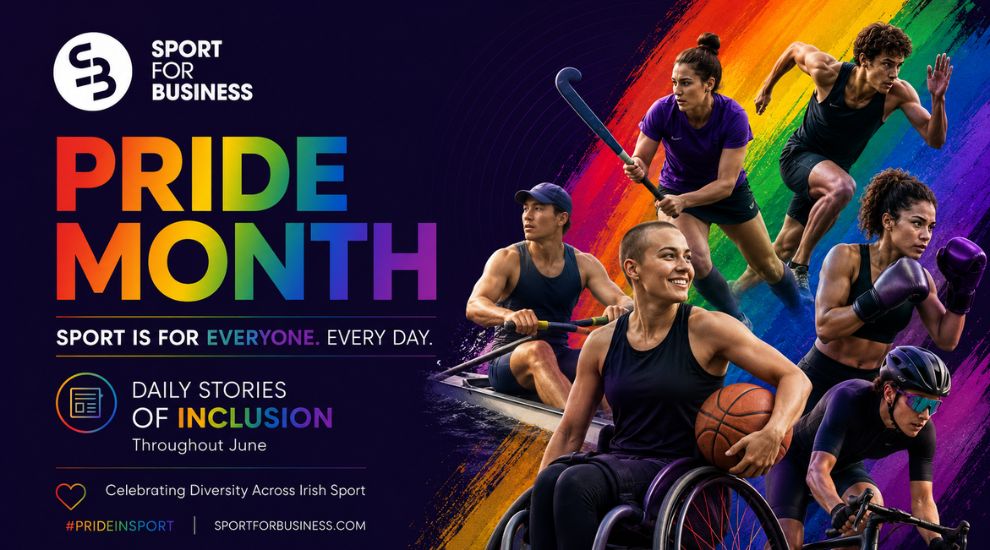
Continuing our daily stories of inclusion to mark Pride Month 2026, today we turn our attention to why LGBTQ+ inclusion matters for overall participation.
For many sports organisations, participation growth remains one of their defining challenges. Attracting new members, retaining existing players, recruiting volunteers and building stronger community connections are priorities that stretch from grassroots clubs to national governing bodies.
Increasingly, those objectives are becoming linked to a broader conversation around inclusion.
Research from Ireland and internationally has consistently shown that members of the LGBTQI+ community are less likely to participate in organised sport and more likely to leave sporting environments where they do not feel welcome. While significant progress has been made in recent years, barriers still exist, particularly for young people deciding whether sport is a place where they belong.
In the most recent Sport Ireland Sports Monitor for 2025, the figures for those under 45 show that while 61% of those who identified as heterosexual in that adult cohort participated in sport, the figure dropped to 52% in the LGBTQI+ cohort.
Club membership also shows a substantive gap between the two cohorts, from 45 to 37 per cent, as does volunteering, from 11 to 9 per cent, and attendance at sports events, from 21 to 9 per cent. Sport is clearly not seen as wholly welcoming.
Across Irish sport, governing bodies have invested heavily in programmes designed to broaden participation. Whether through women in sport initiatives, disability inclusion programmes, community outreach or youth engagement, the objective is clear: create opportunities for more people to become involved in sport and remain involved throughout their lives.
LGBTQ+ inclusion is becoming an increasingly important part of that conversation.
The challenge is not simply encouraging people to join clubs. It is ensuring they feel comfortable enough to stay.
Research has shown that experiences of discrimination, exclusionary language or a lack of visible support can discourage participation and contribute to higher dropout rates among LGBTQ+ participants. In contrast, welcoming environments can have a significant positive impact on retention and engagement.
The lessons emerging from clubs across Ireland are often remarkably practical. Clear codes of conduct, inclusive coaching practices, visible support from club leadership and education programmes for volunteers and members can all contribute to a stronger sense of belonging.
Importantly, many clubs report that these initiatives benefit everyone, not just LGBTQ+ participants.
A culture built around respect, inclusion and positive behaviour tends to improve the experience for all members. It can strengthen volunteer recruitment, reduce conflict, improve retention and enhance community engagement.
There is also a growing recognition that younger generations increasingly expect sporting organisations to reflect the values of the communities they serve.
For teenagers and young adults, inclusion is often viewed as a baseline expectation rather than an optional extra. Clubs and governing bodies that embrace this reality may find themselves better positioned to attract and retain future participants.
The commercial implications are also becoming more apparent, as we will explore over the rest of the month.
 Sporting Pride is a full member of Sport for Business.
If you would like to be part of the Sport for Business community and see your organisation in our content, on our stages, and in the conversation happening every day around the commercial world of Irish Sport, email us today and let’s see what is possible.
Image Credit: Sport for Business
ABOUT SPORT FOR BUSINESS
Sport for Business is Ireland’s leading platform focused on the commercial, strategic and societal impact of sport. It connects decision-makers across governing bodies, clubs, brands, agencies, and public institutions through high-quality content, events, and insights.
Sport for Business explores how sport drives economic value, participation, inclusion and national identity, and how your story can be part of ours.
Through analysis, storytelling and convening the sector, it helps leaders understand trends, share best practice and make better-informed decisions. It positions sport not just as entertainment but as a vital contributor to Ireland’s social and economic fabric.
Find out more about becoming a member today.
Or sign up for our twice-daily bulletins to get a flavour of the material we cover.
Sign up for our News Bulletins here.