The Government has sought input from those with an interest in Irish Sport on how to frame a new national Sports policy for the next decade.
This is the first time in 20 years that such a framework will be adopted at Government level and it is a crucial opportunity to put sport into its important context as part of overall Government thinking.
The Key Areas of interest and the Sport for Business views on each are as follows:
The key questions asked in the consultation around local and regional facilities are…
How to address barriers to facility use in order to maximise usage, and how to ensure that sports facilities meet the highest accessibility standards for participants, spectators and workers?
A key element of accessibility is security. It is unfortunate that we need to protect sporting facilities with fences and locks, unlike may other parts of Europe but the sad reality is that there is still a psychology within a small minority that if a space is there it is open to abuse.
This raises the cost of providing facilities and also ensures we need to be smart in how we maximise the use of those facilities that are already built or planned.
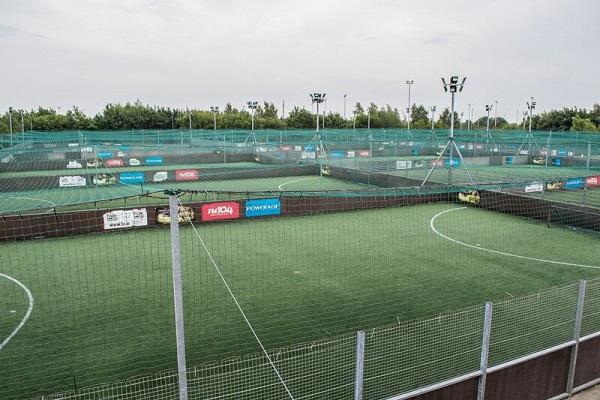
We need to make better use of existing facilities so that school sport which is a major factor dovetails with clubs and private use.
A facility in Australia – ‘Sporting Schools’ provides a central system where schools can book private pitches or facilities and central Government funds the transport needed to bring pupils to pitches that would otherwise lie empty during the working day.
It’s a fine example of how different groups that will gain benefit can be brought together for optimum benefit.
Looking at similar programmes around the world will yield similar projects that can be trialled and rolled out once local effectiveness has been proven.
What should be the balance of funding between local and non-local sports facilities?
We live in a country with a population of less than South London so questions of local vs regional are all relative. We cannot have a sporting palace in every parish but we can plan so that the travel time to get to the step-up facilities that can be seen as more regional in nature should be factored in.
This will be a challenge as we see with medical and hospital facilities where local pride becomes a strong political factor.
The key determinant should be demonstrable demand and use. Whether that is to provide for a population of 500 or 50,000 should not negate the need for robust questioning of a project and ideally joining up a number of potential projects to provide for the best possible use.
What facilities can best drive increased participation and/or improved performance and what should be the balance of funding between facilities/equipment designed to increase participation and those aimed at improving performance?
At local level the two do not necessarily need to be split out.
Management of pitch use and maintenance is at a much higher standard now than was previously the case and this should allow for a better blend between allowing wider access to the better facilities.
The bigger gaps in terms of facilities lie in indoor halls with proper storage facilities to enable multiple sports safely store equipment and use an appropriate facility that they might not otherwise be able to afford.
The focus here should be geared towards maximising participation. If elite performers are born out of this then they may need to factor in travel time in order to pursue their full potential. This may not be universally welcomed but it is a fact of life that it is worth the getting there if the experience is right at the end.
How to better link desired outcomes, current programmes and capital investment in sports facilities?
Centralised decision making would yield the best overall result but only if the process of communication with local needs is clear.
Individual sports, clubs and facility providers will always put their own needs first but sometimes a little compromise can go a long way towards unforeseen benefits.
Factoring this level of understanding and management onto a volunteer based infrastructure though is easier said than done and whether there is either the central resource or the willingness to move towards a better societal outcome is not certain.
It is likely that the best forum for doing this is through local authorities who have a detailed knowledge of local needs and in may cases an existing relationship with key stakeholders.
Should some or all publicly funded sports facilities be self-financing or to what extent, if any, should the public sector become involved in subsidising the operation of these facilities?
If physical activity is seen as a desirable public policy with financial benefits in health then public funding should be a strong part of the mix.
The discipline though of private sector management, with public responsibility enshrined in any contract in a similar manner to social housing, will lead to a better return on investment.
Subsidy is often seen as ‘free money’ which takes the edge off commercial management of a facility and we need to break this way of thinking.
Seed money to get facilities up and running is where public finances can best be used.
If that can be done within an environment where say a school provides land and clubs provide paid for use then we are getting to a position where the different elements of the mix are working together rather than pulling apart.
Should state funding be focused on multi-sport facilities and equipment that can support a large number of sports?
Yes.
Multi sports facilities are the norm elsewhere and make perfect sense so that maximum use is made in terms of time and shared facilities such as dressing rooms, maintenance, security, access and more.
Should state funding be concentrated on sports that can be participated in for life?
All sport can be participated in for life.
Tennis and Swimming use this in terms of their own promotion and rightly so but walking soccer is an initiative growing in popularity in Britain which allows those who have grown to old for full speed, full contact games to stay involved.
Triathlons are run on an age group basis allowing for competition to remain against peers rather than against the best of the best.
Gaelic for Mums and Gaelic for Dads are ways of expanding the age profile of those willing or able to participate in games they loved as younger people.
As we grow older and leisure time replaces work time as the main focus of lives there will be a demand led call for sports to adapt and provide physical activity at all ages.
We have no choice over getting older. Getting old though is more a state of mind.
How should the state best help in the provision of facilities/equipment for minority sports, emerging sports and participation outside of formal club structures?
Freeing up some of the Capital Sports Funding towards provision of equipment packs which can be used by minority sports within schools or community groups would create a greater diversity of sporting access.
An old Buntus programme of providing multi sport equipment to schools backed up by teacher training initiative could be revived through the school system as well so that physical activity and sport become once more an integral part of growing up
Join us for a morning of learning, networking and insight on the sporting year ahead and the sponsorship trends that will impact upon us on January 20th. Reserve your place now.