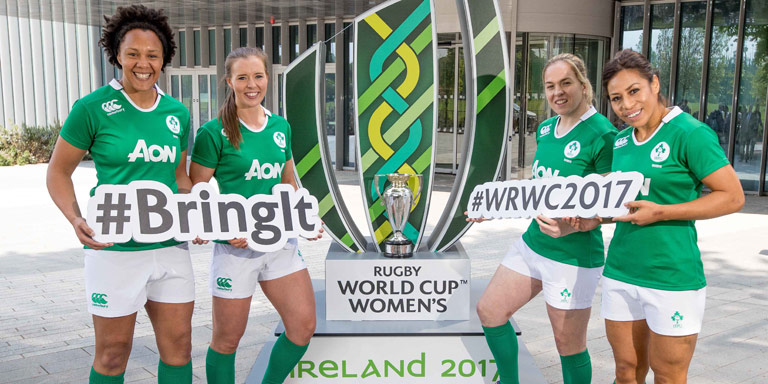
 World Rugby has announced that its flagship 15s and sevens Rugby World Cup properties will no longer include gender in their titles.
In what is claimed to be a first for a major sporting federation, the women’s designation will be dropped from Women’s Rugby World Cup 2021 in New Zealand which will now be named Rugby World Cup 2021, starting the global roll out.
The move is intended to ensure that the competitions have equal billing from a brand perspective, regardless of whether the events feature men or women. The purpose is to elevate the profile of the women’s game, while eliminating any inherent or perceived bias towards men’s only competitions and tournaments, which traditionally haven’t specified gender.
It is an approach that is sound in conception but may have a way to travel in terms of acceptance and understanding.
Without doubt it is a positive but the rugby World Cup only happens on a cyclical rather than an annual basis. It would not be possible to do similar with the Guinness Six Nations for example or the Energia AIL Leagues, both of which now have formal Men’s and Women’s competitions.
The only way for them to tackle the percieved bias and ‘seniority’ of the Men’s game is to reference it as the Guinness Men’s Six Nations in all branding, just as it does the Guinness Women’s Six Nations.
The tournaments arrre different by virtue of gender but need not be given a different sense of importance.
The announcement from World Rugby follows the unveiling of the new ‘Women in Rugby’ brand identity and global campaign ‘Try and Stop Us’, which was launched in May in partnership with member unions to drive greater growth and investment in the women’s game.
“This announcement demonstrates our ongoing and unwavering commitment to advancing women in rugby both on and off the field in line with our ambitious strategic plan,” said World Rugby Chairman Bill Beaumont.
“Unintentional gender bias in sport is an ongoing issue. As a global sporting federation we need to be leading from the front on the issue of equality. By adopting gender balance in the naming of men’s and women’s Rugby World Cup competitions, we are setting new standards in equality in rugby.”
“This is great leadership from World Rugby at a time that rugby is eager to embrace and celebrate true inclusivity and equality across the game,” added Steve Tew, CEO of New Zealand Rugby.”
The expansion of women’s rugby continues to exceed expectations worldwide, with the sport experiencing unprecedented global growth. Participation levels are at an all-time high with 2.7 million players globally – making up more than a quarter of the global playing population. This includes a 28 per cent rise in registered players since 2017. For the second year running, more young girls have got into rugby globally than boys and more than 40 per cent of rugby’s 400 million fanbase are female.