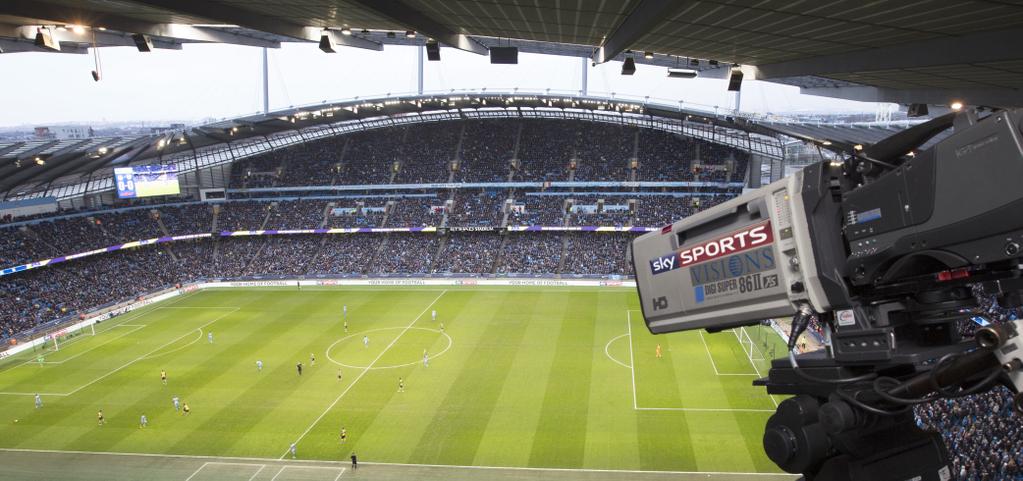
The TV rights to broadcast the English Premier League in it’s home market have through to 2019 been won by the incumbent SKY Sports and BT Sport stations.
Sky retained five of the seven available packages and will continue to show matches on Sunday afternoon and Monday Nights. BT Sport took the other two packages despite competition from the US Discovery Channel and the middle east’s BEIN Sport. They will increase the number of games shown in the Saturday lunchtime and Saturday early evening slots to 42 from the start of the 2016/17 season.
The sums paid by the two broadcasters are staggering and represent a 70% increase on the existing deal.
In total Sky will pay £4.17 Billion (€5.6 Billion) for 126 games a season while BT Sport will shell out £960 million (€1.29 Billion) for its package which will include 26 first pick matches.
When the first TV deal for the fledgling Premier League was won by Sky Sports in 1992 they paid £38 million for a package of 60 live matches. In side 27 years that figure will have increased 45 fold and is still accelerating.
Both broadcasters have placed live sports rights at the heart of their business proposition and within that larger picture there is still significant headroom to believe that the numbers will climb higher again in three years time.
Sky’s operating profit in 2014 was £1.2 Billion (€1.6 Billion) while in the last month BT has bought UK mobile operator EE for a figure of over £12 Billion. There is clearly plenty more in the tank as regards bidding for the top end content that will drive underlying subscriber numbers.
The Premier League is now second only to the NFL in America in terms of the value of its TV broadcast deal and the average amount paid per game is now £10.5 million (€14.1 million). That figure, for each and every live game to be broadcast over three years between 2017 and 2019 is almost 40% higher than the total media rights income for the GAA over the course of a year.
Because live sport remains one of the few ‘appointment to view’ broadcast elements, and through its saturation multi media coverage across all channels on and offline, these are the kind of figures that are mind boggling and yet justifiable in terms of profit and loss.
Better that they should be flowing through sport than any other form of human endeavour and let us hope that the halo effect of seeing sport as being among the most enjoyed and highest ranking endeavours of our society will continue.
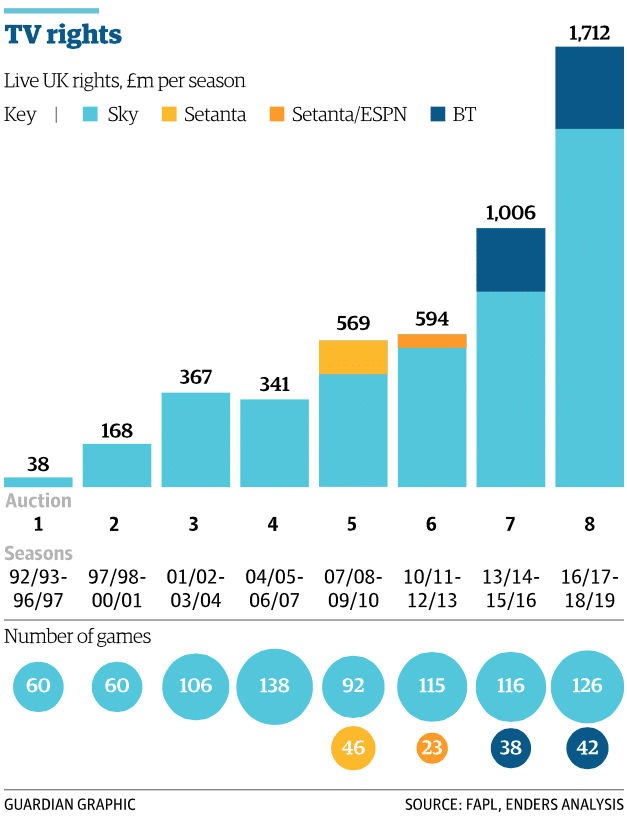
Graphic Source The Guardian. To read the full coverage of the TV rights click here.