In a new Leading Sport series, in association with our Partners in Leadership PwC, Sport for Business will host exclusive interviews with leaders in the commercial world of sport in Ireland and further afield.

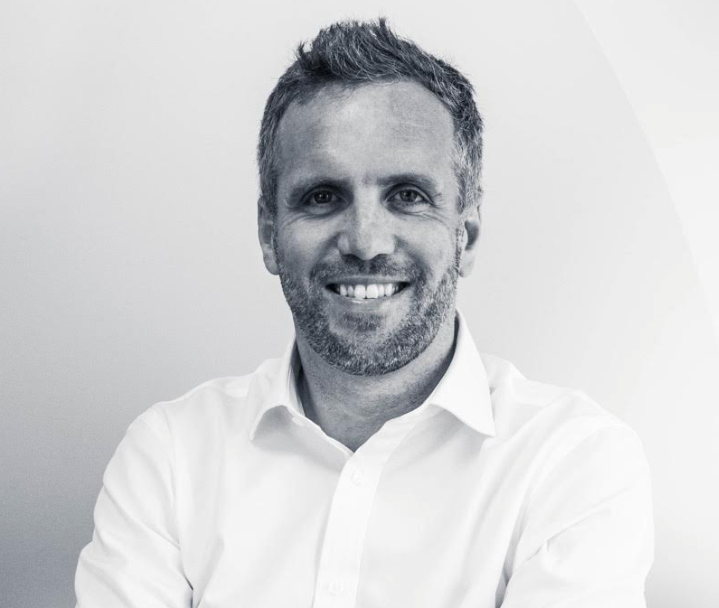
In this week’s first in the series for 2017 we caught up with the newly appointed Head of Commercial Partnerships at the European Tour in Golf. We asked about the future of Irish golf, the prospects of another Ryder Cup and the importance of the island of Ireland in relation to European golf.

Sport for Business: We have long treasured the notion of the Irish Open as a special event. It went through some lean years but is it the Tour view that it is now a main pillar event in Europe?
Max Hamilton: The Dubai Duty Free Irish Open has always held a special place on the European Tour – a position enhanced this year by it being one of our Rolex Series events – and it has been a permanent fixture on our International Schedule since 1975.
The tournament that year was won by the late Christy O’Connor Jnr and it is fitting that, as we mourned the passing of one of Ireland’s great golfers last year, the Irish Open continues to be carried forward alongside the name of its modern great, Rory McIlroy, whose commitment and support to the tournament through his Foundation has been unwavering.
I doubt there was a more popular winner in the whole of sport than at The K Club last year when Rory claimed his first Irish Open title. We are also hugely grateful for the support of title sponsor Dubai Duty Free who have helped raise the championship to new heights in recent years.
What do you see as the impact of the Rolex involvement this year and into the future?
There is no question that the Rolex Series is one of the most important developments in the 45 year history of the European Tour.
We are delighted to have eight Rolex Series events in our first year, including the Dubai Duty Free Irish Open, and the Series’ success and growth will help elevate the Tour and all our other events.
A stronger content offering during the week will increase consumer consumption of our game while the stronger financial offering – with each tournament at a minimum prize fund level of US$7 million – will give our younger players the option of not having to go and play in the US.
Fans tuning into the Irish Open will see our innovation showcased along with our enhanced digital production, providing a truly different experience for the players and for fans, both at home and at the venue.
Is Ireland unusual in seemingly short term announcement of venues?
There is no hard and fast rule in this regard and it is often the case with national Opens such as Ireland and Scotland where there is a desire to show off the many and wonderful venues across the length and breadth of the country.
Is the Tour supportive of the rotation policy between ROI and NI?
We have always been supportive of the island of Ireland as a whole and nowhere was that more apparent than when, for the first time since 1953 at Belvoir Park, we staged the Irish Open north of the border at Royal Portrush in 2012.
Since then the rotation policy between north and south has worked well and is a policy we will look to continue.
Will Brexit have an impact on movement of players and spectators.
Like all global companies whose main headquarters are in the UK, we are currently assessing the impact of Brexit on all aspects of our business. We have not experienced any difficulties on that score up to now.
What can Ireland teach other events about building spectator numbers?
Ireland is fortunate that golf is in the DNA of its people which certainly helps crowd numbers every year.
In addition to that, as well as being large in number, the crowds at the Irish Open are always very knowledgeable about our sport which makes it gratifying for our players to play in front of them.
One thing every Irish Open does well is engage the whole local community. Everywhere you go in the local area that is hosting the Irish Open, you are made well aware that the golf is on – I think that is something that other tournaments and other events could learn from and potentially benefit from.
What do you see as the biggest challenges facing the Tour in the next few years?
I think the issues we face are faced by everyone in the game. Golf needs to embrace change and modernise to appeal to wider markets.
As the gatekeepers of the professional game, the traditional 72-hole format will always have a significant presence in our sport. But we must look towards new formats geared towards the millennial demographic for our sport to evolve.
We have to engage our fans in news ways, given the way content is produced and consumed 24/7. We have a saturated golf market and we must be courageously different and never forget that we are an entertainment content business that has golf as our platform.
There is a narrative for change in the game right now which is the reason we are embracing format change such as the World Super6 event we held in Perth recently and the upcoming GolfSixes tournament to the north of London next month.
It is the reason we are also pushing the boundaries on our digital content and innovative thinking. On a practical level, we also have to address the issue of slow play which we have done with the setting up of our new Monitoring Penalty and which we are doing through constant dialogue with the rules makers of the R&A and the USGA.
Investment in Adare has raised hopes of a Ryder Cup return to Ireland? When might that be an option?
We do not speculate on future Ryder Cup venues. All our energies at this moment are concentrated on The 2018 Ryder Cup at Le Golf National on the outskirts of Paris and on The 2022 Ryder Cup at Marco Simone Golf Club in Rome.
Some leading Irish clubs still have issues with equality. Will the Tour stand strong on this as has the R&A?
Absolutely. As we have stated publicly in the past, we will not take the Irish Open to a venue that operates a male-only membership policy.