 There was a natural lift in spirits on Friday night when we got to see a roadmap of a potential return to sport.
The reality though is that there are many caveats to be explored and hurdles to be cleared before any likely return will become a reality.
There was excitement at the dates of May 18th, June 8th and June 29th where returns to small social gatherings of up to four people will be permitted, where small group team training and where ‘behind closed doors’ events might be permitted but the most important words are ‘where social distancing can be maintained.”
This is going to be the point at which sport takes a divergent path between those where there is no contact like golf, tennis and equestrian sport which we have covered elsewhere and the major field sports of Gaelic Games, Football and Rugby.
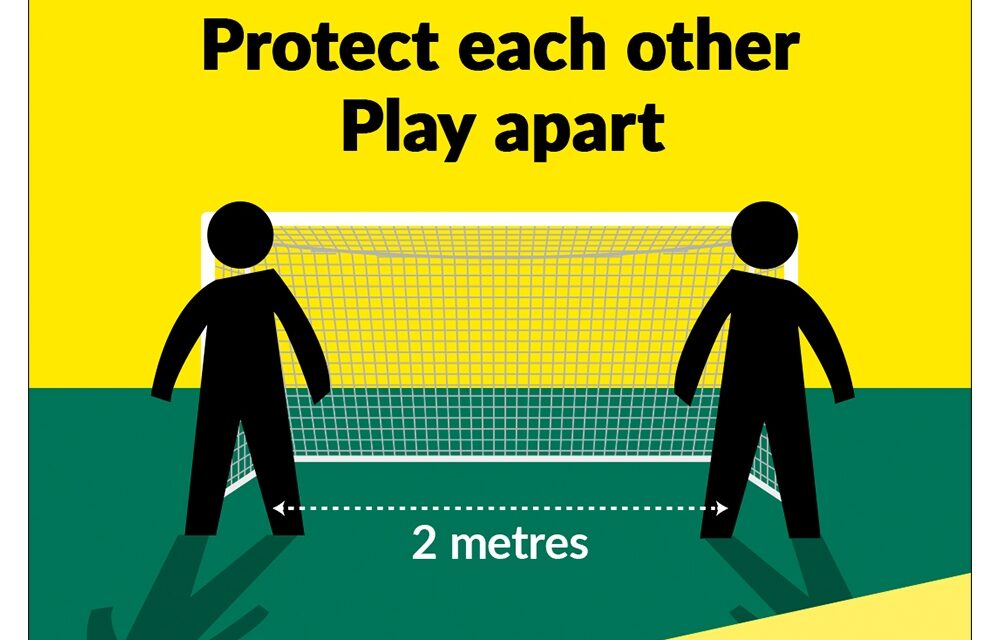
There was discussion over the weekend about how in certain circumstances, at some unspecified point in the future the guidelines on social distancing might come down from two metres to one metre.
There is planned to be a prevalence study across a broad cross-section of the population in June to get an estimate of how many people have picked up the infection without knowing it, and may now have immunity from catching it again.
The higher that percentage goes, the better it is and the better informed we are on the calculated risk of engaging in activities that by their very nature produce zero metres of social distancing.
If that figure is ten per cent the risk is far greater than if it was 30 per cent or higher.
Sport is about calculated risk. There is always the threat of injury but we factor that into a decision on whether to play or allow those close to us who are not yet old enough to make that decision to play.
When the likelihood of injury ranges from a pulled muscle to a bruise that risk is deemed worthwhile.
When it extends to injury that might lead to paralysis or other catastrophic injury, the levers of calculation become more difficult to weigh.
The key to all though is that in a physical sense the risk is undertaken and applied to the individual.
In the world of pandemic infection, the circle of risk is widened and that is where things become very difficult in the world of contact sport.
The optimists will look to the wording on phase four within the cultural and social measures of the roadmap and see the 20th July as the date on which it will be permitted for “sports team leagues (eg Soccer and GAA)” to return.
They will read on to the words “But only where limitations are placed on the number of spectators,” and consider that as being OK for the games but not in the stadia.
The realists though will carry on to the last phrase “and where social distancing can be maintained.”
That’s the real kicker which sporting bodies will this week have to wrestle with.
Even in the fifth phase starting on August 10th, where ‘close contact sports’ including and specifically referenced as Rugby and Boxing can return, the phrase “where social distancing can be complied with” remains.
There is a direct contradiction between contact sport and social distancing. Up until now, it has been a game of absolutes. Stay home, stick to household groups, stay two metres apart, wash your hands and the different mantras we have taken on as gospel.
Now though we have to face the concept of calculated risk.
Instead of stepping off the pavement to avoid the oncoming walker would you go up and shake their hand or give them a hug. If that looks ridiculous and dangerous today, when will it be OK?
But what then of a tackle, a shoulder, a scrum, a shemozzle. If not today, then when? And who has ever witnessed any of those separated by a metre of distance in anything other than a computer simulation?
Friday was a win in many areas of our social discourse and in the world of getting back to a functioning society. For sport, though there are a lot more questions that remain.
Check out below our discussion meeting this week looking at different ways in which we might address some of the issues raised in this article. Reserve your place as a Sport for Business member here.
Check out our Live Webinar series Events coming up on Sport for Business