 With school exams now finished and a new Junior Cert cycle starting in September, it appears disappointing that little will be done to correct Ireland’s poor showing in international tables of physical activity in schools.
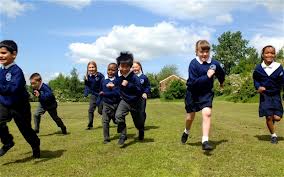
The new curriculum does include a commitment to 100 hours of PE over a two year cycle but this is less than is currently the case and this placed Ireland third from the bottom of a league table published by Eurydice this year for secondary schools and rock bottom for primary schools.
As part of its hosting the British Commonwealth Games in 2014, the Scottish Parliament is introducing a minimum threshold of two hours a week of physical education in secondary schools.
Speaking at last week’s Business of Women’s Sport conference at the UCD Smurfit Business School, Peter Smyth of the Irish Sports Council highlighted low physical fitness as a bigger contributory factor in death than any other element, including smoking.
A report published this week in Wales has called on the need for physical education to become a core subject with the same status as maths, English and others in order to ‘defuse the obesity time-bomb that is ticking in modern youth.’
The problem is international. In 1980,an estimated 7 percent of U.S. children ages 6 to 11 were obese, according to the US Center for Disease Control and Prevention. By 2010, that number had jumped to 18 percent. Among adolescents ages 12 to 19, the jump was even bigger, from 5 percent in 1980 to 18 percent in 2010.
The Welsh report came from a commission chaired by Paralympian Baroness Tanni Grey Thomson. It commends the Welsh Government’s commitment to making ‘physical literacy’ as important in schools as reading, writing and numeracy. However, they maintain that giving PE core-subject status is the only way to turn fine words into real action.
The report estimates the cost of of introducing PE as a core subject to be in the region of €6 million, a fraction of the longer term cost in health spending from failing to act.
Ireland’s preparation of PE teachers is better than most countries with 180 qualifying each year from three third level institutions.
Until such time though as the curriculum gives as good a basis for sport and physical fitness, as is increasingly the case at third level, their talents will not be fully exploited.
In January of this year the Department of Tourism, Transport and Sport listed the promotion of sport and physical activity as an examination subject as one of the ten targets for 2013. It would hardly have been included were it not for some initial discussions that might have taken place between the Department and colleagues at the Department of Education and Science, as well as the HSE.
This would be a significant step forward in terms of ‘joined up’ Government in an area of public policy where the rewards might generally lie in a longer time frame than would normally be at the top of a political list.
In most areas we advocate that small steps forward are the best way to make progress but in the case of physical education more needs to be done in order to correct the poor legacy we are creating for children in school, a legacy which is tempered by higher than norm extra curricular activities through club sport but which needs to be for all through a formal place in the education system.
Sport for Business is currently planning The Business of Youth Sport, a half day conference to take place in November 2013. Click to find out more or contact us today if you would like to participate.
Find out more on Sport for Business



Join us as a Member More on Youth Sport More on Sponsorship

The state of physical education in schools