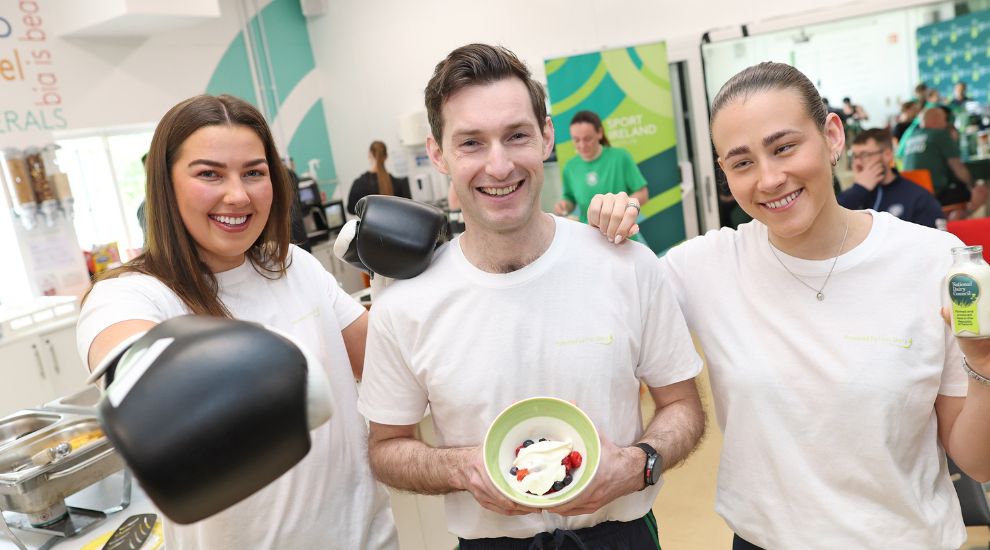
The National Dairy Council has launched a new three-year partnership between the National Dairy Council and the Sport Ireland Institute, Ireland’s national high-performance sport support centre for elite athletes.
The “High-Performance Breakfast, Powered by Irish Dairy” programme will provide a nutritious dairy-based breakfast for Ireland’s elite athletes, coaches, and support staff as they prepare for the Los Angeles 2028 Olympic and Paralympic Games.
The launch was accompanied by new research, which has found that while Irish adults place a high value on starting the day with a healthy and balanced breakfast, convenience continues to shape many of the choices made at the kitchen table.
The survey of more than 1,000 Irish adults found that 84 per cent say a healthy and balanced breakfast is important to them. However, 41 per cent still typically choose convenience-led options such as bread, toast, or pastries, with more nutrient-rich choices such as cereal with milk also common.
Double Olympic champion and three-time Olympic medallist rower Paul O’Donovan, World Champion boxer Lisa O’Rourke, and Paralympic silver medallist swimmer Róisín Ní Ríain were among the athletes at the Sport Ireland Institute on the Sport Ireland Campus in Blanchardstown for the launch.
For Sharon Madigan, Head of Performance Nutrition at Sport Ireland Institute, the partnership brings together science, education and practical delivery in a way that has long been part of the Institute’s vision.
“It’s a win-win across the board for so many different aspects of performance,” she said, speaking to Sport for Business. “It brings the evidence into play. I can talk to athletes until I’m blue in the face about nutrition, but a lot of the action happens in here, and we can bring the science to life through the art of cooking.”
The kitchen at the Institute has been designed not only as a place to prepare food but also as a functional space for athlete education. Madigan said the idea of using breakfast as a practical daily support has been in place since 2017.
“Some people would say, well, why breakfast?” she said. “But you have a lot of athletes coming from a training session and going to the gym, or maybe going out for a run afterwards. Breakfast sets them up to do the work or recover from the work they have just done. It allows us to bookend sessions, especially if athletes have two sessions in the day.”
That approach links closely to the broader research findings. Just over a quarter of respondents said convenience and practicality are their main priority when choosing breakfast, while only 4 per cent opt for a traditional cooked breakfast. Nearly half eat cereal or granola with milk or yoghurt, while 52 per cent usually eat breakfast at the kitchen table, compared with 11 per cent who always eat it on the go.
The partnership aims to highlight the role of dairy in supporting performance, muscle recovery after exercise, and overall health within a healthy, balanced diet.
Madigan said the Institute’s approach is rooted in “food first”, with dairy providing multiple options around protein, calcium, hydration and recovery.
“For me, some of the big injuries we are seeing are around bone health,” she said. “The problem with bone is that we don’t think about it, we don’t see it and we don’t feel it. We focus on the soft tissue. When we do see it or feel it, we’re in trouble.”
She said the importance of bone health starts early, with athletes effectively building what she described as a “bone pension” up until their early twenties.
“These are foods that are cost-effective, they’re handy, they’re in everybody’s fridge, and we can do so much with them.”
The research also found that among adults who exercise regularly, 79 per cent reach for water after exercise, 16 per cent choose electrolytes, 15 per cent opt for tea, and just 10 per cent choose milk or flavoured milk, despite its hydration and post-exercise muscle recovery benefits.
Post-exercise, 95 per cent of adults said rehydration was important, followed by muscle repair at 85 per cent and refuelling at 75 per cent.
Dr Mary Harrington, Senior Nutritionist at the National Dairy Council, said the research showed a gap between intention and action.
“This research shows that Irish adults want a nutritious and balanced breakfast, but there is a gap between what people prioritise and what they choose in the morning,” she said. “Irish dairy offers a simple and versatile way to add more nutritional value to breakfast. Whether it’s milk with cereal, yogurt with granola, or a glass of milk, dairy provides high-quality protein, calcium, and other important nutrients to help support a balanced start to the day.”
She added that milk plays a valuable role in recovery after exercise, comprising approximately 87 per cent water, with the remaining 13 per cent containing electrolytes such as potassium, carbohydrate in the form of lactose, and high-quality protein, including casein and whey.
Those elements support the three key post-exercise needs often referred to in sports nutrition as the “Three Rs”: rehydrate, refuel and repair.
Madigan said the challenge remains one of education, both among the general public and among athletes, where the message around recovery has to be repeated and reinforced.
“Sometimes we only think about the session we have just done. We don’t think about how that is going to impact the session we are going to do next.”
“The body doesn’t know it’s a Wednesday morning or a Tuesday night. Physiologically, there is no switch that goes off at midnight. If I have a session on a Tuesday night, I have to start thinking about my Wednesday morning session before I do the Tuesday night session.”
That could mean making simple, practical choices after an evening session rather than trying to force down a heavy meal late at night.
“If you had cereal and milk, or yoghurt and fruit, or cheese on toast, then suddenly that becomes your first breakfast because you are already thinking about the next morning,” she said. “It’s about little and often, bridging the session, and thinking about the next session.”
Liam Harbison, Sport Ireland Institute Director, said nutrition is central to performance at the elite level.
“Elite performance starts long before the competition actually begins,” he said. “What our high-performance athletes eat, when they eat it, and the quality of it makes a real difference at the highest level.”
“We’re happy to partner with the National Dairy Council on this initiative, which puts first-class nutrition at the heart of daily preparation for Ireland’s best athletes, coaches, and support staff. As we continue to build toward the LA 2028 Olympic and Paralympic Games, programmes like this are the kind of practical, evidence-based support that gives Irish sport a competitive edge.”
Emma Walls, CEO of the National Dairy Council, said the partnership reflected the organisation’s support for Ireland’s Olympians and Paralympians on the road to Los Angeles.
“This initiative reflects the National Dairy Council’s commitment to providing Ireland’s top athletes, coaches, and their teams with a nutritious, dairy-based breakfast to help support performance and recovery in the high-performance centre,” she said.
“Through this partnership, we are celebrating Ireland’s world-class, grass-fed dairy alongside the best of Irish sporting talent, bringing together elite nutrition and elite performance.”
For Paul O’Donovan, the value lies in the practical support it gives athletes across busy training days.
“When you’re training at a high level, especially coming up to big competitions, it’s not just the sessions on the water that matter; the things around them make a difference too,” he said. “Breakfast is one of those. You need something good to eat before the day gets going, and eating properly really helps with recovery and building strength. These are the things that give you the edge.”
“It’s great to see the National Dairy Council partnering with Sport Ireland Institute on this programme. Having a good breakfast available five days a week is a real support for athletes. We’re always trying to get the nutrition right, but we’re not always blessed with time. Dairy is something most of us know from everyday life, but it has a very practical role in sport too, particularly for energy, protein, and hydration.”
Madigan said the availability of breakfast also creates a social and educational space where conversations with athletes and coaches can happen naturally.
“Part of this is not only the opportunity to educate because the food is there, but also the piece where I can sit down with coaches or athletes and ask what they are having today, or whether they have thought about the session later on,” she said.
“Maybe they can put a bit aside and have that later. Have they got something with them? That social element matters.”
Elite performance may be measured in medals, margins and moments, but much of the work begins earlier in the day, in the choices that help athletes train, recover, adapt and go again.

 Sport Ireland and the Sport Ireland Institute are full members of Sport for Business.
If you would like to be part of the Sport for Business community and see your organisation in our content, on our stages, and in the conversation happening every day around the commercial world of Irish Sport, email us today and let’s see what is possible.
Image Credit: National Dairy Council
ABOUT SPORT FOR BUSINESS
Sport for Business is Ireland’s leading platform focused on the commercial, strategic and societal impact of sport. It connects decision-makers across governing bodies, clubs, brands, agencies, and public institutions through high-quality content, events, and insights.
Sport for Business explores how sport drives economic value, participation, inclusion and national identity, and how your story can be part of ours.
Through analysis, storytelling and convening the sector, it helps leaders understand trends, share best practices, and make better-informed decisions. It positions sport not just as entertainment but as a vital contributor to Ireland’s social and economic fabric.
Find out more about becoming a member today.
Or sign up for our twice-daily bulletins to get a flavour of the material we cover.