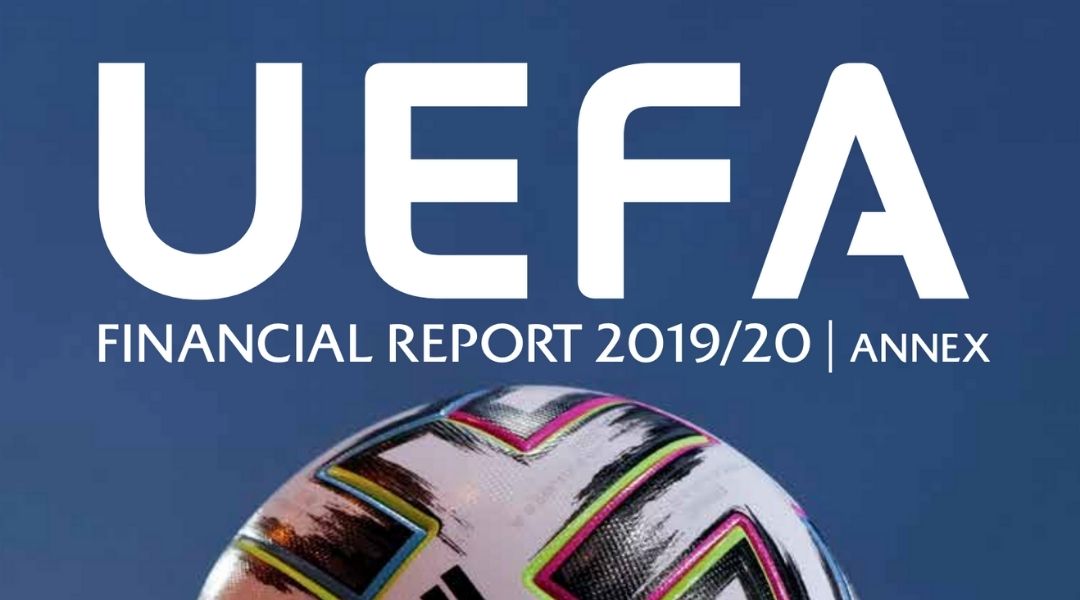
The impact of the initial stages of the pandemic can be seen in stark black and red when looking at the annual report and accounts for UEFA that were published yesterday.
Media rights income fell from €3.3 Billion in 2018/19 to €2.59 Billion last season, while other commercial rights including sponsorship dropped from €478 Million to €417 million.
In total 85 per cent of UEFA’s revenue comes from media rights and the dent from losing the closing stages of the Champions and Europa Leagues was significant.
The strength of the product though can be seen in the fact that despite last year, the total revenue from sponsorship, merchandising and licensing rights in the cycle from 2018 to 2021 has still increased from €1.29 Billion in 2015-2018 to €1.32 Billion
Ticket revenues dropped from €26.9 Million to €3.5 Million and hospitality revenue also took an obvious dive falling from €23.4 Million to a modest €300,000.
In terms of the balance between club and international, the revenue figures leave no doubt. Club competitions drove 89.9 per cent of income with international matches and rights drawing in 9.2 per cent.
Looking Forward
In terms of looking forward, the report contains a line in the risk section stating that “UEFA’s management has evaluated the financial risks associated with the pandemic. The risk of future competitions played with a limited number of spectators or being cancelled may lead to a significant decrease in revenue with important reimbursements to football partners and ticket holders. The corresponding distribution and solidarity payments might be reduced accordingly to ensure the continuity of UEFA’s activity.”
It remains in rude financial health nonetheless with total reserves still being maintained above €500 million, down from €574 million the previous year.
None of the income for the postponed Euro 2020 Finals has been recorded in this accounting period and has instead been rolled forward to when the tournament takes place this June and July.
The distribution of revenues to national associations, including the FAI was halved from €551 million to €278 million.
There is no direct reference to the work done in bringing the FAI back onto an even keel during this period though there is an increase from €29 million to €51 million in bridging loans to associations.
The reference to this in the accounts states that “Interest-bearing bridging loans were granted in exceptional cases to provide funding for essential infrastructure for the long-term benefit of member associations or to advance HatTrick investment payments with the approval of the HatTrick Committee, creating a win-win situation for the member associations and UEFA.”
As an open and transparent look at the finances of a major sporting body in a time of crisis, this is fascinating reading.
You can download a copy of the report here.
UEFA and the FAI are members of the Sport for Business network of sporting and business organisations working together across a number of key areas.
Sport for Business Partners
[logocarousel id=”56327″]