The Republic of Ireland and Northern Ireland women’s national teams will get to know their 2026 plans later today, as UEFA prepares to unveil the groups for the 2027 FIFA Women’s World Cup qualifiers, which double as the next cycle of the UEFA Women’s Nations League.
The draw takes place on Tuesday afternoon in Nyon (12pm Irish time, live on UEFA.com), setting the competitive roadmap that will potentially carry both teams closer to the next World Cup in Brazil 2027.
Republic of Ireland: another shot at history
For the Republic of Ireland, the draw represents both a reward and a reckoning. Carla Ward’s side earned their place in League A by beating Belgium in a tense promotion–relegation playoff last week, securing a place once again among Europe’s elite.
Having made their World Cup debut in 2023, Ireland are now targeting consecutive appearances on the biggest stage.
Only the four group winners in League A will qualify automatically for Brazil, while the other 12 teams will move into the seeded playoff system. That means every point and every goal could be pivotal.
Ward’s team enter the draw as Pot 4 seeds, alongside Slovenia, Serbia, and Ukraine. The 16-team League A will be split into four groups, with one nation from each pot. The draw will deliver Ireland three opponents from a who’s-who of European women’s football.
Pot 1: France, Germany, Spain, Sweden.
Pot 2: Netherlands, England, Italy, Norway.
Pot 3: Denmark, Austria, Iceland, Poland.
Pot 4: Slovenia, Serbia, Ukraine, Ireland.
UEFA’s “winter venue” rules mean that only two of Sweden, Norway, and Iceland can be drawn together, but otherwise, anything goes.
Ward has made no secret of who she’d like to see. “I would love England at Wembley,” said the Ireland head coach last week. The Birmingham-born manager—who took the reins earlier this year knows the emotion and attention such a fixture would generate, and with England ranked fourth in the world, it would offer a measuring stick for how far Ireland have come.
From a rankings perspective, the potential range of difficulty is stark. A Spain (1), England (4), and Denmark (14) combination would be the hardest possible draw; France (6), Norway (13), and Poland (26) the most favourable. Italy, also ranked 14th, would be another welcome second seed.
Ireland, currently 27th in the world, are guaranteed a seeded playoff spot no matter where they finish. But the goal is to stay in League A and prove they belong. Memories of the Euro 2025 qualifying “Group of Death”—against England, France, and Sweden—remain fresh. That campaign yielded just one win, albeit a historic one against France at Páirc Uí Chaoimh. A repeat of that calibre of opposition would test Ireland’s depth and consistency, but this team has grown tougher since then.
The qualifying fixtures will be packed into three double-match windows:
March 3 & 7 2026
April 14 & 18 2026
June 5 & 9 2026
Each team plays home and away, making travel and venue selection critical. The Aviva Stadium is expected to host at least one marquee tie, though Páirc Uí Chaoimh, scene of recent success, is also in the mix alongside the traditional home base of Tallaght Stadium.
Should Ireland finish second or third, they will face a League C opponent in the first round of the October 2026 playoffs. A fourth-place finish would drop them into a tougher bracket against higher-ranked League B sides.
Two rounds of playoffs, in October and November/December 2026, will determine seven of Europe’s final eight World Cup places. The eighth-best playoff winner will go to the inter-continental decider in February 2027.
Northern Ireland: a climb worth making
Across the border, Northern Ireland approach the draw from a different starting point but with the same sense of optimism. They will line up in League B, aiming to build momentum under new leadership and climb back toward the elite bracket.
The opponents are competitive but beatable, the structure rewards consistency, and finishing first or second opens doors to promotion or playoff opportunities.
For Northern Ireland, whose young squad continues to evolve after their historic Euro 2022 campaign, this draw is a chance to redefine expectations.
Pot 1 contains the four teams ranked 17th to 20th.
17 Belgium; 18 Portugal; 19 Wales; 20 Switzerland
Pot 2 contains the four teams ranked 21st to 24th.
21 Scotland; 22 Czechia; 23 Finland; 24 Northern Ireland
Pot 3 contains the four teams ranked 25th to 28th.
25 Albania; 26 Türkiye; 27 Slovakia; 28 Israel
Pot 4 contains the four teams ranked 29th to 32nd.
29 Luxembourg; 30 Malta; 31 Montenegro; 32 Latvia
Their best-case scenario is a group free of former League A heavyweights, giving them a realistic shot at first place. A group including mid-tier sides such as Hungary, Romania, or Slovakia would play to their strengths. Conversely, landing one of the stronger “relegated” sides, say, Switzerland or Portugal, would make life tougher.
There is no doubt that the IFA contingent in Switzerland will be hoping to avoid the political nightmare of being drawn in the same group as Israel.
With several dual-nationality players now integrated and a pipeline of domestic league talent emerging, the team’s next step is sustained competitiveness. The draw will dictate whether their next 12 months are about consolidation or a genuine promotion push.
Image Credit: UEFA
Further Reading for Sport for Business members:
Read our Sport for Business Coverage of Football
SPORT FOR BUSINESS Upcoming Events
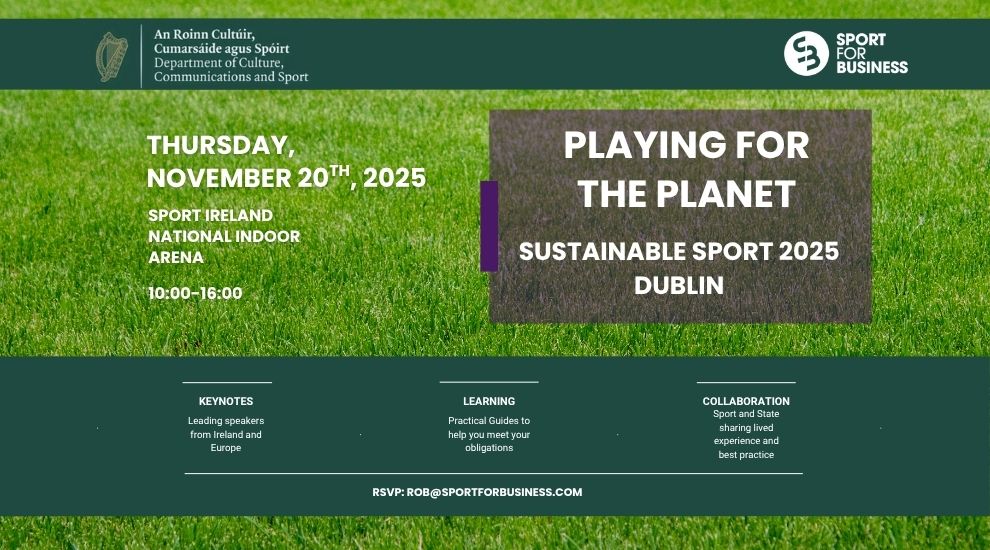
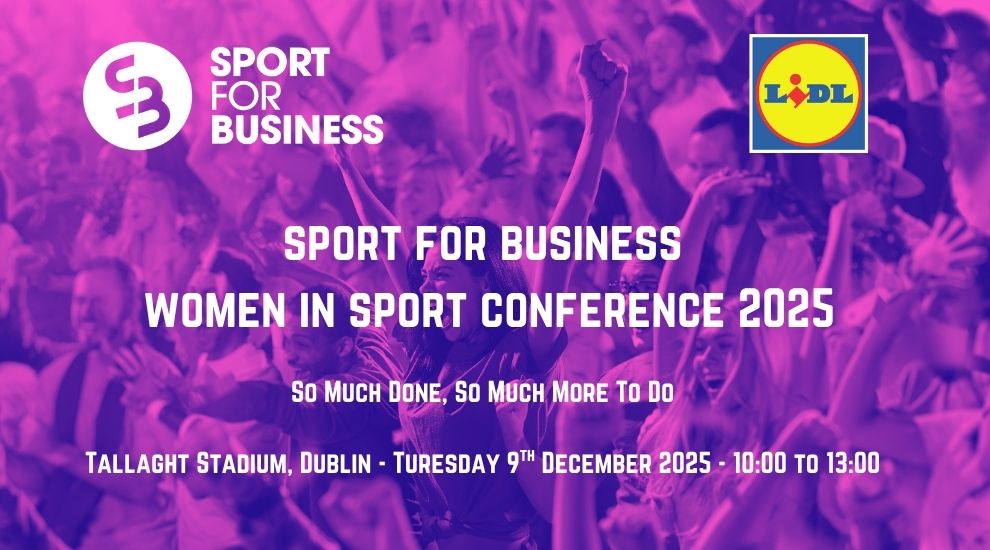
November 20th – Playing for the Planet – A new event focused on Sustainability in Sport with the Department of Culture, Communications and Sport
December 9th – Our 12th Annual Women in Sport Conference in partnership with Lidl.
January – The Sporting Year Ahead 2026 in partnership with Teneo.
Sport for Business Podcasts
MEMBERSHIP AND EVENTS
Over 40 National Governing Bodies of Sport in Ireland, including the FAI and the IFA, as well as all the leading sporting and business organisations in and around the world of sport, are among the 300+ members of the Sport for Business community.
This includes all of the leading sports and sponsors, as well as commercial and state agencies, individuals interested in our world, and an increasing number from beyond these shores taking a keen interest in Ireland.
Find out more about becoming a member today.
Or sign up for our twice-daily bulletins to get a flavour of the material we cover.
Sign up for our News Bulletins here.