A recurring theme of the debate around Women’s sport is the importance of consistent and mainstream media coverage.
There are those who argue that women’s sport will never achieve parity of esteem until it is given parity of coverage on mainstream television but that presents a conundrum in terms of media being drawn towards the most popular events which in turn become more popular as a result of the exposure.
A full stadium at a major event makes for good visual TV and a sense that ‘everybody’ is watching. That does not happen yet in most cases for Women’s sport thus giving TV schedulers and rights negotiators less compelling evidence to ‘be there’ with cameras.
$30 Million
There are exceptions which will in time become the norm. This year’s Women’s World Cup attracted record TV audiences and generated $30 million in advertising revenue for Fox Sports who broadcast the tournament live.
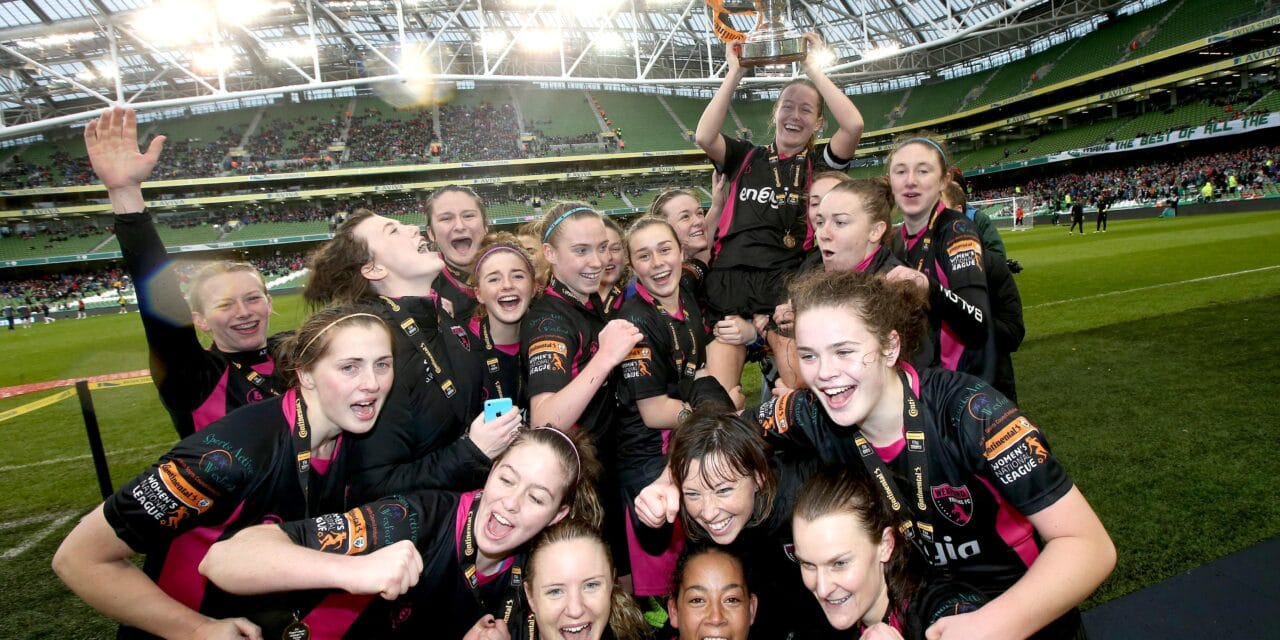
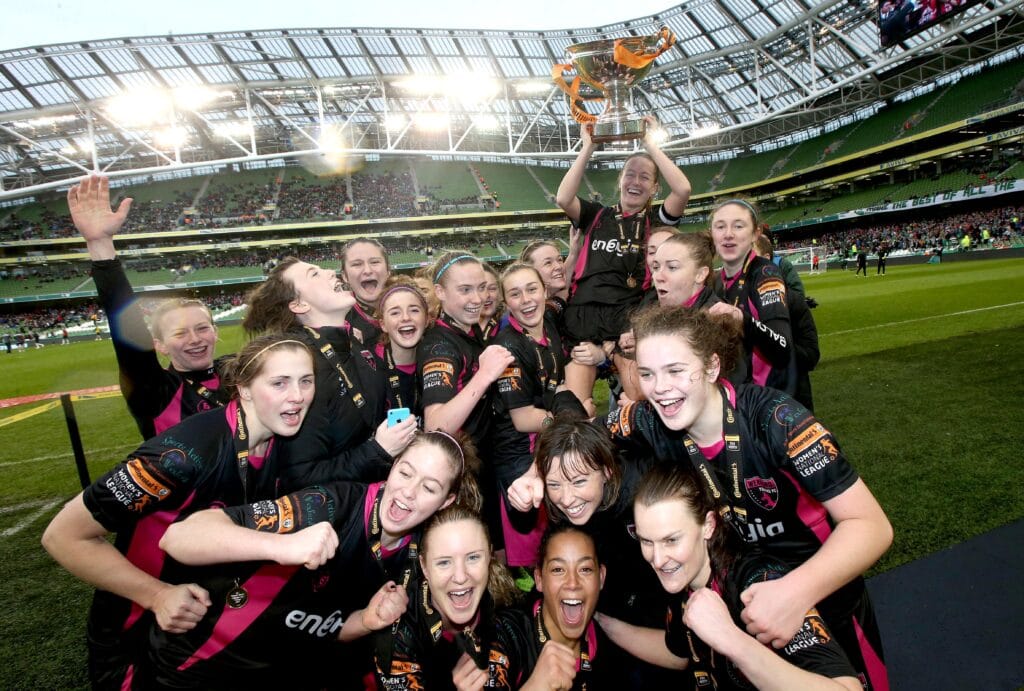
Yesterday RTE Sport gave equal billing to the Men’s and Women’s FAI Cup Finals played at the Aviva Stadium. The Women’s game generated more drama with late equalisers and a penalty shoot out, though television pictures of the Cork City men’s team coming onto the pitch to warm up before the shoot out was concluded attracted more commentary online than the game itself.
Ireland’s advance to the semi finals of the Women’s Rugby World Cup attracted TV audiences approaching 500,000 for TG4 in 2014, giving lie to the fact that audiences are not interested.
Narrative
This comes from a wide variety of media appearances. Programme like ireland’s Fittest Family have had coaches including Derval O’Rourke, Nikki Symmonds and this year Anna Geary, all of whom are great ambassadors for Women’s sport at the highest level.
Making their appearance alongside Jason Sherlock or Alan Quinlan ‘normal’ is a process that takes time but is underway. Having women analysts and commentators on television is another way of creating the right environment and this is also well underway through the promotion on merit of broadcasters like Jacqui Hurley, Evanne ní Chuillin, Joanne Cantweel, Sinead Kissane and Marie Crowe among others.
Foundation
The art of storytelling also needs a strong foundation among the core supporters of a sport or a team. Sport in 2015 has never had greater opportunity to control its own media through social and online channels.
“This is a critical way for sports and sports stars to promote themselves in an effective manner,” according to Cliona Foley, an experienced reporter from mainstream media with the Irish Independent and now working in the online sphere to boost coverage of Women’s sport.
“Mainstream journalists are continually checking these new media for the stories and characters that are capable of providing a good story and it is an area that much can be achieved in.”
Champions
Increased sports coverage on major portals like Her.ie as well as specialist champions like sportswomen.ie provide an outlet where coverage is achieved, read and seen as opposed to being tilted at mainstream and falling short of a packed news agenda.
In the Uk Women in Sport recently mounted a crowd funded campaign aimed at generating funds to research that actual coverage devoted to Women’s as opposed to Men’s sport. It was well promoted and Sport for Business contributed buying a Women’s World Cup shirt signed by the England team.
The campaign itself though came up short of what it needed and now alternative sources of funding are being tapped into to make the research happen.
Backers
We were one of a mere 44 backers of the campaign. It was well thought through but these initiatives need advocates to stand up and play their part in making change happen. That can only come from within the audience that cares about issues like equality in sport.
That has to be the next step, to build from within and to make the news rather than wait on traditional mainstream media to give an imprimatur.
Sport is about doing what you can in the circumstances at the time. Earning media is no different. It’s time to stop giving out about the lack of coverage, and to start recognising and building on the work being done by sports, athletes and media to take one step at a time forward.
All of a sudden one day we will look back and see how far we have come. Far enough to attract 33,000 to Croke Park this September, far enough to attract Continental Tyres, Liberty Insurance, Aon, AIG, Tesco and AIB to give strong commercial backing where so much less existed a mere three years ago.

Our coverage of Women’s Sport this week on Sport for Business
Inspired:
Inspiring words from an Inspiring leader in sport. Fiona Coghlan speaks out on why we need to normalise sport in girls lives and normalise women’s sport in society.
This Girl Can:
‘I jiggle therefore I am’ was the signature caption on a campaign which ran across England during 2015, raised levels of physical activity among women. Could it work in Ireland?
The Leadership Gap:
The Leadership Gap – 44% of those competing at the London 2012 Olympic Games were women but in leadership roles within sport on a global basis the number is only 15%. In terms of behavioural change it seems the biggest challenge will be in this area rather than in pure participation.
The Media Question:
It’s one that absorbs those in the media and in sport. It’s also what normalises the telling of the stories around Women’s sport.
The Sponsorship Question:
We will talk to those who are putting their marketing muscle behind women’s sport across a range of area from gaelic games to rugby, soccer and hockey to horse racing. Are they winning?