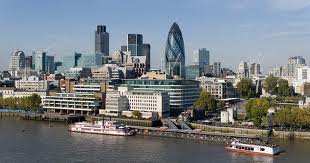
 The London Business School hosted its annual Global Leaders Summit on Monday May 21st. The theme was on the lessons shared between business and sport.
Sport for Business followed proceedings via a live blog reproduced below which captured some of the main thoughts and ideas being expressed by among others, former All Black Rugby Captain Sean Fitzpatrick, the Head of UK Athletics, Nigel de Vos and a group of Olympic sponsors talking about what their involvement in the London 2012 games has meant for their companies.
1440-1600: Strategies for leadership – the parallels between business and sport
Professor Kenneth Shropshire, Director of Sports Business Initiative
Wharton School of the University of Pennsylvania
“The language of sport is how business should define itself.”
“A key element of a successful sport is getting the best possible players on the pitch.”
Ralph Krueger, Coach Edmonton Oilers and contributor to World Economic Forum
“Defeat in first Olympic cycle was crushing but winners are born in difficult times. Positive processes initiated after a defeat are the strongest ones. Processes aimed at identifying and then realising potential.”
“When we lose in sport we get up the following day and look for the next win. There is a valuable lesson for business in that.”
Nils de Voes, CEO UK Athletics
“Athletics is a loose alliance of individuals as opposed to a team, even at an event like the Olympics.”
“Very important to appoint based on quality and cultural fit as opposed to a sugar rush. Is Roberto Di Matteo the right man for Chelsea? Only one year after leading West Brom to 13 defeats in 14 games.”
“Sporting leadership has many parallels with business, the importance of coaching and having the right person to help each individual.”
Sean Fitzpatrick, Former All Black Captain
“It’s all about winning. We are brought up on attitude that winning rather than participating is the most important thing.”
“Do everything you can to finish on top. Say it to four-year-olds. Be as succesful as you can be.”
“You can see among staff who wants to participate and who wants to add value in order to be the best.”
Q: Innovation in Sport
De Vos: “Dick Fosbury the best example of innovation but could not patent it and others took it on, then did it better than him.”
Krueger -“We are always looking at new ways to train. It’s a never ending process to do what you can to be better.”
Q: Is there a time for dictatorship in business or in sport?
Fitzpatrick – “I was told I was too slow, too fat, too arrogant and I had lost the respect of the All Black jersey. It took six weeks to get myself back straight and the coach ran us as a dictator for two years before we found ourselves again.””We never liked him but we did respect him.”
Shropshire – “Madden aways said, Do as I say and everything will be alright.” “In business it is a lot more difficult to bring people along in such an unswerving way.”
Gratton – Have you advice on how practice can improve business performance.
Fitzpatrick – “If you’re not there ten minutes early, you are late and unprepared.” “We always critique our colleagues in a real time environment.”
De Vos – “In sport we understand that importance of winning. We have to just get on and do once the final whistle has been blown.” “One of the biggest malaises is doing business with yourself.” “Internal discussions take up time and energy and need to be right or they will drain too much.” “A 20 year plan is harder to manage than the week to week of sport.”
Krueger – “Have no fear of correction by making sure that expectation is understood.”
Shropshire – “Business is different than sport but failing to prepare is preparing to fail.” If you have practiced the same move time and again, it is easier to judge whether it has been executed.” “Preparation for a business meeting or a pitch will give you a better return.”
Fitzpatrick – “In business you hide, in sport you can’t.” “In Britain (and Ireland) people are less willing to put their hand up and say I’m good at that.”
Gratton – “How do you get the right team together?”
Fitzpatrick – “The legacy of the jersey is more intimidating than any opposition.” “All Blacks have to live in NZ and sacrifice earning two or three times the salary.” “They have to fit the team and the culture. Get rid of superstars if they don’t fit.”
Gratton – “Do you select for skill or for attitude?” “An issue for business as much as sport”
Krueger – “An orchestra is not made of 35 violinists.” “We are looking for ego’s, that have great confidence, that want to control but they have to understand what the team is about. If one person doesn’t get that, you have to remove them.” “Dealing with ego’s and making people accountable for what is best for the team will enable you to win.”
De Vos – “Team GB is a great marketing concept, but it’s a bit manufactured and doesn’t reallt exist ‘as a team'” “Outside boxing and athletics, most of the Olympic team are white, middle class and selected well in advance.” “Leadership of ‘Team GB’ lies in ensuring that the two socio economic sides do not clash in a disruptive manner.”
1120-1215: The professionalisation of the sports business
Simon Cummins, Odgers Berndstan Executive Search
“The investment in sport sees some businesses rapidly expanding in revenues and turnover. Value of sponsorship deals and naming rights are fuelling huge growth.”
“Governments that cannot afford the biggest events realise the significant impact of second, third and below tier international events.”
“Incredible growth of global audience for sports content around the world.”
Over 75% of executives placed in sports positions in last five years have come from outside. Sport is now in every way a business. One of the few global languages so lots of repatriation to become involved in sport.”
“Sport as a business is now a fascinating cerebral challenge. Massive growth now in search for commercially aware non executive positions.
David Portas, Portas Consulting
“Sport has completely outstripped economic gowth around the world since 1995.”
“Management still is closer to third division than Premier League.”
“Analysis that £25 billion of revenue is wasted throughout sport through less management strength than is needed.”
“Insight and analysis is vital in order to justify the increasing revenues that are available to the sport.”
Dan Jones, Deloitte
“The profile of sport far exceeds the actual monetary value within. There is danger therefore of the leaking of the money to the talent, as in the athletes.”
“The environment is one of skyrocketing revenues, flatline profits and increasing debt.”
“Sport is a great cocktail to attract talent. Against that the scrutiny on governance is beyond what is expected given the revenues, there is a high level of media interest and irrationality.”
“Horse racing deserves enormous credit for what it has done in terms of integrity and governance.”
“Man United revenues are less than one per cent of Vodafone but the scrutiny is enormous.”
0930-1100: Faster, Higher, Stronger Panel -Global economic benefit from sport
Michael Payne, Former Director of IOC
“London 1948 was first games to be televised. Financial difficulties meant apporoach made to BBC to pay for rights to televise. BCC agreed reluctantly to pay £1,000 but because games made a profit, the cheque was never cashed. Set a precedent though for payment for TV rights.”
Heather Hancock, Deloitte
“Benefit of developed facilities is harder to corral through individual rather than team sports.”
“Emotional affinity is the holy grail for any brand, whether a company or a country. It is impossible not to be moved by some element of sport.
“Brand building that makes 8% of Indian and Chinese market more amenable to UK through London 2012. 60% have said they are more likely to buy British. Massive boost to digital market through being the first digital games.
Beth Comstock, GE
53% rise in brand awareness for GE in areas not previously strong. Important to focus on clear messages. Strongest to emerge from London 2012 has been sustainibility.
Yet again a focus on enabling staff engage with something bigger, through sponsorship of the Olympics and the British Triathlon team.
Importance of building business. GE is an infrastructure company. Power generation, healthcare and the ability to show talent and ability on a massive scale. Using the Olympics to realise €1 Billion in new revenues through showing talent through the work done at the games.
Peter Ayliffe, President and CEO Visa Europe
“For Visa, the Olympics is not a sponsorship, it’s not a marketing activity. It’s a platform for innovation and a major driver of business growth. Showcasing the future of payments through contactless points and mobile. Partnering with fellow Olympic supporter Samsung and building strong business relationships through sport.”
“Objective for all our staff to benefit from Olympics. From handover party on the Mall to supporting potential Olympians and enabling staff to help and mentor. Sponsorship of test events was great enabler of engagement. 95% of adults recognise the Olympic Rings. 66% of people would rather work with supporters of sport. 7% lift in Visa usage in areas where olympic message is strongest.”
“Looking at uplift of 18% in spending in London over course of games. Brand recognition of Visa is crucial.”
Andrew Scott, Professor of Economics at London Business School
“Sport has an allure which is even greater than its already large commercial importance. There is great scope for raising revenues substantially higher.
“How can sport capture revenue from the massive passion, engagement and ‘talkability’ surrounding sport?”
“Hosting major events serves as a boost to trade through showing a strong commitment to an event in sport that is shared and enjoyed by the world.”
Michael Payne
“Twitter will be on the main scoreboard at the London Olympics are part of the audience entertainment.”
Beth Comstock, GE
“Social Media will go crazy during the games. We don’t yet know the real value of this as sponsors but I would bet on there being a lot of value in sport events that we cannot yet even imagine.”
Heather Hancock, Deloitte
“Our sponsorship and involvement in sport increases our capacity to attract and retain talent.”
Michae Payne, Olympic Author
“The Olympics is like hosting 26 World Cups at the same time.”
“London is now the reference point for future bidding cities. Build for what will be used in the long term, use temporary facilities to boost in short term.”
“There will be three media for every one athlete at the london Games.”
Heather Hancock, Deloitte
“Regeneration is a two generation thing to get right.” “Too harsh to judge impact straight after the closing ceremony of the Paralympic Games.”
Peter Aycliffe, Visa
“Business absolutely has a responsibility to the grassroots of sport. Give and Gain initiatives across schools and local clubs are a great way to get staff involved. Yes, get benefit from the Olympics. Feel the passion. But let’s make sure that after the games we are supporting clubs and communities as a legacy of the games. Deloitte has done a great job at bringing sponsors together in ways that may never make the headlines but will make a difference.”
Heather Hancock, Deloitte
“Deloitte created ParaSport with Paralympic movement in 2005, giving people information on how to get involved, where, when and how you can play. 30,000 people registered. Some of those competing for Team GB will only have taken up sport because of this business led, sport implemented initiative.”
“Vital to stay on the case after the London Games.” Sport can change lives, as can jobs and business has to play its part as well as encouraging government to make the right decisions.”
0915: Under way with David Sproul, CEO of Deloitte, and a Chelsea fan just back from Munich. “The Olympic challenge is equivalent to building a FTSE 100 company and dismantling it in eight years.” Role as professional services provider to the games. Logistics, brand management and leadership lessons will flow in both directions.
“Pit stop analysis in F1 is as complex as any business challenge. Ignoring hierarchy, Maclaren places authority and responsibility at the point of greatest knowledge.”
“The ability to be as close to the event as possible, either in person or through new media is the main driver behind sports revenues.”
We will also keep you in touch with developments from the Sport Accord Convention in Canada where many of the world’s leading sporting administrators are gathering for a week long meeting.
Sport at London Global Leaders Summit