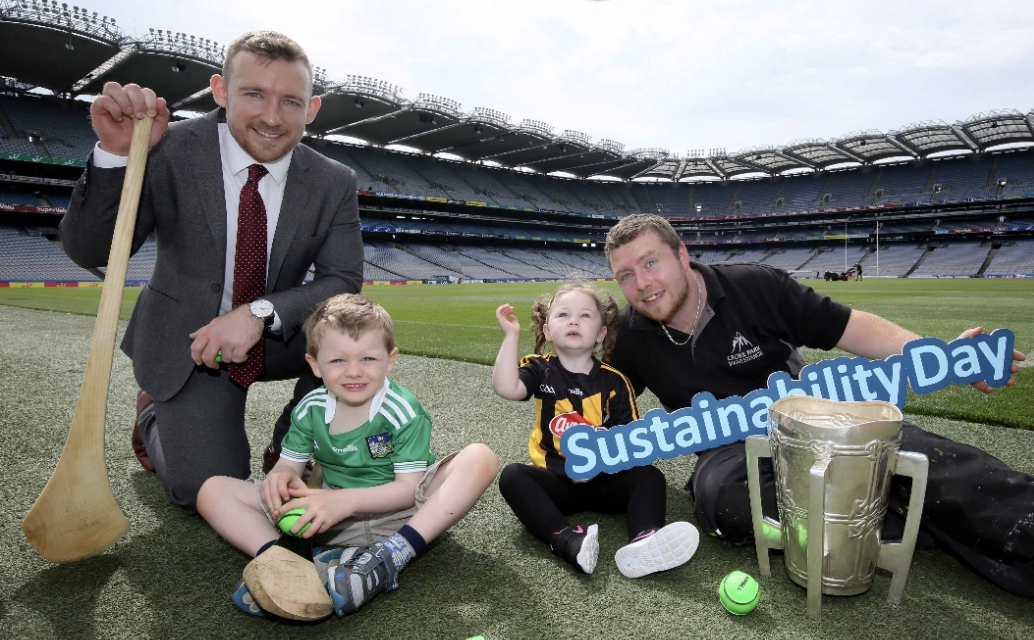
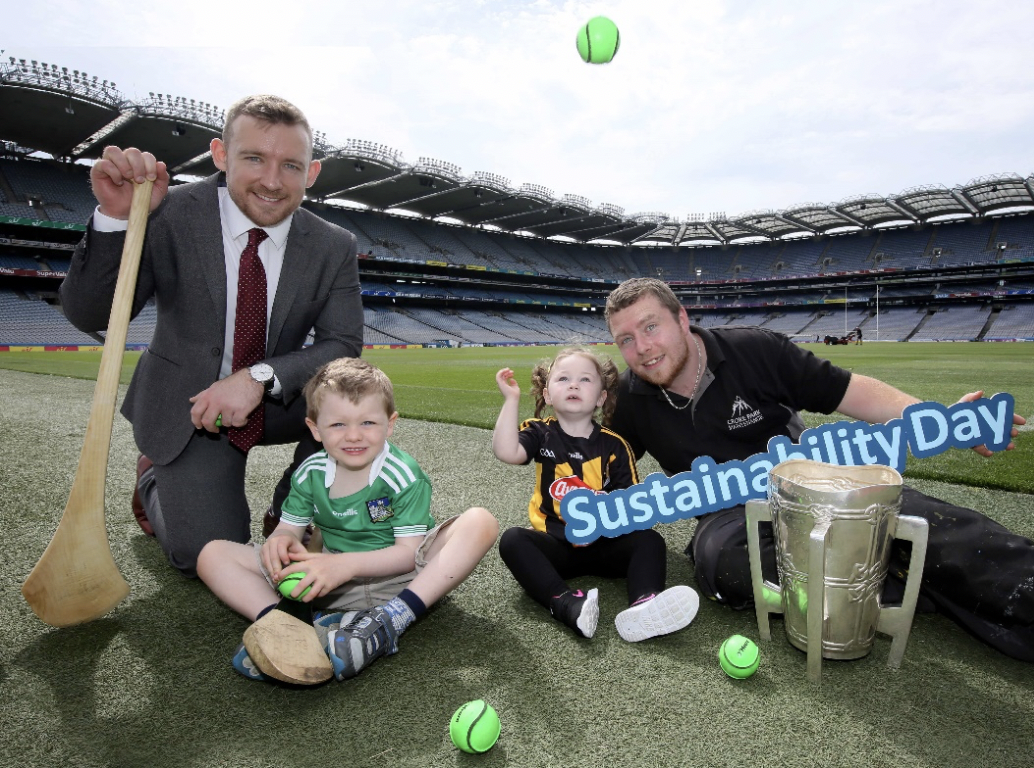
 This weekend, Croke Park will celebrate the best of hurling together with marking its annual Sustainability Day.
On Saturday for the game between Kilkenny and Limerick, the stadium is running its first-ever trial of reusable cups.
As part of the stadium’s focus on reducing single-use plastic, the bars in the Lower Hogan Stand will host a pilot deposit-return scheme to cut down on the amount of plastic waste produced on match-day.
Pint drinkers will pay a refundable €1 deposit with the purchase of their first drink from the participating bars and this deposit can be reclaimed at any of the many return points throughout the stand.
The reusable cup scheme complements Croke Park’s fully compostable coffee and tea cups, which were introduced in 2018, alongside compostable cutlery as the stadium continues to step up to the challenge of reducing single-use plastic items.
The cups are made from vegetable-based plastics only, which allows them to be disposed of in the stadium’s organic waste stream; thereby entering a cycle in which 20 tonnes of compost produced from the stadium’s organic waste is made available each spring to the stadium’s local community for use in local and community gardens.
Sustainability Day in Croke Park will also be a celebration of a very special aspect of the stadium’s biodiversity programme.
Earlier this year, Croke Park installed a number of beehives under the stewardship of local beekeepers Colm Fogarty and Neil Hanlon on its turf farm in north county Dublin. The first-ever batch of Croke Park honey was harvested recently and there will be honey-themed dishes and tastings on offer throughout the stadium on Saturday.
Saturday’s sustainable activities are just a taste of Croke Park’s sustainability programme. The stadium is home to not only the GAA but also to a Bug Bee & Bee habitat installed in the Outer Cusack carpark in 2015 to create a habitat for insects such as pollinators, who can often find it difficult to find places to nest and hibernate in overly-managed urban gardens.
Nearby bird boxes installed as part of a nest box monitoring scheme, are home to the stadium blue tits, which in 2019 have once nested in the boxes.
The blue tit times the hatching of her eggs to coincide with the buds arriving on the trees, as this results in an explosion of caterpillar prey on which to feed newly-hatched chicks. In the evening, the action is elsewhere in the stadium as the resident family of bats – another species that is both essential to and an indicator of a healthy biosystem – whirls around the steelwork of the stadium’s upper levels.
Recently-installed swift boxes at the Hill16 end of the stadium and in the nearby newly-built GAA Handball facility are designed to provide a much-needed home for the local population swifts.
The swift is an amber-listed migratory bird that is under threat from a sharp decline in suitable habitat. As swifts are extremely loyal to their nesting places it is hoped that the stadium and handball alley will be hosting succeeding generations of swifts for many years to come.