Welcome to the tenth article in our Sports Economy series, where we take the first of a two-part look at the world of streaming services and their impact on sport.
Genoa, June 25th, 1990 and “a nation holds its breath.’
Fifteen thousand Irish fans were in the Luigi Ferraris stadium for the high point of Italia ’90, in Irish eyes at least, to see Dave O’Leary become our World Cup hero.
For most of us though, it was a television experience. Peeking at a screen through slitted fingers or half hiding behind the couch while listening to George Hamilton’s commentary.
1990 also marked the year that Sky and British satellite TV was first launched in Ireland. Since then we have witnessed an explosion of sports content on TV but also the packaging of key events to go ‘behind the paywall’.
All EU countries, and Britain, each maintain their own list of culturally important sports events that are ‘protected’ for free-to-air terrestrial coverage but the pressure of financial investment of TV money which is so important to the finances of sport has given rise to the division of fans into those who can afford to pay and those who cannot.
Striking the correct balance between commercialising TV rights and maintaining fan engagement is not an easy task for leagues and federations.
As if the job of selling rights was not complicated enough, rights holders now must navigate an evolving media landscape characterised by changes in sport and entertainment consumption habits.
The concept of live sport exclusive to internet streaming is no longer something only for the far-off future. It is happening and it is growing.
In the first of two articles, we look at the ‘streaming wars’ which are currently ongoing between a handful of giant internet video streaming platforms, not all of which will survive, and the ‘arms race’ to acquire all types of ‘content’, including sport.
Culture Shift
The culture-shifting dynamics of the coronavirus pandemic has accelerated the worldwide trend of video streaming and this has brought about many interesting questions for sports.
Will sport change its distribution model from pay-tv to direct to customer video? If so, will sports organisations create their own streaming platforms such as ‘Premflix’ for example, suggested as something that is ‘only a matter of time’ by Premier League chief executive Richard Masters in 2020, or sell rights to established streamers?
The second article will examine these complex questions.
Globalisation
Traditionally television markets were local to individual countries with each market dominated by a handful of broadcasting networks or channels.
However, the twin megatrends of globalisation and digital disruption have created a global television market that is likely to be dominated by a small number of conglomerates.
Wall Street thinks that this will occur and that global internet video-streamers will be the ones to dominate.
Financial markets have regularly rewarded company’s investment into streaming capability with increases in their share price and punished the stock prices of traditional media companies not intent on doing so.
Direct to customer video streaming
The TV and movie industries were the first to break away from traditional networks and channels in favour of global streaming while live TV sport, which is more local in nature, has remained a staple, even a lynchpin, of traditional pay-tv bundles.
The video ‘streaming’ business model is relatively straightforward. Bypass traditional broadcasters and go straight to consumers with an internet-based platform of high-quality video content, monthly subscription, allow viewers to pick what they want to watch when they want to watch it and typically with no ads.
High quality delivery and no cutting out are crucial elements because customers have a choice. Cutting a service is as easy as signing up to one.
This selling point is even more crucial for sports. Can you imagine your stream stalling just after Shane Long got his shot off against Germany or Johnny Sexton put the boot to his drop goal in Paris? The roll-out of 5G networks will be an important element for any transition of sport to internet streaming.
The largest internet video streaming companies of today come from the U.S. and China and are typically owned by $200 billion companies so the barriers to entry are huge.
The Big Three – Netflix, Prime Video and Disney+
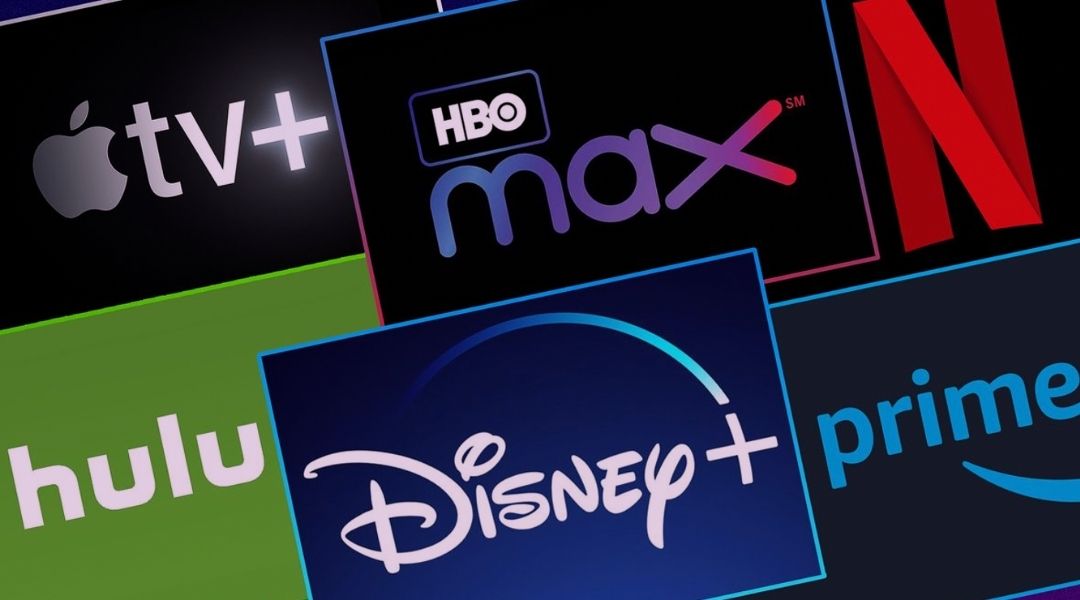
With over 200 million subscribers worldwide Netflix is the leading player in the space and concentrates on scripted TV drama and movies.
Sport has so far remained on the sidelines for Netflix. This point is relevant to the wider discussion as other streaming services intent on catching Netflix but keen on doing something different are increasingly targeting live sport.
Amazon does not disclose subscription numbers for their video streaming service Prime Video but it is estimated to be over 100 million.
The Walt Disney Company has been intent on capturing video streaming market share quickly.
Their strategy has been underpinned by acquisitions and low-price subscription. Despite the recent temporary closures of its theme parks and theatrical movie business, the share price of Disney stock has hit an all-time high thanks to the growth of their streaming offering.
In spite of only launching in 2019 their offering for children, Disney+ already has 95 million subscribers.
Some recent moves from Disney and Amazon can clearly be interpreted as intentions to build strong sports content providers.
Disney owns the sport broadcasting network ESPN which is the largest buyer of sports media rights in the U.S.
Disney recently offered a package to consumers in the U.S of ESPN+, the streaming platform of ESPN, Disney+ and Hulu, all together for as little as $13 a month.
Hulu is itself the 6th largest streaming platform globally by the number of subscribers and was recently acquired by Disney.
Disney made a similar move internationally, this month offering Star+ free of charge to Disney+ subscribers in the European market, including Ireland.
Star+ will offer sports content from ESPN along with Hulu programming.
Only the biggest players can offer attractive and affordable packages like these.
Amazon, like Disney, has made several moves in sport for their U.S. and international offering.
In the U.S, Amazon purchased non-exclusive streaming rights for NFL games in 2017 and in 2020 aired the first NFL game to air exclusively on Prime Video to all of subscribers across 240 countries.
Amazon also disrupted the Sky and BT dominance of Premier League UK rights acquiring a package of live streaming matches for the 2019-21 cycle.
Prime Video also offers three of the four Tennis majors to its UK subscribers along with the ATP World Tour while last month it added the Spanish La Liga to its UK offering.
They own UEFA Champions League rights in Italy and Germany and the GAA teased recently that they would entertain Amazon as a bidder for broadcast rights in the future.
New Pretenders
Netflix, Amazon and Disney are very much ‘the Big Three’ but a host of new pretenders have emerged recently.
However, the barriers to entry are so large that even many of the large tech companies failed in their attempts to muscle in on the space.
Microsoft, Facebook (who were outbid for the streaming rights to cricket’s Indian Premier League for example), Yahoo and Google’s attempts at creating their own Netflix or Prime Video were quickly abandoned.
Apple TV+, launched globally in 2019, is spending big on original programming to buck the trend but so far have sent mixed signals with regard to their interest in acquiring sports rights.
Peacock & HBO Max – Pretenders to the crown?
There are two new streaming platforms coming out of the U.S. that merit specific attention.
Both are currently only available in that market but each has the size and profile to launch internationally and both have significant presence and interest in sport.
Peacock was launched in 2020 and represents the coming together of distributor Comcast, a massive telecommunications conglomerate, and it’s subsidiary and content producer NBCUniversal.
The American sports channel, NBC Sports Network, will be closed and folded into Peacock.
The World Wrestling Entertainments independent streaming platform for the U.S. market, the WWE network, was recently purchased by NBC Universal for $1 billion, which again will be integrated into Peacock.
A global release of the Peacock platform is planned. Now Tv, currently available in Ireland, and the streaming platform for Sky and its channels, could well form a part of the international versions of Peacock as Comcast own Sky, outmuscling Rupert Murdoch in a fascinating duel for the company in 2018.
Comcast commented at the time that the purchase of Sky was made to further their international strategy.
HBO Max is also the coming together of an enormous distributor in massive telecommunications company AT&T, and a content provider subsidiary, Warner Media, itself owners of Warner Bros, HBO and DC Comics among others.
Although it has not been announced yet it is rumoured Warner Media will begin switching to HBO Max some of its Major League Baseball and National Basketball Association games they currently show via their traditional pay-tv channels TBS and TNT.
An international release of HBO Max is planned for the second half of 2021. Again, sports are planned to form an integral part of the international offering.
In a twist to the typical streaming model, some of Peacocks content is available for free with ads and HBO Max plan to offer a similar type of membership in 2021. Ads will not accompany premier content for either platform.
Other Platforms
Many other platforms are also worth mentioning. Discovery+ is a strategic partnership between Discovery and U.S. telecommunications giant Verizon. Discovery Inc owns many local and regional versions of its U.S. channel brands and is thus suited to international markets. It owns Eurosport and Golf TV for example.
Paramount+ is a rebranding of the existing U.S. streaming platform CBS All Access. In the future the owners of Paramount+, ViacomCBS, may well be the topic of case-study analysis in Universities, but not for the right reasons.
Over the past decade, they sold a massive amount of their own content to Netflix, allowing it to gain traction and become the market leader. Paramount+ will now specialise in news and sport and launch in both the U.S. and internationally in 2021.
From the UK – Britbox and DAZN
DAZN, owned by British billionaire Len Blavatnik aspires to be the Netflix of sports. It is available in over 200 countries including Ireland. Like nearly all platforms its content ranges by geographical location. The service has so far mostly concentrated on Boxing, signing superstar Canelo Alvarez to a five-year, eleven-fight, $365 million deal in 2018 which was cut short last year after a legal dispute.
Britbox is a joint venture between the BBC and ITV but is not available in Ireland and has made very little comment about whether sport is seen as part of its future.
In summary Netflix, Disney and Amazon are not going anywhere and the latter two are very keen on building a presence in sport both in the U.S. and internationally. Of the other players discussed in this article, not all will survive despite Juniper Research predicting that there will be two billion active subscriptions to on-demand video services by 2025, a 65% jump from the current level.
Traditional broadcasters intent on entering the space are turning to hybrid models, partnering with telecommunications companies for distribution and offering a low price / free subscription tier with advertisements, in order to compete with established players.
The purpose of this first of two articles was to outline ‘who’s who’ in the streaming service industry and describe their interest in sport.
The more complex discussion about whether sports leagues and federations should go for direct-to-consumer offerings or stick with their existing style of broadcast will differ from sport to sport, and region to region, and will be discussed in the second of this two-article series.
Dive Deeper into our Sports Economy Series
 Conor Foley has a business degree from Trinity College Dublin, an MSc in finance from DCU and is a Chartered Financial Analyst. Over a 12-year professional career, Conor has experience of advising clients such as institutions, charities and bodies in the areas of global strategy, project management, asset allocation and financial structure. Conor will be working with Sport For Business to produce The Sport Economy, a regular piece, offering insights from the domestic and international sporting worlds of finance, economics and business, aims to bring Sport For Business members lessons and information from around the world to aid you in your strategy, financial affairs and business decisions. Conor has worked in leading financial institutions both at home and abroad and is committed to the growth and development of professional and amateur sport in Ireland.
Sport for Business Partners
[logo_carousel_pro id=”51608″]