Each Wednesday we take a look at the world of the Irish and international sports media, the stories, the numbers and the organisations that are, more than ever before, our window on the world of sport…
EUROVISION PUBLISHES GUIDE TO ENHANCED COVERAGE OF WOMEN’S SPORT
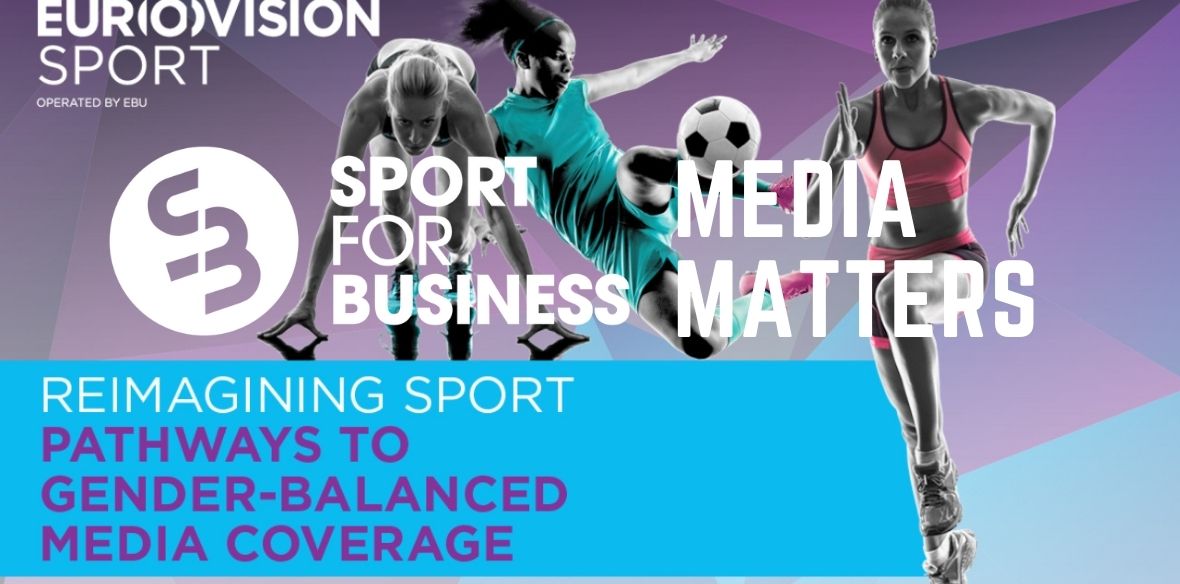
Eurovision Sport has published a new media handbook, ‘Reimagining Sport: Pathways to Gender-Balanced Media Coverage’, as part of its mission to drive greater and more consistent coverage of women’s sport across the EBU territory.
Written by Elsa Arapi, Eurovision Sport’s Senior Sports Rights Manager and Women’s Sport Project Manager, it seeks to build on women’s sport’s impressive upward trajectory over the last few years.
The handbook argues that ‘the successes of the last few years have demonstrated that with the right amount of investment from all stakeholders in the sports ecosystem, the women’s game can continue to grow and be just as entertaining, as attractive, and as first-rate as men’s sport’.
The handbook continues: ‘We, at the EBU, are determined to do our part to address this imbalance so that women’s sport continues to spring just as high. We know that by showing more women’s sport and, in turn, more female sporting role models, we can help inspire the next generation, challenge biases and stereotypes, and better reflect our diverse audience’.
Inequalities
- 4% – Women’s sport global representation of all sports media coverage
- 7% of the global $30 billion spent on sponsorship is directed at sportswomen and the female sports industry
- 2 – The number of females in the world’s top 100 highest-paid athletes
Case Studies and Surveys
- EBU Members increased their coverage of the FIFA Women’s World Cup 2019™ by five times, and total hours viewed were up by an extraordinary 946% compared to the 2015 edition in Canada;
- A joint Nordic investigation into the gender pay gap in sport found that female ice hockey players in Finland earn as little as 0.3 cents for every Euro earned by their male counterparts;
- Analysis of coverage by nine broadcasters of the IBU Biathlon World Championships in 2020 found that the highest live market share over all broadcasting countries was reached in Norway for the Women’s Relay with 85.30%;
- Irish EBU Member TG4’s sponsorship and broadcasting of the TG4 Ladies Gaelic Football Championship since 2001 has helped Ladies Gaelic Football become one of the fastest-growing sports in Ireland;
- UK EBU Member the BBC commissioned a survey that found that 86% of female athletes who replied earn under £30,000 a year.
- Since Swedish EBU Member SVT began to actively seek parity in men’s and women’s sports coverage in 2014 the traffic to its website has doubled and interest in women’s leagues has increased by 96%.
The Way Forward
In addition to analysing and assessing the position of women in sport and in sports broadcasting in 2021, ‘Reimagining Sport: Pathways to Gender-Balanced Media Coverage’ contains a range of recommendations and suggestions to help broadcasters, rights-holders and sports bodies increase gender equality in sport.
These include:
- Building and maintaining an audience for women’s sport
- Target-setting and the critical role of measurement
- Recommendations for bias-free representations of sportswomen
- Black female athletes: at the intersection of sexism and racism
- Pathways to gender-balanced teams
- Creating an environment of inclusivity and acceptance
“Promoting women’s sport is perfectly aligned with our values, said Glen Killane, Head of Eurovision Sport.
“As public service media, it’s part of our mission to reflect all the communities we serve and some of the most inspiring work of our Members springs from this sense of responsibility.”
“Significantly, when the EBU surveyed members late last year, it found 92% of us see gender equality in our sports coverage as important, and this handbook has been designed to help the members who don’t have any strategy to address it,” added Cliona O’Leary Deputy Head, TV Sport at Ireland’s RTE, and Chair of the Women’s Sport Expert Group.
“Public service media has more permeation of society than most other media and working in an area which often delivers the biggest audience for our channels we have great potential to convey important messages of inclusivity, often in positive celebratory environments.”
We will look in greater detail at what the handbook tells us at the Sport for Business Women in Sport Conference 2021 on March 25th, for which registration is now open
WATCHLOI PRICE POINT PITCHED AT €59
Fans of the SSE Airtricity League will be asked to pay €59 to subscribe to see more than 60 games lives through the first half of the season.
You’d have to imagine that fans will see this as reasonable value given that it is the only way to see your own team in 14 games, and every other match is available too.
A decision on whether the service will continue in similar form through the second half of the season will be taken partly on the basis of the take-up, though there will also be pressures on resource for RTÉ with the Euro 2020 Finals, Olympic and Paralympic Games and the GAA Championship season in full swing, hopefully, by then.
ITV FIGURES REVEAL COST OF COVID
The annual report and accounts for UK Broadcaster ITV has included an impairment charge of £23 Million to account for the cost of disruption to the planned sports programming through 2020.
It does not differentiate between the cost of reduced advertising revenue in the general market and the loss of matches and events but the overall figure is a good indication of the very real damage done to media through the loss of sporting activity.
Other figures of note include a 17 per cent year on year increase in advertising on ‘Player’ services through video on demand, and the estimate in analysis of the £8 million paid per year to British horseracing for coverage of its marquee events including next week’s Cheltenham Festival and the Aintree Grand National.
Sport for Business Partners
[logo_carousel_pro id=”51608″]
Sport for Business Media Members
[logo_carousel_pro id=”53097″]