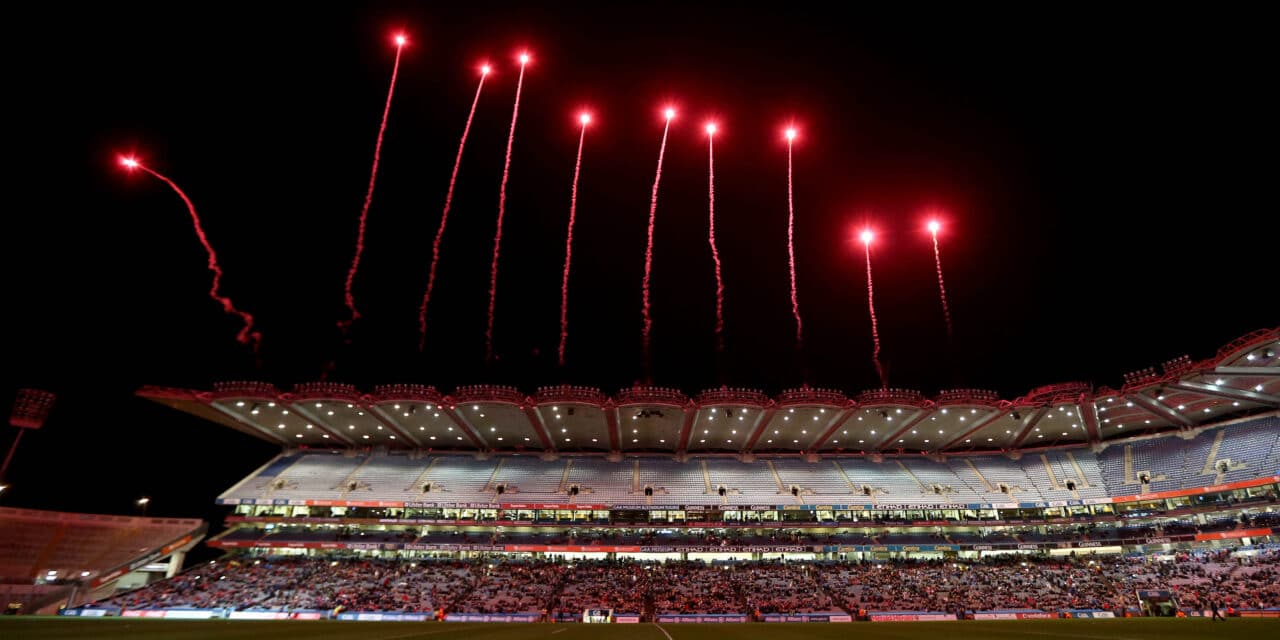
The Irish Sponsorship Summit took place at Croke Park in Dublin on Thursday and we posted regular updates throughout the event. Among the many speakers were Geoff Wilson of the IFA, Lisa Browne of Electric Ireland, Padraig Power of the IRFU, Patrick Haslett of Paralympics Ireland, Olympian Deirdre Ryan, Stephen Martin of the Olympic Council of Ireland and Lisa Uckman from IEG.
Geoff Wilson, Irish Football Association on making Social Media part of your sporting strategy
“What are you going to say as part of a social media strategy? Who are you looking to speak to? How often are you going to speak to people? Who’s going to manage it? Which platforms will you use? What return are you looking to get and what will you do in the event of a crisis?
“Our objectives are to help communicate with the fans, and develop reach for our sponsors.”
“Ridding ourselves of the perception of being sectarian was critical. We drowned out sectarian singing, we created green and white as our colour, rather than red, white and blue. We moved from selling 4,000 shirts to 43,000 shirts. That’s a measure of how we succeeded to date.”
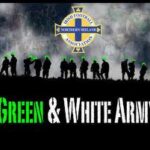 Getting engaged with fans through conversation, connection through the GAWA brand (Green and White Army) and the Big Pitch campaign we ran through Facebook.”
“We tweet team line-ups, results, comments from people at matches”
“Interview and insight from the manager, including an online diary about what he is doing was important in building and creating personality.”
“Use of GAWA hashtag is important as well in speaking to the community.”
“Social media is not about straight revenue. but we believe it will be soon. Recent radio ad dropped the website address and replaced it with twitter handle. The game is moving, and we want to be to the fore, but it’s hard.”
Lisa Clancy, GAA – Entering the Digital Arena
 “We needed to bring our digital comms up to speed to communicate with our volunteer base across over 2,500 clubs”
“Partnerships with Google and eBow enabled us to create a portal we could be proud of.”
“The right content in terms of video, polls, exclusive columns from players, news and fixtures was vital.”
“Mobile strategy followed and then move to social media. It was very important to bring senior officials and management up to speed on how social media works and how it can be of benefit.”
“The final one of the 32 counties officially came onto Twitter just last night. 40 clubs came to the launch and helping them to do things simply but correctly is very important.”
“By 2015, 50% will have access to tablets. Mobile is huge and we now have the number one downloaded app in Ireland with more than 100,000.”
“Sponsor content should be subtle and integrated in order for it to be shared and noticed.”
“Talk with your audience rather than shouting at them.”
Deirdre Ryan, Olympian
“To be honest, I was somewhat cynical and suspicious of the commercial partnership and how it might impact on my Olympic preparation.”
“Thankfully the reality proved to be so much better than I feared.”
“Success requires meticulous planning and a top class team. We spent four years immersed in technique, nutrition, training and the rest to produce marginal gains that make all the difference. Sponsorship provided the funding for the right class of facilities at camps and that had a huge beneficial impact.”
“The sponsorship really did connect us. Meeting Katie Taylor and our sailing team and all sorts at the launch was a new experience. Meeting at PR events for Electric Ireland was the main way in which we met and the familiar faces you knew on entering the village was a real boost.”
“The involvement was fun and made us feel like superstars. Training is a lonely pursuit and the glamour of TV ads and photo calls was great.”
“The involvement of agencies like WHPR really buoyed us up. They were interested in us and took our views into account which made for a strong partnership.”
“Finally it gave me a great insight to a world post athletics that I enjoyed and that gives me a different perspective on preparation for the games.”
Stephen Martin, Olympic Council of Ireland
“Exclusivity, use of the logo, rights to activation with Team Ireland, publicity and collaboration with other partners are key to what we can deliver.”
“We gave exclusive access to limited numbers of sponsors to gain access to the Olympic Village.”
“Have regular meetings, keep involved at every stage of your journey as a rights holder, and the sponsors’ as a company helping to facilitate that but needing to show a return on their investment.”
Lisa Browne, Electric Ireland
The collective story of the rights holder, the sponsor and the team member.
“Electric Ireland was moving from monopoly to full on competition. It was a time of great stress for the organisation. We were heavily regulated, with no control over pricing and had to give up 40% of market share as well as the ESB brand in supply.”
“At the time of the launch of Electric Ireland in March 2011, sponsorship was identified as a core tool in the transition.”
“We had very specific requirements. An Irish brand with heritage that needed to become famous again. We needed something to make us interesting and newsworthy. It had to be sport or entertainment.”
“70% expressed themselves as hugely interested in the Olympics. It cut across class and gender.”
“Awareness of the brand leapt from 29% to 86% by the time of the Olympics.”
“We launched introducing four athletes, Deirdre Ryan, David Gillick, Katie Taylor and Derval O’Rourke. The important thing was the journey rather than the medals.”
“The first stage was to introduce the Olympic partner logo to all customer facing material.”
“After more research we discovered a huge hunger for the stories behind stars of the past and of the future.”
“January 2012 we had to drop ESB from the dual branding of the company and we chose a 200 day countdown mechanic to put us in the news, in the hearts and minds of the consumers.”
“PR was central to our association, as well as engagement across the staff through personal appearances, involvement in training courses and more.”
“The outdoor campaign using electric blue colours, energetic imagery and individual athletes spun through partnership with RTE into a great TV campaign.”
“Awareness of the sponsorship peaked at 59% and we brought over 200,000 customers back to the brand, in no small part due to what we were able to do through the Olympic team.”
“The Olympics gave us content that enabled us to tell positive stories that reflected well on the brand.”
Patrick Haslett, Paralympics Ireland
“Building partnership with sponsors was preceded by building the brand of Paralympics Ireland. There was little understanding of what we were about and what our elite athletes were capable of.”
“We chose to put our stars front and centre stage – Michael McKillop, Jason Smyth and Mark Rohan were the ‘hooks’ on which we were able to build a story around the brands that became involved in our journey to London 2012.”
We will embed this video of what transpired later but for now you can see it on You Tube
http://www.youtube.com/watch?v=6njLyvLp9jM
6 official sponsors, 12 official partners.
“An experiential day for media, able to compete alongside athletes in their sport and see what it was like. Hand cycling and blind cycling on the back of a tandem were pretty interesting for those who never imagined what it might be like.”
Padraig Power, IRFU
“One word of advice to brands – come to us or any sport with a clear idea of what you hope to gain from a partnership. Unfocused or unmatched expectations fail to bring a relationship to anything like it can be.”
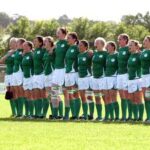
“IRFU has up to 22 commercial partnerships at present. There is not enough sponsorship of the women’s team and they are going for a first triple crown this weekend. We are open for business.”
Looks like that will be one of the headline subjects at our Sport for Business event on women’s sport taking place in May.
“Aviva’s main motivation for naming rights on the stadium was the ability to entertain multiple stakeholders. O2 have brought a whole different perspective in terms of producing content that promotes both the brand and the sport.”
“We don’t want to intrude too much on preparation but insight from players is a great way to involve fans at a level they would previously have considered impossible.”
“No plans at present to live stream games because for now the main broadcast deals are still the ones that underpin so much.”
“There is no middle ground in relation to the media coverage of rugby. It is always the greatest thing ever or the worst period of all time.”
“Sponsors buy in for the brand values, the emotional engagement and the long term, but winning is important.”
“The provinces are important but it’s the national team that pays for the sport. The best season possible of all teams progressing to final stages of Heineken Cup would still only equate financially to coming fourth or fifth in the RBS Six Nations.”
“The relationship works but people should understand the financial dynamic behind that success.”
Tony Meenaghan, Professor of Marketing at Sport for Business Founder member UCD Smurfit Graduate Business School gives a tour de force of deep diving and developments around sponsorship. We will carry this as a separate feature next week.
Lesa Ukman, IEG Chief Insights Officer
“Be Bold, Human, Relevant, Entertaining, Engaging, Accountable, Quick”
“Sponsors and rights holders are moving, or indeed have moved to a new model of the 4p’s.
“We have translated promotion of product into promotion of purpose. Barcelona FC valued the additional benefit commercially of carrying UNICEF on their shirts at €2 million, and that’s what they paid to the charity. The pay off is that they got more from the Qatar foundation.”
“Naming is no longer important except in the right to become a producer of content that enables consumers to become brand ambassadors through sharing. Heineken and the Champions’ League given as an example of how this has developed over last three years.”
“Participation has overtaken passive viewing. Brands are developing activation campaigns that put brand and product into peoples pockets on their smartphones.”
“The fourth is rooted more in what always existed, that of presence. 02 estimate that for every €1 spent on sponsorship they draw in over €6 in terms of revenue through data enabled by giving priority access to tickets and other benefits that are seen as differentiating the brand.”
Other speakers on the day included Fiona Bolger, Darragh Persse of Sports Revolution, Phillipe Brodeur of AerTV, Ger Gilroy who hosted the day and Jim Geraghty of Lucozade Sport.
Ballywire which produces some of the video news content we regularly feature on Sport for Business is one of the sponsors of the day.