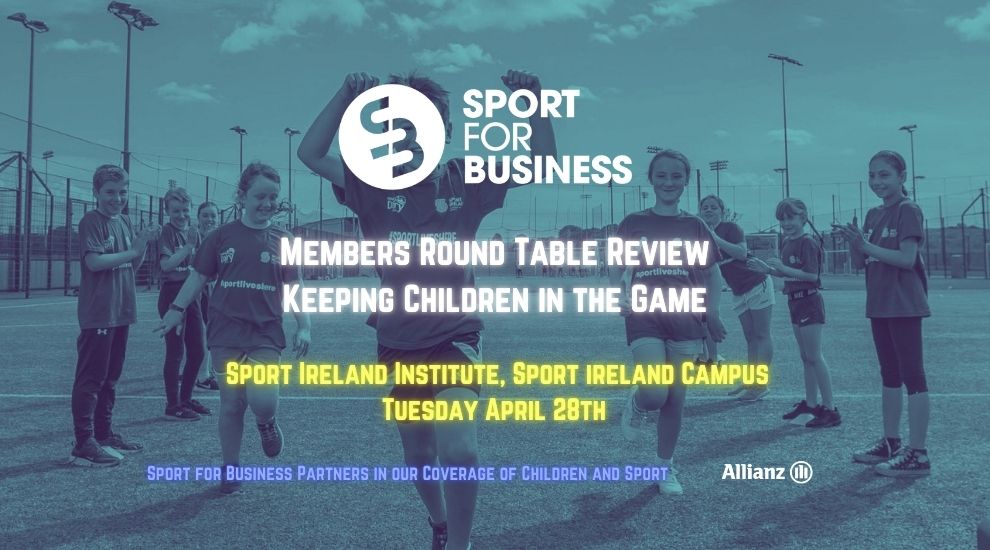
The second of our six Sport for Business members Round Table events for 2026 took place at the Sport Ireland Institute on one of the thorniest but most important challenges facing sport – how to keep children involved and enable them to lay the foundation for a lifelong engagement in games and physical activity.
No one in the room, Rob Hartnett suggested, had all the answers. But in bringing together people from across governing bodies, clubs, research, and community sport, there was a chance that “a little gem” might emerge.
Over the next two hours, there were a few that did.
A Shared Challenge, Seen from Different Angles
Around the table were voices from across the ecosystem — from Sport Ireland and Tennis Ireland to the Irish Rugby Football Union, alongside advocates for disability sport, club volunteers, and those working in participation and research.
What quickly became clear was that there is no single reason why children drop out — and therefore no single solution.
Research presented during the discussion highlighted that participation remains high in childhood — up to 95% in primary school — but begins to fragment in the teenage years. The widely cited “drop-off” around early adolescence is real, but overly simplistic.
Instead, the data points to two major pressure points: exam years and the increasing demands on time, identity, and independence as young people grow.
That aligns with lived experience across sports.
Teenage girls, for example, often face a convergence of factors — competition structures, body image, confidence, and social pressures — while boys may drift later, particularly into their early twenties.
Structure, and Its Unintended Consequences
One of the most consistent themes was that modern sport — highly organised, scheduled, and adult-led — may unintentionally be part of the problem.
Compared to previous generations, unstructured play has all but disappeared. Where children once we threw down jumpers for goalposts, today’s participation is largely mediated through coaching sessions, fixtures, and formal pathways.
That brings benefits in terms of safety, quality coaching, and progression — but it also creates rigidity.
Sport has become “something you attend,” rather than something you simply do.
And within that structure sits competition — not inherently negative, but often over-emphasised too early.
Stories shared around the table highlighted how selection pressures, performance expectations, and even parental behaviour can turn what should be a space for enjoyment into one of anxiety or exclusion.
The image of a child standing on the sideline, never getting on the pitch, was one that resonated strongly.
The Case for Flexibility
If structure is part of the challenge, flexibility may be part of the solution.
There was strong support for models that allow children — particularly teenagers — to engage with sport on their own terms.
Examples ranged from social basketball programmes for teenage girls to simplified competition formats in tennis, and informal “come and play” sessions that remove barriers to entry.
The concept of “opt-in competition” — where participation is the default and competitive pathways are a choice — sparked particular interest.
This approach recognises a key insight from behavioural science: young people are more likely to stay engaged when they experience autonomy, a sense of improvement, and a clear personal purpose.
In contrast, systems built solely around winning risk losing those who don’t see themselves in that outcome.
Community, Belonging, and the Power of Sport
Another thread that ran through every contribution was the importance of belonging.
For some, particularly in disability sport, the club is not just a place to play, but a central part of social life.
For others, it is the friendships, the shared experiences, and the sense of identity that matter most.
This extends beyond performance or participation metrics.
Sport, at its best, offers a space where children will feel valued, included, and connected, but that sense of belonging can also be fragile.
Barriers such as cost, transport, facilities, and socio-economic disadvantage were all highlighted as factors that can limit access, often before a child even gets the chance to participate.
In some communities, children’s only exposure to sport remains the schoolyard.
Schools, Clubs, and Who Owns the Problem
The question of ownership, of who is responsible for keeping children in sport, proved complex.
Schools were identified as a critical starting point, given their reach and equality of access. Yet participants were cautious about placing too much reliance on the education system alone.
Children may encounter sport in school, but sustaining participation requires pathways into clubs and communities, and opportunities to play.
That transition from structured school activity to self-directed participation is often where engagement is lost.
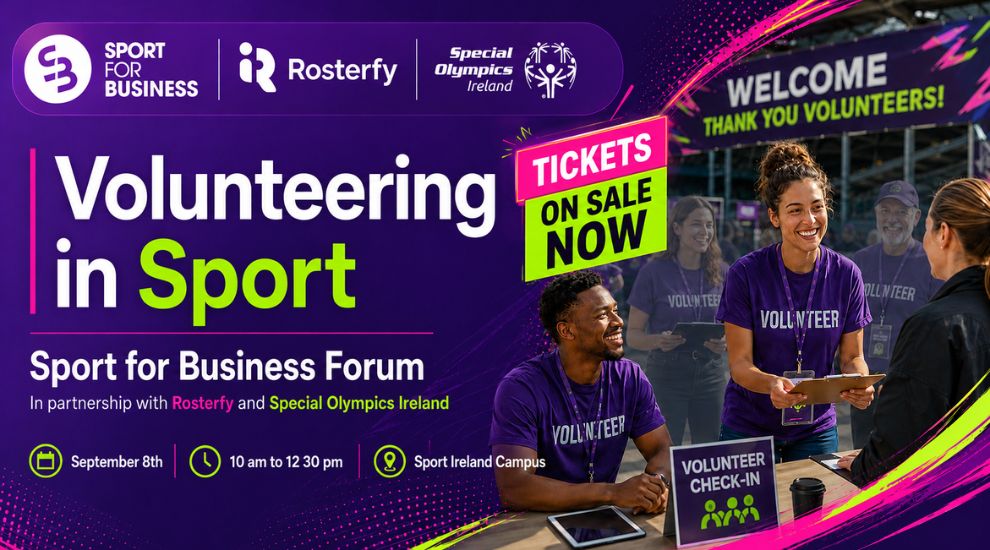
Clubs, meanwhile, rely heavily on volunteers, whose numbers and confidence are under pressure. Supporting and empowering parents to play a role not necessarily as expert coaches, but as facilitators of fun and inclusion emerged as a key opportunity, and one we will explore at a similar Round Table on Volunteering to take place in September.
A Changing Landscape
One of the more striking insights was the competition sport now faces from outside its traditional boundaries.
The growth of gyms and personal fitness, particularly among young adults, reflects a shift towards activities that offer flexibility, autonomy, and individual progression.
These are qualities that traditional sports structures have not always prioritised.
At the same time, broader societal changes, from digital media to the long-term impact of the pandemic, are reshaping how young people spend their time and how they connect with others.
The cohort currently in their mid-teens, having experienced formative years during lockdown, represents a particularly important group to understand and support.
From Conversation to Action
As the session drew to a close, there was no single “solution” agreed, but there was a shared understanding.
Keeping children in sport requires:
- More flexible, inclusive structures
- Greater emphasis on enjoyment and development over outcomes
- Stronger connections between schools, clubs, and communities
- Support for volunteers and coaches
- A willingness to listen to young people themselves
- Above all, it requires a shift in perspective.
As one contributor reflected, perhaps the goal is not simply to produce better athletes, but to ensure that as many children as possible are still active — in any form — at 18 and beyond. A wider base will be better in general and will also create a wider potential for great athletes to emerge.
If that becomes the measure of success, the system around it may begin to change.
And in conversations like this yesterday, steps towards a better long term future are already being taken.
Our Sport for Business Children in Sport Conference will take place in September, in partnership with Allianz, as will our Members Round Table on the subject of Volunteering. To express an interest in either of these events, or to suggest a Round Table discussion in your specific area of interest, reach out to Rob Hartnett of Sport for Business via email on rob@sportforbusiness.com.
 If you would like to be part of the Sport for Business community and see your organisation in our content, on our stages, and in the conversation happening every day around the commercial world of Irish Sport, email us today and let’s see what is possible.
Image Credit: Sport for Business
ABOUT SPORT FOR BUSINESS
Sport for Business is Ireland’s leading platform focused on the commercial, strategic and societal impact of sport. It connects decision-makers across governing bodies, clubs, brands, agencies and public institutions through high-quality content, events and insight. Sport for Business explores how sport drives economic value, participation, inclusion and national identity, and how your story can be part of ours.
Through analysis, storytelling and convening the sector, it helps leaders understand trends, share best practice and make better-informed decisions. Its work positions sport not just as entertainment, but as a vital contributor to Ireland’s social and economic fabric.
Find out more about becoming a member today.
Or sign up for our twice-daily bulletins to get a flavour of the material we cover.
Sign up for our News Bulletins here.
Upcoming Events