Russia Returns to the Olympic Fold – But the Hard Questions for World Sport Are Only Beginning
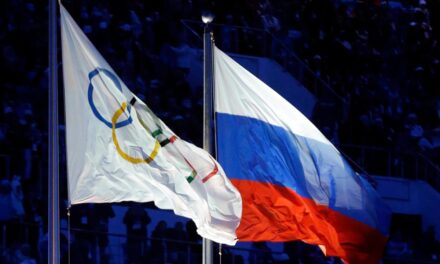
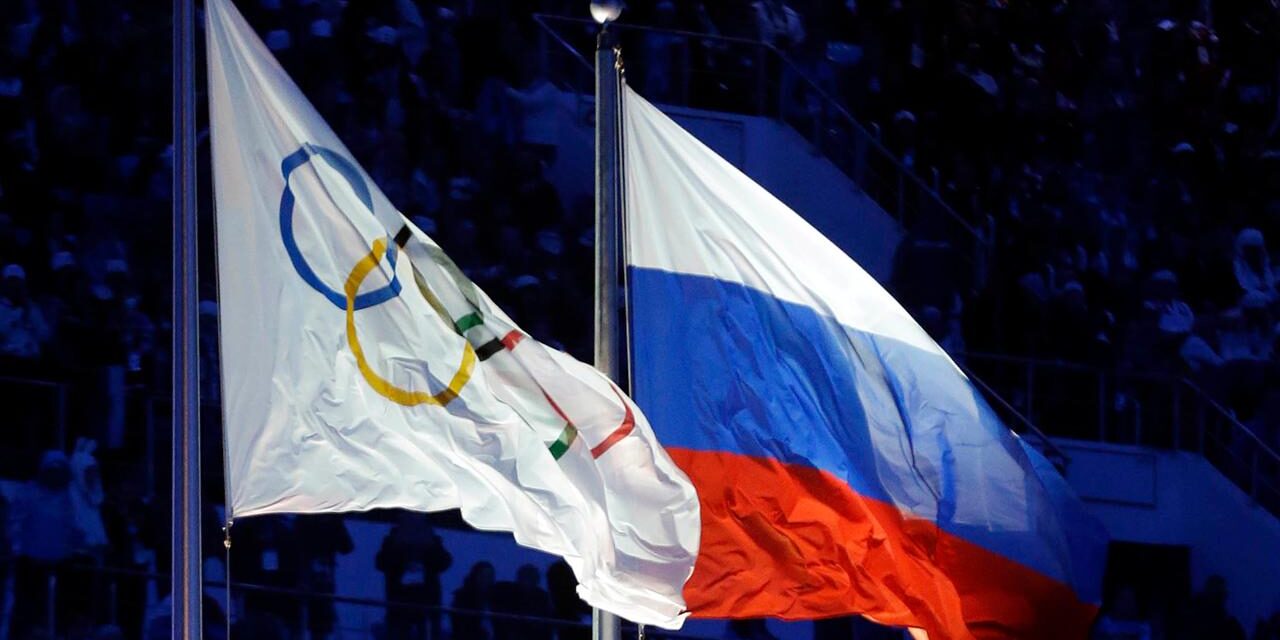
The International Olympic Committee’s decision to provisionally readmit the Russian Olympic Committee has reopened one of the deepest divisions in international sport and shifted responsibility for managing it away from Lausanne and back onto the governing bodies of individual sports.
While the move does not automatically restore Russian teams and athletes to every international competition, it removes the overarching IOC recommendation against participation that has been in place since Russia’s invasion of Ukraine in 2022. Each international federation must now determine its own position, creating the prospect of a fragmented sporting landscape in which Russia may return to some sports while remaining excluded from others.
The reaction has been swift, particularly across Europe. Estonia has led a coalition of nine European Union member states – Denmark, Estonia, Finland, Latvia, Lithuania, the Netherlands, Poland, Romania and Sweden – calling on the European Commission to suspend EU funding to sporting organisations that facilitate Russia’s return.
The absence from that group of larger sporting nations such as Germany, France, Italy and Spain is notable, though several major European federations continue to express reservations about readmission.
By contrast, there has so far been little formal reaction from the United States. With Los Angeles preparing to host the 2028 Olympic Games, Washington has largely avoided becoming directly involved in the governance debate, leaving the issue to the IOC and the international federations.
For Ukraine, however, the decision has been met with deep disappointment. Ukrainian sporting authorities argue that the circumstances that prompted Russia’s suspension have not fundamentally changed and that restoring Russia to the Olympic movement risks normalising a conflict that continues to have devastating consequences for Ukrainian athletes, sporting infrastructure and wider society.
The IOC maintains that the legal circumstances surrounding its earlier suspension have changed. Its original action was based not simply on the invasion itself but on the Russian Olympic Committee incorporating sporting organisations from occupied Ukrainian territories, which the IOC ruled breached the Olympic Charter by violating the territorial integrity of another National Olympic Committee. With those organisations subsequently removed, the IOC argues that the specific legal grounds for suspension no longer exist.
That legal explanation may satisfy some governance experts, but it is unlikely to quieten a much broader debate about consistency in international sport.
Almost immediately, comparisons have been drawn with Israel’s continued participation in international competition despite mounting criticism of the Israeli government’s military actions in Gaza. Calls for sporting sanctions against Israel have grown steadily over the past two years, yet no equivalent action has been taken by the IOC, FIFA or most international federations.
Supporters of Israel’s continued participation argue that each conflict has distinct legal and constitutional considerations, and that sporting sanctions should only be applied in exceptional circumstances under the Olympic Charter. Critics respond that international sport appears willing to isolate some nations while treating others differently, exposing governing bodies to accusations of political inconsistency.
That debate has become increasingly visible beyond formal governance circles. One recent flashpoint came when Barcelona and Spain star Lamine Yamal attracted criticism from Israeli government representatives after expressing solidarity with the Palestinian people on social media. The episode underlined how geopolitical tensions are increasingly spilling into the sporting arena, with athletes themselves becoming part of the wider political conversation.
For governing bodies, this may prove to be the more enduring challenge.
The IOC has effectively handed responsibility back to each sport. Athletics, football and several other federations may yet decide to maintain their existing restrictions on Russian participation. UEFA and FIFA, in particular, continue to face significant opposition from a number of European member associations regarding any return of Russian national teams to competition.
Ironically, however, the removal of the IOC’s overarching position may increase rather than reduce the pressure on those organisations.
Without the IOC acting as a unifying umbrella, federations will be expected to justify their own policies independently. If UEFA, FIFA or other governing bodies continue to exclude Russia while permitting Israel to compete, questions about consistency are likely to become more persistent. Campaigners who have argued for sanctions against Israel will increasingly focus their attention on the individual federations rather than the IOC, asking why one nation remains excluded while another does not.
That places international sport in an increasingly uncomfortable position. Every decision risks being interpreted through a geopolitical lens, yet every attempt to avoid politics invites accusations of inconsistency.
Without the narrow legal justification triggering the wider global exclusion, individual sporting bodies will have to justify why one war is worse than another. That gives rise to moral as opposed to straightforward legal judgement. And if invasion of another sovereign state is the marker, then what about the United States itself, or many others.
International sport is increasingly being asked to determine which conflicts should carry consequences for participation, at a time when armed conflict is more widespread than at any point in the modern era.
The pressure will now come in terms of whether international federations can articulate a coherent, transparent and universally applicable set of principles governing participation at a time when the International Red Cross estimates there are around 130 conflicts taking place around the world.
This places sport at the centre of political arguments it has long insisted it wishes to avoid, but in moral terms may no longer be able to.

 The Olympic Federation of Ireland are full members of Sport for Business.
If you would like to be part of the Sport for Business community and see your organisation in our content, on our stages, and in the conversation happening every day around the commercial world of Irish Sport, email us today and let’s see what is possible.
Image Credit: IOC
ABOUT SPORT FOR BUSINESS
Sport for Business is Ireland’s leading platform focused on the commercial, strategic and societal impact of sport. It connects decision-makers across governing bodies, clubs, brands, agencies, and public institutions through high-quality content, events, and insights.
Sport for Business explores how sport drives economic value, participation, inclusion and national identity, and how your story can be part of ours.
Through analysis, storytelling and convening the sector, it helps leaders understand trends, share best practices, and make better-informed decisions. It positions sport not just as entertainment but as a vital contributor to Ireland’s social and economic fabric.
Find out more about becoming a member today.
Or sign up for our Daily Sport for Business Snapshot email bulletins to get a flavour of the material we cover.
Sign up for our News Bulletins here.