Ireland’s high-performance athletes are increasingly delivering on the world stage. Behind those performances, though, lies another challenge every athlete must eventually confront: building a career alongside sport and making the transition when elite competition ends.
The Sport Ireland Institute’s Athlete Friendly Employer Network aims to ease that transition while showing Irish businesses that athletes bring exceptional qualities to the workplace.
Launched in 2018, the Network connects high-performance athletes with employers willing to provide flexible working arrangements, remote opportunities, internships and career pathways that recognise the particular demands of elite sport.
Companies including SportsKey, AIB, JP Morgan, Flogas, Atlantic Projects Company, EY, Key Patent Innovations and PBC Biomed have taken part.
Working closely with the Olympic Federation of Ireland, the Network forms part of the wider Performance Life Skills programme at the Sport Ireland Institute, headed by former Olympic canoeist Eoin Rheinisch.
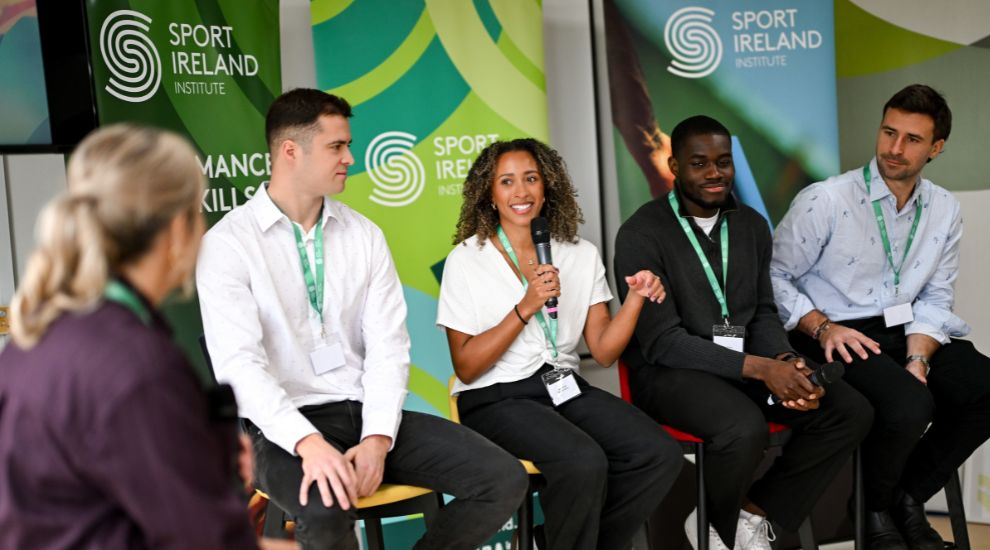
Sport for Business spoke with Carol Keenan, Performance Life Skills Specialist at the Sport Ireland Institute and coordinator of the Athlete Friendly Employer Network, about how it works, why athletes make strong employees, and why she believes more Irish businesses should get involved.
Sport for Business: We naturally focus on what athletes achieve in competition, but how significant is the challenge of preparing for life outside sport?
Carol Keenan: It is significant because an athlete’s sporting career is relatively short compared with their overall working life.
They have invested years in becoming exceptional at what they do. They face early mornings, training camps, international competition, and enormous amounts of preparation for moments that can define a sporting career.
We want athletes to understand that preparing for what comes afterwards does not diminish that commitment to sport. It can actually become another part of their development.
Our Performance Life Skills team works with athletes throughout their careers, whether that means helping them pursue a dual career while they compete or preparing them for when they eventually step away from high-performance sport.
SfB: What does that support look like in practical terms?
Keenan: It can be very individual.
We provide one-to-one career coaching, CV development, interview preparation, and job-search support, but it starts with understanding the athlete.
They might know exactly which industry they want to enter, or they may have spent so long focusing on sport that they are only now thinking about what comes next.
Our role is to help them identify their skills, understand where those skills might fit in the workplace, and prepare them to make that move.
It sits within Sport Ireland’s wider athlete welfare support and the high-performance system’s commitment to athlete wellbeing, protection, and best practice.
SfB: Where does the Athlete Friendly Employer Network fit into that?
Keenan: It is one of the most important pieces because it is something we cannot deliver by ourselves.
We can prepare athletes, coach them and support them, but ultimately we need businesses willing to open the door.
The Athlete Friendly Employer Network connects high-performance athletes with businesses that understand the demands of elite sport and are prepared to consider flexible employment, remote working or structured internship opportunities.
Sometimes that leads directly to employment. Other times, it might provide mentoring, experience, or the opportunity for an athlete to better understand an industry.
All of those things are valuable.
SfB: Is there sometimes a tendency for companies to think of this primarily as something they are doing to help the athlete?
Keenan: There can be, but we want businesses to recognise that this is very much a two-way opportunity.
Elite athletes develop qualities that are extraordinarily relevant to business.
They understand discipline. They understand resilience. They know what preparation looks like. They are accustomed to receiving feedback, adapting quickly and performing under pressure.
Those characteristics do not disappear when an athlete walks away from competition.
The business gets someone who has operated in a high-performance environment for years.
SfB: Some strong examples are already emerging from the Network.
Keenan: Absolutely.
Former Irish sailing Olympian Seafra Guilfoyle is a great example. Within a year of joining Stripe, he won the company’s internal Catalyst Award and was named its Sales Development Representative Top
Performer across the EMEA region for Q4 2025.
Paralympic champion Greta Streimikytė works part-time with AIB.
Olympic rowing medallists Aifric Keogh and Fiona Murtagh joined JP Morgan’s Athlete Internship Programme in 2025, and Fiona went on to become World Champion in the single sculls.
Cormac Comerford, who represented Ireland in alpine skiing at the Milano Cortina 2026 Winter Olympics, works as a project manager with Atlantic Projects Company while continuing his sporting career.
Irish international hockey player Niamh Carey has worked with PBC Biomed alongside competing at international level.
These are important examples because they show that the model works.
SfB: Presumably flexibility is central to making those relationships work?
Keenan: It is.
An athlete might have a major championship, a training camp, or a period of international competition
that doesn’t fit neatly into a traditional work calendar.
That does not mean they cannot make a significant contribution to an organisation.
Employers who understand that flexibility can often access really talented people who might otherwise struggle to fit into conventional employment structures while still competing.
Remote working has created additional possibilities.
We currently have athletes looking for part-time or remote opportunities across areas including
marketing, operations, administration, project management and software development.
A very diverse talent pool is available.
SfB: The programme is not exclusively about finding employment either. Entrepreneurship has become another strand.
Keenan: Yes, and that reflects the personalities of many athletes as well.
Many athletes have a strong entrepreneurial instinct.
Former Olympian Nadia Power co-founded the fitness brand Swifter with James Madden, who completed the Sport to Startup programme for high-performance athletes.
That programme was based on the Local Enterprise Offices’ Start Your Own Business programme and was delivered in partnership with Sport Ireland. It helped participants examine an idea, test it and develop it through to business-plan stage.
Double Olympian Harry McNulty, from Ireland Rugby Sevens, has also gone down that route with the launch of his adventure travel business, 890 Expeditions.
The important thing is giving athletes options.
Employment is one route. Entrepreneurship may be another.
SfB: Irish high-performance sport has been enjoying an unprecedented period of success. Does that make this an especially important time for business to become involved?
Keenan: I think so.
In 2025, Irish athletes won a record 127 major medals at World and European Championship level.
Those achievements do not happen accidentally.
They come from the athletes themselves, but also from the investment and structures around them through Sport Ireland, the Department of Culture, Communications and Sport, National Governing
Bodies and the wider high-performance system.
Irish business has an opportunity to become another part of that ecosystem.
You can support an athlete’s career while also bringing a very talented and motivated person into your organisation.
SfB: What would you say to a company that is interested but perhaps does not know what becoming an Athlete Friendly Employer involves?
Keenan: The first thing I would say is to talk to us.
It doesn’t mean a company has to suddenly create a large athlete employment programme.
It might start with one opportunity: an internship, a part-time position, mentoring, or simply talking to athletes about careers in a particular sector.
Our team works with the athletes before introductions are made. We help them prepare their CVs, practice interviews, and understand the opportunity.
We want to ensure a good fit for both the business and the athlete.
SfB: Ultimately, what would success look like for the Network?
Keenan: We want more athletes to feel confident that they can prepare for their future without compromising their sporting ambitions.
At the same time, we want more employers to recognise the talent in Irish high-performance sport.
These athletes have spent years learning to perform under pressure, respond when things go wrong, and keep improving.
Those are qualities every organisation values.
If we can bring more athletes and more businesses together, everybody benefits.
The Sport for Business Perspective
Supporting an Olympic, Paralympic, or high-performance athlete through flexible employment undoubtedly contributes positively to Irish sport, but the examples already emerging from the Network suggest employers should also view it through the lens of talent acquisition.
Ireland’s high-performance system is producing a cohort of people extensively trained in goal setting, resilience, teamwork, accountability, adaptability, and performance under pressure.
The challenge is translating those qualities from the sporting arena into business language and structures.
That is where the Sport Ireland Institute’s Performance Life Skills team and the Athlete Friendly Employer Network can become particularly valuable.
As Ireland continues to invest more seriously in high-performance sport, developing strong connections between athletes and Irish business should increasingly become part of that infrastructure.
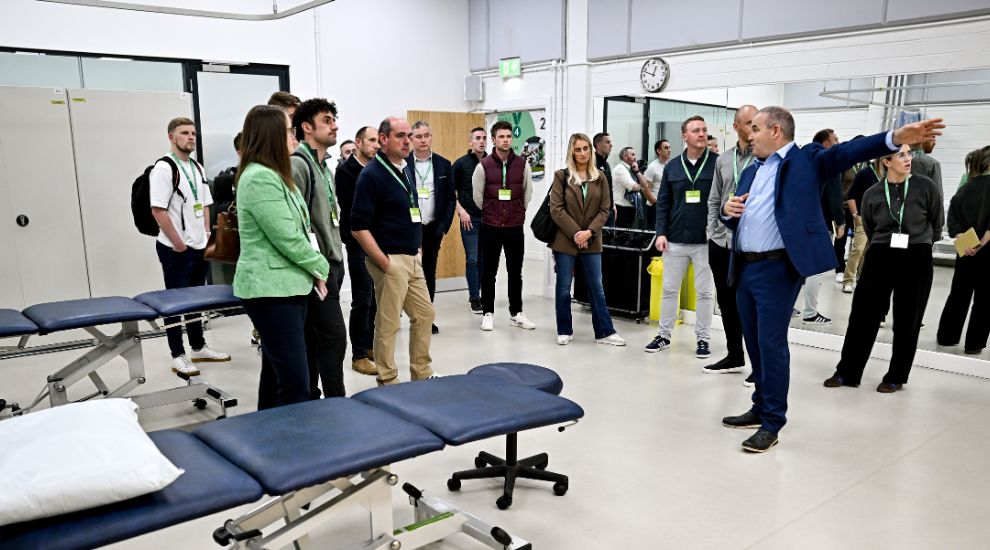
The next opportunity for companies to learn more will come at the annual Athlete Friendly Employer Network Breakfast on November 6th at the Sport Ireland Institute on the Sport Ireland Campus.
Businesses interested in joining the Network or exploring opportunities for high-performance athletes can contact afe@instituteofsport.ie.
 Sport Ireland is a full member of the Sport for Business community of sporting, business, and state organisations.
If you would like to join the Sport for Business community and see your organisation in our content, on our stages, and in the daily conversation around the commercial world of Irish Sport, email us today and let’s see what is possible.
Image Credit: Sport Ireland
ABOUT SPORT FOR BUSINESS
Sport for Business is Ireland’s leading platform focused on the commercial, strategic and societal impact of sport. It connects decision-makers across governing bodies, clubs, brands, agencies, and public institutions through high-quality content, events, and insights.
Sport for Business explores how sport drives economic value, participation, inclusion and national identity, and how your story can be part of ours.
Through analysis, storytelling and convening the sector, it helps leaders understand trends, share best practices, and make better-informed decisions. It positions sport not just as entertainment but as a vital contributor to Ireland’s social and economic fabric.
Find out more about becoming a member today.
Or sign up for our Daily Sport for Business Snapshot email bulletins to get a flavour of the material we cover.
Sign up for our News Bulletins here.