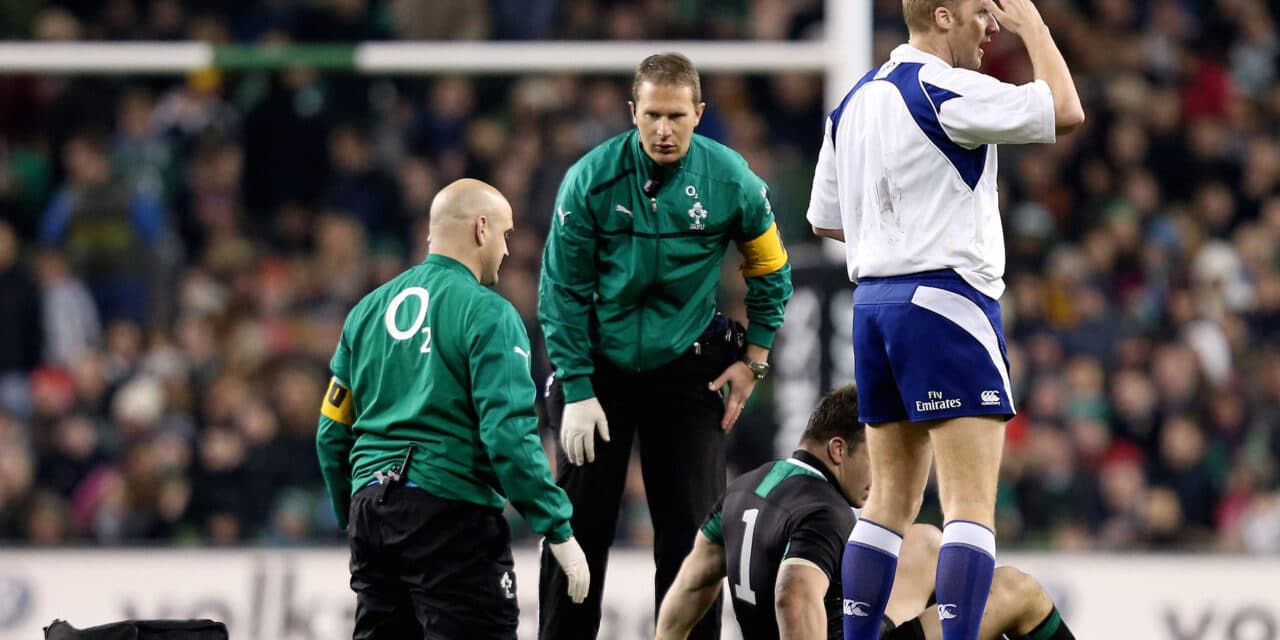
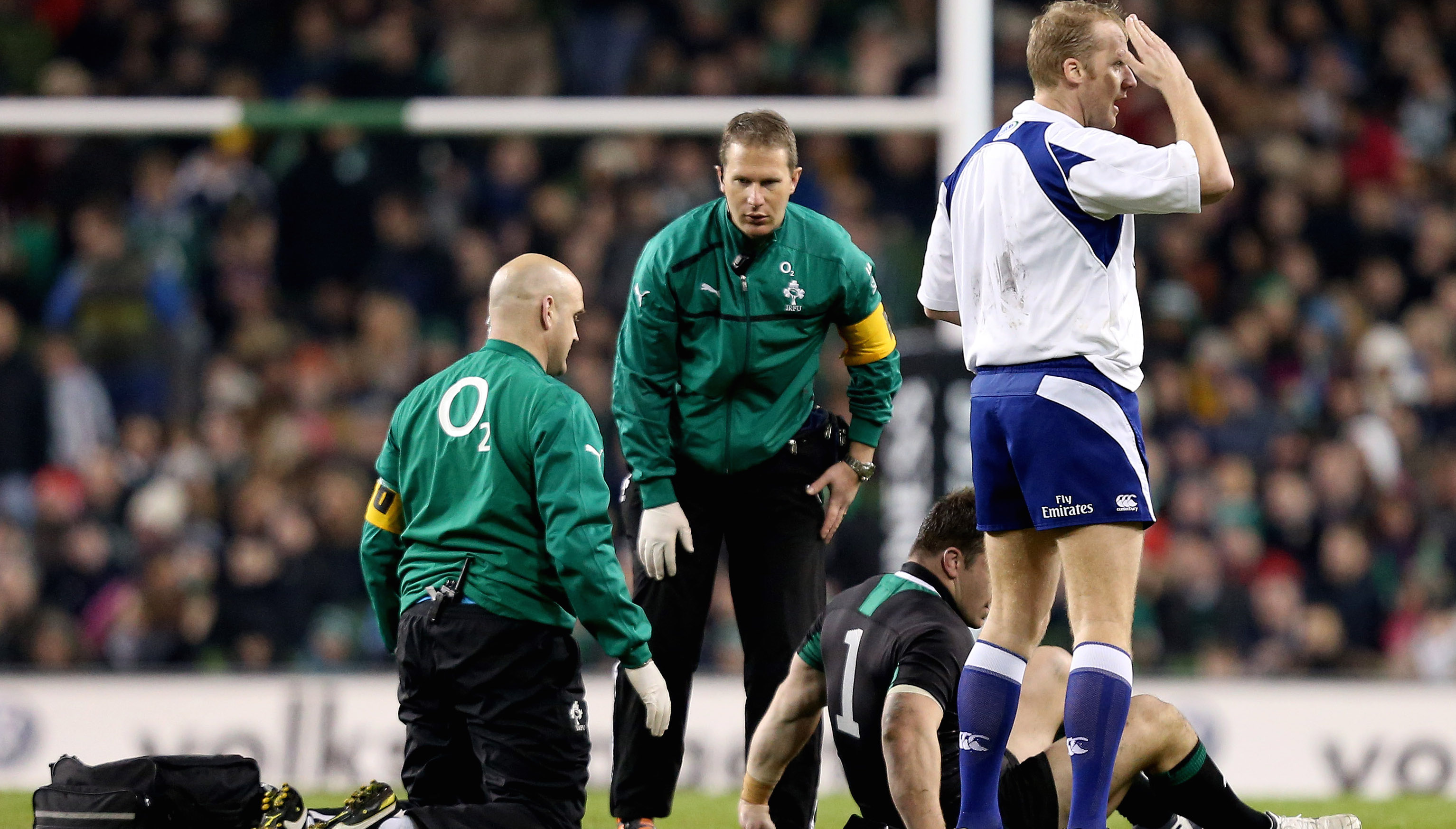
One of the biggest challenges facing contact sports, and rugby in particular is the question of concussion. This season Jonathan Sexton and George North, two of the biggest stars in the game have been sidelined following multiple head traumas and a new concern for how they need to be handled.
New research published in the United States yesterday suggests that the warning signs over concussion may be about to become much louder.
Until this research those looking to study the physical impact of trauma on the brain have only been able to do so posthumously.
The new data, produced by researchers at UCLA studied the living brains of 14 retired NFL players analysing the deposit of specific tau protein deposits.
They were compared to studies on 24 patients suffering from Alzheimers and 28 more from a control group. The results indicated that the profile of deposits in each of the three groups were different and that they pointed towards further proof that repeated head traumas could lead to chronic traumatic encephalotomy or CTE.
There has been criticism of the tests for being imprecise and based on too small a sample but medical research always starts small and then build credibility as the range of tests increases. The cost of each of the scans in this study has been put at a figure of $10,000 per scan but with the money tied up in professional sport, and a US legal culture based on litigation first, it could yet be a significant point in how concussion is managed or indeed feared to a point way beyond where current thinking is.
A number of court actions in the US have prompted sports governing bodies to set aside substantial multi million pots to deal with existing and likely future lawsuits around damage done to players engaged in contact sport.
The growth in bulk and speed of rugby players in the professional era, allied to the lack of any protective gear is likely to see a more intense spotlight fall on the duty of care which the sport has to its players and how that can best be implemented without shutting the sport down.
The zero tolerance position adopted by the IRFU and supported by IRUPA over the past 18 months has proved successful at raising awareness of the dangers of concussion at an elite level and that is filtering through to junior teams and other sports.
In light of the latest research it may prove to have been an even more important intervention than might have been thought at the time.