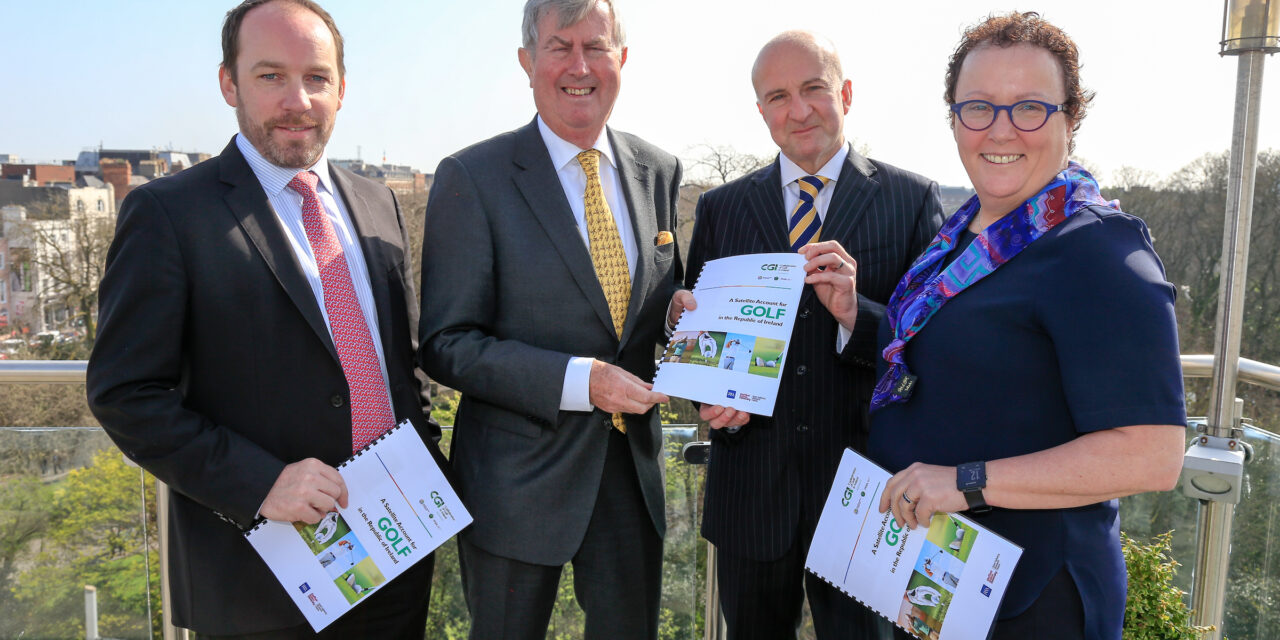
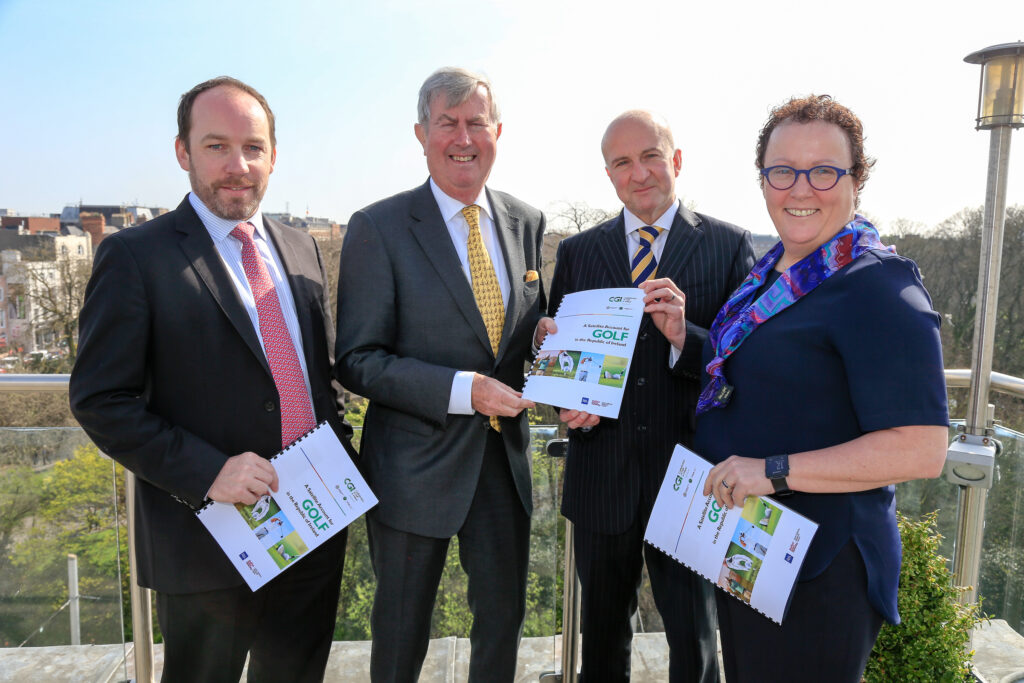
 Consumer spending on golf in the Republic of Ireland alone is now worth €379 million annually, according to a new report commissioned by the Confederation of Golf in Ireland (CGI) and The R&A, the international governing body for the sport.
In terms of a calculation of how that stands relative to other sports spending the authors have drawn a line from an Indecon report into sports overall economic value to suggest that golf is in fact worth 17 per cent of the total money spent by Irish consumers in and around sport.
It’s a bold claim but one that is backed up through breaking down the spend in areas that others sports would only love to have. These include club membership fees of €94 million, food and beverage revenues in clubs of €46 million and golf equipment sales of €39 million.
Value
The report, ‘A Satellite Account for Golf in the Republic of Ireland’ was conducted by the Sport Industry Research Centre at Sheffield Hallam University to evaluate golf’s economic value to the Republic of Ireland.
Related: Read about Rory McIlroy’s new website
A similar report was published in 2016, which detailed the contribution golf made to the economy of the United Kingdom. and when combined produce a figure for the value across the island of Ireland.
“There is an ongoing reluctance to see sport as an industry in the same way as Agriculture would be,” said Professor Simon Shibli, Head of the SIRC. The reality is though that it is just as measurable, just as deserving of support in the creation of jobs and economic value and just as important in terms of that value.
Employed
The research also shows that 9,030 people are directly employed within the golf sector on the island of Ireland, with 6,800 of these in the Republic.
These employment levels equate to the golf industry being responsible for 0.3% of total employment in the Republic of Ireland – the equivalent of one in 300 jobs.
The Gross Value Added of the golf industry in the Republic of Ireland was €202 million, which equates to 0.1% of the entire Irish economy.
Participation
There are 281,000 adult golfers in the Republic of Ireland (103,000 in Northern Ireland), of whom 160,000 play the sport at least once every four weeks. Figures show that the golf participation rates in the Republic of Ireland are higher than the UK as a whole, with 7.9% of the Irish population participating in golf on an annual basis compared with a 7.4% participation rate in the UK.
In global terms they are only bettered in a single nation by Scotland
The report also found that consumer spend per adult golfer in the Republic of Ireland reaches an average of €1,350 per annum and that the sport contributes €93 million to the public sector in corporation tax and VAT.
Given the size of the golf economy and the relatively low corporation tax rate, this is considered by the authors to be a significant contribution to public finances.
Specificity
“We commissioned this piece of research because, for too long, we lacked specificity with regard to the economic impact that our sport makes in the wider Irish community,” said Redmond O’Donoghue, Chairman of the Confederation of Golf in Ireland.
“This study proves that golf plays a far more important role in our economy than many would have expected. We plan to use this study to underpin our arguments for greater support for the game of golf from both the public and the private sectors. It is quite clear now that golf, as well as being a healthy and enjoyable activity, makes a significant contribution to the economy.”
That element of calling for a greater share of public funding for sport in general being directed towards golf was expanded upon with reference to Golf having underperformed in relation to Sports Capital Grants.
This is backed up in the Sport for Business Analysis of funding from the 2014 Round of Grants where Golf came in 19th, behind bowls and snorkelling, with total funding to clubs of €147,000. As a comparison that year tennis drew down €2 million.
Look back on our review of Sports Capital Grant distributions in 2014 and 2015
12 months later the figure more than doubled to €392,000 spread over 13 projects but still behind 13 others sports.
It is clear that while too late for the current round that an assistance for clubs from the centre in the Confederation could yield more in future rounds.
“Golf in the Republic of Ireland is more than just a sport,” added Shibli. “Our research demonstrates that it makes a measurable contribution to the nation’s economy and that golf clubs play an important role in the social fabric of their local communities. The current macro-economic conditions in the Republic of Ireland present an ideal opportunity for the nation’s golf industry to grow in future years.”