
There was a sense of progress – and a clear warning not to ease off – as the Sport for Business Women in Sport Conference took place yesterday at one of the “spiritual homes” of Women’s sport in Ireland at Tallaght Stadium.
Opening the event for the 12th year of Sport for Business debate and discussion on women’s sport, founder Rob Hartnett reflected on how far things have come and how far there is still to go.
“Sometimes we don’t realise how far we’ve come until we can look back from the top of the hill. We haven’t climbed the mountain yet, but we’re certainly climbing hills, and there is definitely an improvement in opportunity both at the elite level, at the grassroots and in visibility,” he said.
He drew on the words of journalist and disability advocate Joanne O’Riordan to frame the day’s theme.
“Gender equality isn’t a slogan, it’s a continuous collective effort to make sure that talent, opportunity and dignity aren’t determined by circumstance.”
“Progress happens when voices meet, collaborate and push forward together.”
The Mayor of South Dublin County Council, Cllr Pamela Kearns, underlined that pride.
“This is our jewel in the crown where, as you know, Rovers play,” said Cllr Pamela Kearns, Mayor of South Dublin County Council. “We have a very strong Shamrock Rovers women’s team, and it would be my hope in the future that we’ll have a big academy and more and more women coming through.”
Kearns, a former basketball player and underage coach herself, stressed the importance of lifelong participation and called out ongoing debates about what women can or cannot wear in sport as “bizarre” in 2025.
“I think that’s what we want to encourage – lifelong women in sport, not just at a competitive level but for our own health and our own benefits and to give us strength going into the future,” she said.
Hartnett also highlighted the importance of male allyship, noting that 27 per cent of those in the room were men – the highest level yet at this event.
“Women in sport is not a women’s issue, women in sport is a human issue and we absolutely have to have men that are bought into this, that are advocating for the changes which still need to be made,” he said.
Trinity’s award-winning campaign
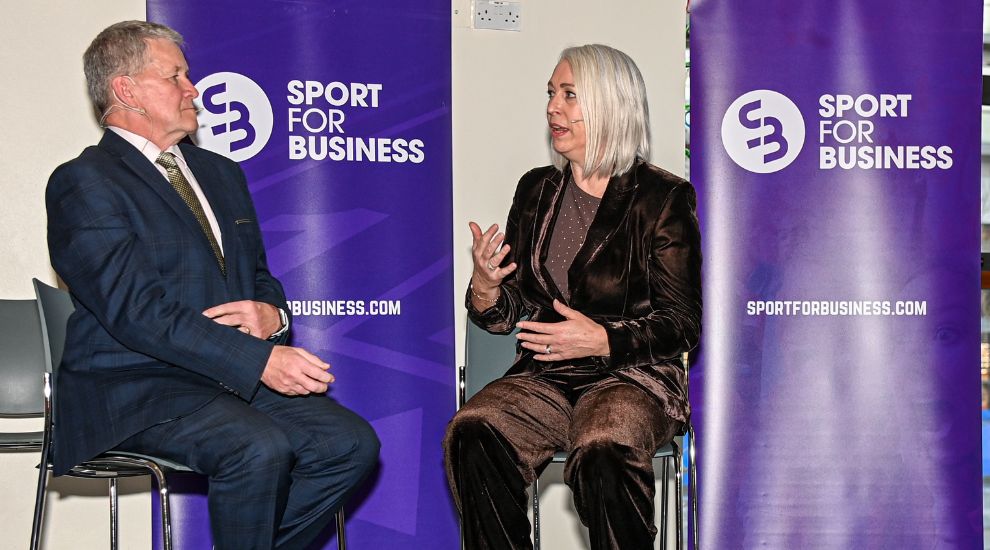
The first main conversation of the morning saw Hartnett joined on stage by Michelle Tanner, Director of Sport and Physical Activity at Trinity College Dublin and Chair of Sport Ireland’s Women in Sport Committee.
Tanner outlined how Trinity has reshaped its programmes to better support women students, many of whom are either returning to sport or trying something new.
“We find that we have to adapt our programmes to activate and encourage and engage more girls and women to get involved in sport activities,” she said.
“When they come to the university environment we’ve nearly 50 sports clubs, so you can imagine the plethora of opportunities to try something new.”
Trinity’s Women in Sport campaign recently won a global award from the International University Sports Federation, closely aligned with Sport Ireland’s Women in Sport policy pillars of leadership and governance, coaching and officiating, visibility and active participation.”
“Our women in sport campaign won an award this year through the International University Sport Federation and it was a mirror of the campaign for the Women in Sport policy that Sport Ireland have, so we did a lot of those four strands.”
Crucially, she said, the campaign has been built with students rather than for them.
“We’re empowering the groups that we’re engaging with and we’re facilitating them, we’re not telling them what to do,” she said.
“The magic, the sweet spot, is giving ownership of the campaign to the people that are impacted by it.”
Policy, funding and collaboration
In her role with Sport Ireland, Tanner spoke about the importance of a clear roadmap through the national Women in Sport policy and the recently launched Balanced Leadership Framework.
“It’s a real live document, it’s not something you sit in a drawer,” she said
“It’s something you can pick up from time to time to figure out how do I do something in terms of the culture in the organisation and how do we embed that into our leadership.”
She praised the scale and creativity of Women in Sport grant applications from National Governing Bodies and Local Sports Partnerships, but returned frequently to the challenge of resources.
“I don’t think we have any lack of ideas or willingness to run campaigns or initiatives to encourage more girls and women to get involved in sport, but it’s really the resources that’s the issue.”
“We do receive government funding… but it’s not enough and I’ll always say that.”
Collaborative programmes between sports and agencies particularly excite her, she added, as a way of sustaining impact and avoiding each organisation “going after the same markets” in isolation.
On leadership quotas, Tanner acknowledged the nervousness that existed when targets around gender balance on boards were first introduced, but pointed to the progress now evident across Irish sport.
“It’s not that we’ll never find any women – hey guys, we’re here,” she said
“We’ve got that balance on our boards and our committees now. The next piece is what happens with the decision-making now, and is that going to affect the programmes and initiatives that we’re running.”
She identified coaching and officiating, particularly at performance level, as one of the next big frontiers.
“We’re not seeing women come through at the active levels and particularly at the high-performance level. There’s a lot of barriers and obstacles still there,” she said.
“It’s that old cliché – you can’t see it, you can’t be it – so we have to really push in that space now.”
Visibility and major events will also be vital, she argued, to reach those outside rooms like Tallaght’s conference suite.
“We need to fill this stadium when our girls and women are playing here,” she said.
“We need to host another big women’s sport event in Ireland so that the general population can get behind us and see it. It’s an incredible force.”
And while there was plenty to celebrate in terms of progress, Tanner was clear about the need to keep driving on.
“We have to celebrate the wins, but we can’t take our foot off the pedal – we absolutely cannot,” she said. “If we do, we’ll just go backwards.”
There will be none of that on her watch.
Join us later for more from the Conference.
Check out our initial review of how the day went.

Image Credit: Sport for Business
Further Reading for Sport for Business members:
Read our Sport for Business Coverage of Women in Sport
SPORT FOR BUSINESS Upcoming Events

Sport for Business Podcasts

MEMBERSHIP AND EVENT,
Lidl Ireland, Catapult, Tallaght Stadium, Trinity Sport and Sport Ireland, as well as all the leading sporting and business organisations in and around the world of sport, are among the 300+ members of the Sport for Business community.
This includes all of the leading sports and sponsors, as well as commercial and state agencies, individuals interested in our world, and an increasing number from beyond these shores taking a keen interest in Ireland.
Find out more about becoming a member today.
Or sign up for our twice-daily bulletins to get a flavour of the material we cover.
Sign up for our News Bulletins here.