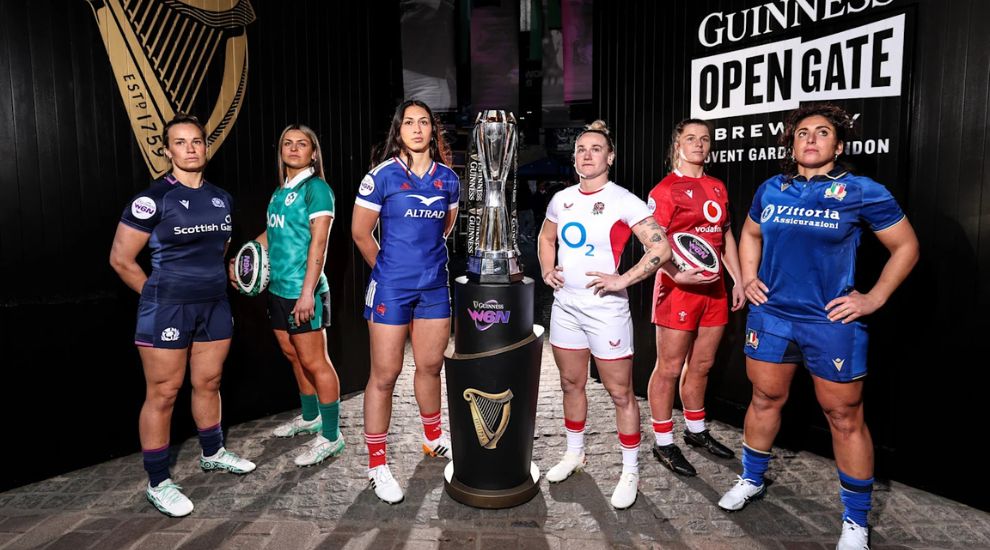
The 2026 edition of the Guinness Women’s Six Nations was officially launched in London yesterday, setting the stage for what organisers believe will be the most commercially and competitively impactful Championship to date.
Returning on April 11th, the tournament is a case study in the accelerating growth of women’s sport, with record attendances, expanded broadcast reach and a strengthened commercial proposition all central to its evolution.
A Championship Scaling Rapidly
The official launch at London’s Guinness Old Brewer’s Yard in Covent Garden brought together captains, coaches and stakeholders to underline how far the competition has progressed in recent years. The tone was clear: this is no longer a developing product, but one entering a new phase of maturity and market relevance.
This will be the first Championship since last years Rugby World Cup which moved the dial in multiple ways oin how the game is viewed.
Read more on the 2025 Rugby World Cup Impact.
For Irish stakeholders, the growth is already tangible. Ticket sales for Ireland’s closing fixture against Scotland at the Aviva Stadium have surpassed 15,000 in advance, making it the best-selling standalone women’s rugby fixture in the country, before the tournament has even begun.
The decision to move the Championship into a standalone window in the rugby calendar was widely viewed as a pivotal strategic shift. It removed competition with the men’s game and allowed for clearer storytelling, improved broadcast visibility and stronger sponsor activation. That is now embedded as part of the international rugby calendar.
Stadium Strategy and Fan Experience
A key pillar of this year’s competition is the deliberate use of major venues to elevate both perception and experience. Matches will be staged across iconic stadiums including Allianz Stadium, Principality Stadium and the Aviva Stadium.
This approach reflects a broader trend across women’s sport: using scale and atmosphere to drive audience growth while reinforcing the elite nature of the product.
“The women’s game is still very young, and that brings a huge opportunity to be responsibly disruptive; to innovate, make bold decisions, and try new things to encourage its evolution, but always remaining authentic and genuine,” said Julie Paterson, Chief of Rugby at Six Nations.
“This year the Championship moves further into its own standalone window within the rugby calendar, to challenge the game to stand on its own merits and have its moment in the spotlight.”
Her comments reflect a wider industry trend, where rights holders are increasingly willing to rethink traditional structures to accelerate growth.
Competitive Narrative: Closing the Gap
On the field, England remain the benchmark. Under head coach John Mitchell, the Red Roses continue to dominate, but there are signs of evolution. The appointment of Meg Jones as captain signals a shift towards a more dynamic, skills-driven approach.
For the chasing nations, including Ireland, the narrative is shifting from participation to genuine contention. The emergence of younger leadership groups is central to that ambition.
Ireland head coach Scott Bemand has handed the captaincy to 22-year-old Erin King, a decision that reflects a long-term commitment to building a new identity.
Read more in our interview with Scott Bemand and Erin King
Similarly, Wales will be led by Kate Williams during a transitional phase, while Scotland and France enter the tournament under new tactical direction.
This generational shift aligns with increased investment in player pathways and high-performance environments, particularly through competitions such as the Celtic Challenge and expanded professional contracts.
Structural Innovation: U21 Series Launch
Perhaps the most forward-looking development is the introduction of the U21 Women’s Six Nations Series, which will run alongside the senior competition.
The initiative is designed to strengthen the talent pipeline by exposing emerging players to international competition earlier in their careers. From a business perspective, it also enhances the matchday offering, with double-header fixtures providing additional value for fans and commercial partners.
The integration of development and elite competitions represents a more holistic approach to ecosystem building — something long established in men’s sport but now being fully realised in the women’s game.
Ireland’s Campaign and Commercial Opportunity
Ireland open their campaign away to England on April 11th before hosting Italy, Wales and Scotland across venues in Dublin, Belfast and Galway. The fixture list provides multiple opportunities to build audience engagement and deepen connections with both traditional rugby supporters and new demographics.
Ireland Fixtures:
April 11: England v Ireland – Allianz Stadium
April 18: Ireland v Italy – Dexcom Stadium
April 25: France v Ireland – Stade Marcel Michelin
May 9: Ireland v Wales – Affidea Stadium
May 17: Ireland v Scotland – Aviva Stadium
From a business perspective, the Championship offers a platform across several key growth areas: sponsorship activation, broadcast expansion, live event monetisation and grassroots engagement.
Sport for Business will be following how this play out over the duration of the Championship.
 If, like the IRFU and principal commercial partner Vodafone, you would like to be part of the Sport for Business community and see the story of your organisation in our content, on our stages, and in the conversation happening every day around the commercial world of Irish Sport, email us today and let’s see what is possible.
Image Credit: Six Nations Rugby and Dan Sheridan, Inpho.ie
ABOUT SPORT FOR BUSINESS
Sport for Business is Ireland’s leading platform focused on the commercial, strategic and societal impact of sport. It connects decision-makers across governing bodies, clubs, brands, agencies and public institutions through high-quality content, events and insight. Sport for Business explores how sport drives economic value, participation, inclusion and national identity, and how your story can be part of ours.
Through analysis, storytelling and convening the sector, it helps leaders understand trends, share best practice and make better-informed decisions. Its work positions sport not just as entertainment, but as a vital contributor to Ireland’s social and economic fabric.
Find out more about becoming a member today.
Or sign up for our twice-daily bulletins to get a flavour of the material we cover.
Sign up for our News Bulletins here.
Upcoming Events