 The battle against doping in sport is one that may never end but which can never be given up on without giving up on the integrity of sport as a whole.
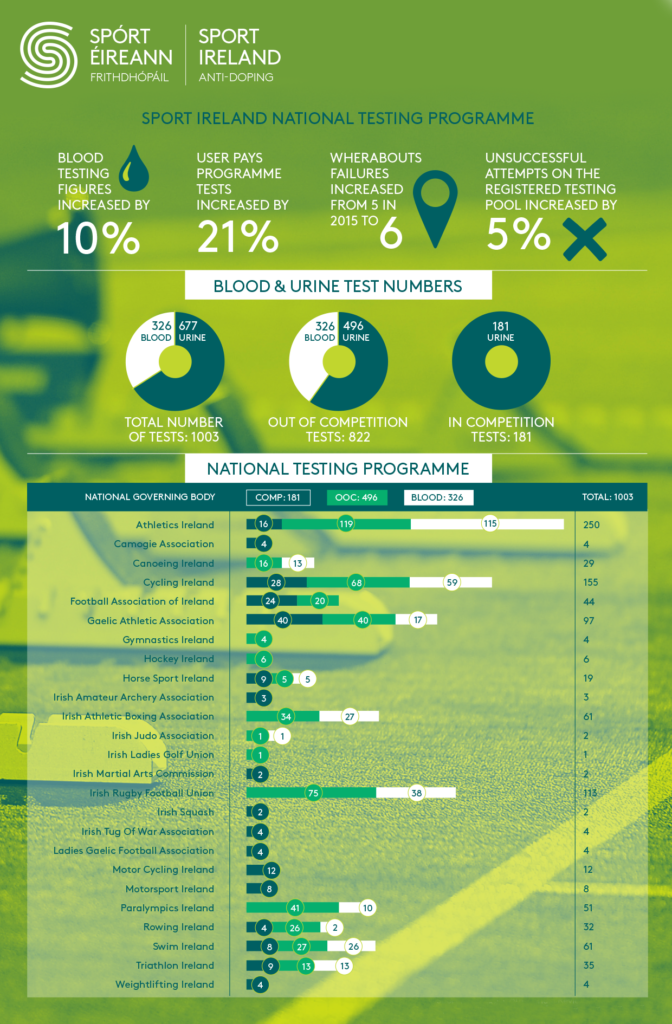
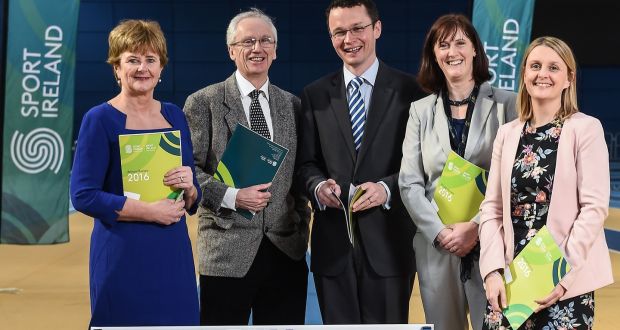
In Dublin yesterday Sport Ireland produced details of its annual report on the anti doping unit. It told of an increase of 10% in testing and only four positives out of a total of over 1,000. The most high profile of these was boxer Michael O’Reilly who missed out on the Olympics as a result.
To catch a doper means to expose them and also to expose the country to negative publicity on a global scale. That’s a price which has to be understood and to be paid.
Systematic
If we hear of an African or Russian Republic athlete caught doping we tut and assume that the whole programme of some countries is based on systematic cheating. Could others think the same of us when they look at our record of Olympians either caught or with a shadow of suspicion over them.
Perhaps but we need to stand tall and continue to call out cheats that are discovered and redouble our efforts to find those that cast the shadow in the first place.
The most enlightening, and unnerving figures from yesterday were not so much around the 46 therapeutic use exemptions uncovered, but in the research undertaken among 148 athletes into their own attitudes toward and knowledge of what is going on from their side.
Delta
40 per cent of those questioned admitted they personally knew of others who had used banned substances. That compares to 0.04 per cent who were caught through the testing. It’s a 100 fold delta from what we are catching to what might be happening.
That raises massive questions about the effectiveness of the testing process. The easiest thing would have been to look at the answers, dismiss them as all being related to perhaps just one or two individuals known in a small community and left on a shelf or better still shredded.
Sport Ireland though deserves enormous credit for resisting that urge and for putting the results of the survey out there.
It does beg a serious question of how cheating can be beaten though in the first place. If 40 per cent know of someone who they suspect of doping have they shared their concerns via anonymous tip lines or been more open in their questioning.
We are all lessened when cheating occurs but none more so than clean athletes who cannot compete and either walk away from sport or toil in the shadows of qualification rounds content that they are beating their own previous self.
If they know but do not speak out then are they not in some way, however small, culpable in the ability of the cheats to keep on winning?

Other results of the athlete survey revealed that 10 per cent felt there was a prevalence of doping in Irish sport as opposed to nearly twice that who felt it was the same globally. There may be an element of ‘that crowd over there’ about this but again the broad number is still out of kilter with the positive tests.
Perspective of Youth
Athletes questioned directly said they would not take a banned substance to win a medal but Ciara Mageean gave away the different perspective of youth when she said that she had spoken with her coach about whether she would swap a guaranteed Olympic Gold for the ability to walk after the age of 60 and she said yes, without a doubt.
Asking the same question of Sport Ireland CEO John Treacy who turns 60 in June and who is in rude good health might have elicited a different response.
“Globally 2016 was a difficult year and Sport Ireland felt compelled to join with other world leaders in anti-doping to strongly condemn the type of behaviour which was revealed in the McLaren Reports,” said Treacy in response to a less hypothetical question.
“I am delighted that Sport Ireland continues to be one of the leaders advocating for clean athletes and pushing for reform of the anti-doping system internationally.”
Summit
“In January of this year Sport Ireland hosted over twenty NADOs a special summit in Farmleigh where the calls from Copenhagen and Bonn were reiterated. It is imperative that these recommendations be implemented and Sport Ireland will continue to advocate to protect clean athletes everywhere as we look forward to the rest of 2017.”
He was backed in that contention by Minister of State for Sport Patrick O’Donovan who said “Ireland is a proud sporting nation, where sporting success unites people from all backgrounds right across the country, but we only want to celebrate those successes if they are achieved in a fair manner.”
“In a difficult year in the fight against doping, Sport Ireland has been working diligently and with great professionalism to ensure that Ireland’s sporting interests are protected. In Ireland we remain committed to championing fair play in sport and protecting the rights of clean athletes; we want to send out a very clear message that doping, both in Ireland and internationally, should not be tolerated at any level”.
Talking about the research findings Caroline Murphy, Chairperson of the Sport Ireland Anti-Doping Committee said “The results of this research give a reasonable indication of the knowledge and experience of Ireland’s high profile athletes when it comes to matters relating to anti-doping.”
“The results will be used by Sport Ireland to shape the anti-doping education programme moving forward, as we continue to leave no stone unturned in our fight against doping.”
That is a long, hard fight. It’s one though that cannot be left to others and that is something which those athletes and coaches who know of wrongdoing will have to step up to if it has any chance of being won.