The US Olympic and Paralympic Committee has written to all the athletes expected to compete at trial events for Tokyo to outline an expected approach towards respectful protest.
The guidance defines latitude for athletes to express their personal perspectives on racial and social justice in a respectful way and without fear of sanction from the USOPC.
Demonstrations that are permitted and which will not attract and sanction include:
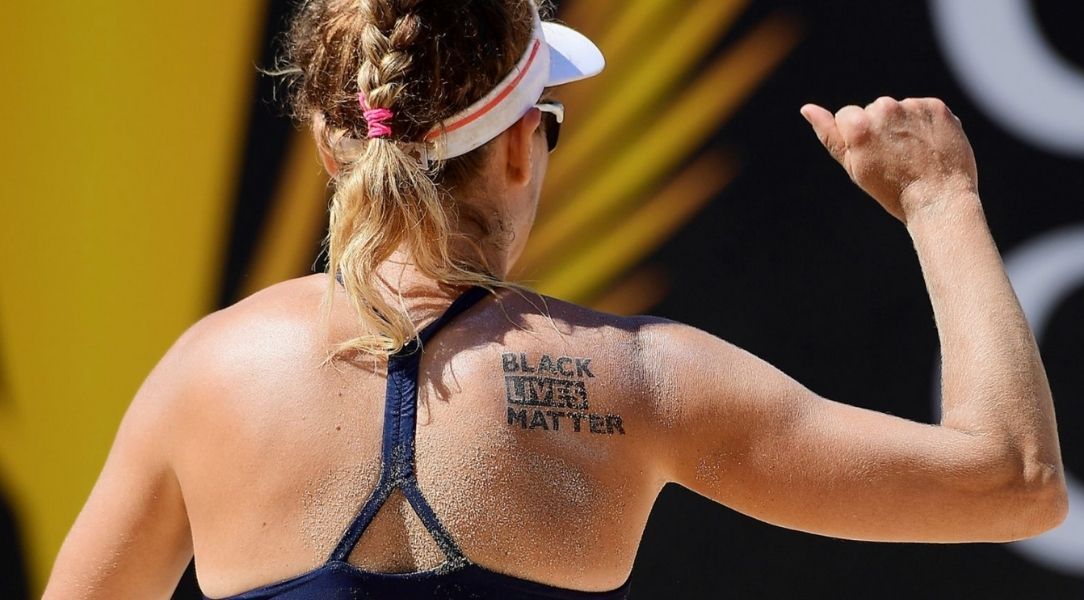
- Wearing a hat with phrases such as “Black Lives Matter” or “Trans Lives Matter” or words such as “equality” or “respect”
- Orally advocating for equity/equal rights for Black, Indigenous, and People of Color (BIPOC) individuals, or other historically underrepresented, marginalized or minoritized populations
- Holding up one’s fist at the start line or on the podium
- Kneeling on the podium or at the start line during the national anthem
On the other side of the coin there is a list of actions that are not allowed:
- Wearing a hat with a hate symbol or hate speech on it
- Making hand gestures affiliated with hate groups
- Violent protests that cause damage or hurt others
- Defacing, distorting or causing physical hard to a national flag
- Protests aimed explicitly against a specific organization, person or group of people
Throughout history trying to define that some protests are more acceptable than others has proven to be problematic.
One person’s freedom fighter is another’s terrorist. Looking at this through an Irish lens it would appear a case could be made for defending an athlete’s right to wear an IRA t-shirt and calling out an IRA slogan on the basis of arguing that Catholics and nationalists in Northern Ireland were a marginalised group.
That would obviously cause offence within other communities and is it down to an Olympic Committee to determine which side is deserving of the greatest level of protection or right to protest?
Last night in Hungary, the Republic of Ireland players took a knee at the start of the game against Qatar but their opponents did not. This was a fact clearly seen and disapproved of by at least one Irish player caught on camera. There was however no protest against human rights as had been undertaken by Norwegian and German footballers earlier in the week and forgiven by FIFA.
In November last year the Olympic Federation of Ireland Athletes’ Commission, following a two-part consultation with Irish Olympic and aspiring Olympic athletes, called for a relaxation of IOC Rule 50 to allow for considerate protest if it can be carried out in a manner that does not detract from the experience of other athletes nor impact on the timing and running of events.
“We recognize that there are challenging circumstances surrounding Rule 50 – it is clear that athletes are becoming more engaged in issues that affect athletes and society as a whole however we must also recognize that simply abolishing Rule 50 could have negative consequences which we feel should be avoided,” said Athletes Commission Chair Shane O’Connor.
“We acknowledge that finding the right balance for what could be termed ‘considerate’ protest will be difficult but we believe it is incumbent on the IOC to reconsider Rule 50 and find that balance which meets the needs of athletes without detracting from the Olympic values or creating a negative impacting on athletes and spectator’s games experience.”
The Americans have made a start and it will be interesting to observe the reaction and the application of its specific guidance.
Sport for Business Partners
[logo_carousel_pro id=”51608″]