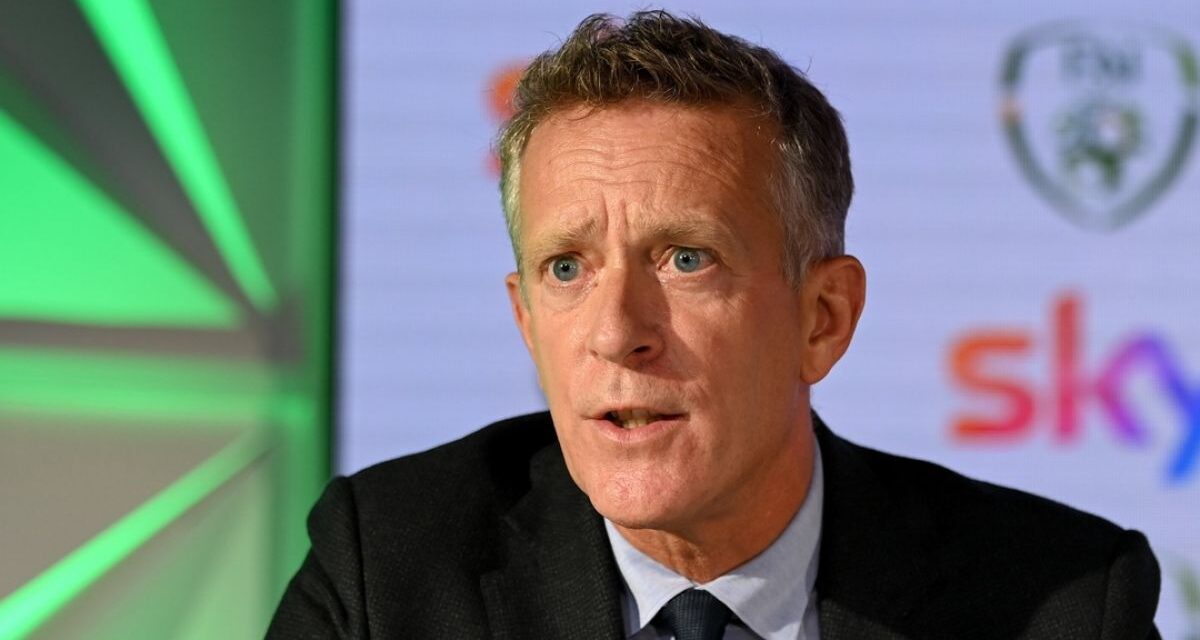
The changing way in which we work is top of many agendas at the moment and so too at the FAI where CEO Jonathan Hill was forced to defend his maintaining a home life in England while working as CEO of the Association.
“The pandemic has changed the way that people work and at this moment in time I do not plan to move my young family over here,” he told a gathering of media at Abbotstown to discuss the new FAI Strategic Plan and the bid for hosting the Finals of Euro 2028.
“For me, the most important thing is not where but rather how I do my work.”
He was strongly backed in this by Chair Roy Barrett who saw the arrangement as “a bot of a non-issue really.”
“I would much prefer to have a really good Chief Executive who is very effective and productive. That is more important to the board and I than matters of presenteeism.”
We do not know yet just how the new world of mobile working, Zoom meetings and coming together when it is important rather than on a 9-5 basis, will work out but Hill is having to face the issue in a warmer spotlight than most.
The thrust of a Sunday times article from the weekend was that money is being spent on flights and accommodation when the Association remains in a challenging financial position. There was a €30,000 relocation package offered as part of his recruitment but that has not been drawn down so this is a logistics and a presentation issue rather than one of governance.
People are working remotely and being there in person when they are needed and it is working well when it is working well. Some are suited to it, others less so.
There is an irony in that whether or not Hill will ‘get’ the unique nature of the Irish football family without being seen at the club awards nights, the medal presentations and the facility openings are being judged against the very hands-on approach of John Delaney who was a master of being present.
It is better to have an open and transparent management setup than one that is defined by being in a particular chair in a particular office.
Barrett got a bit tetchy when pressed on the matter saying that he would not be discussing issues around an individuals contract and this issue will fade so long as progress continues in the area where a CEO should be judged, on performance against objectives.
The Strategic Plan is covered in detail elsewhere on Sport for Business and is a strong document with those objectives laid out.
Some are fuzzier than might be ideal but this is a sport coming back not only from the pandemic that affected everyone but also from its own self-inflicted wounds.
There are key roles to be filled and it will be a measure of how the team is performing off the pitch once they are in place and settled with a number of key elements of the strategy pushed to being undertaken in 2022.
So long as we see the evidence of progress in those it will matter much less whether the CEO lays down his head of an evening in a Blanchardstown hotel or in the comfort of his family home. Good leaders are not easy to find. Hill’s starting year and a bit have held much promise and we can only hope that the toll of the travel, family commitments and a still uneasy football establishment here does not make him question whether it is worth it.